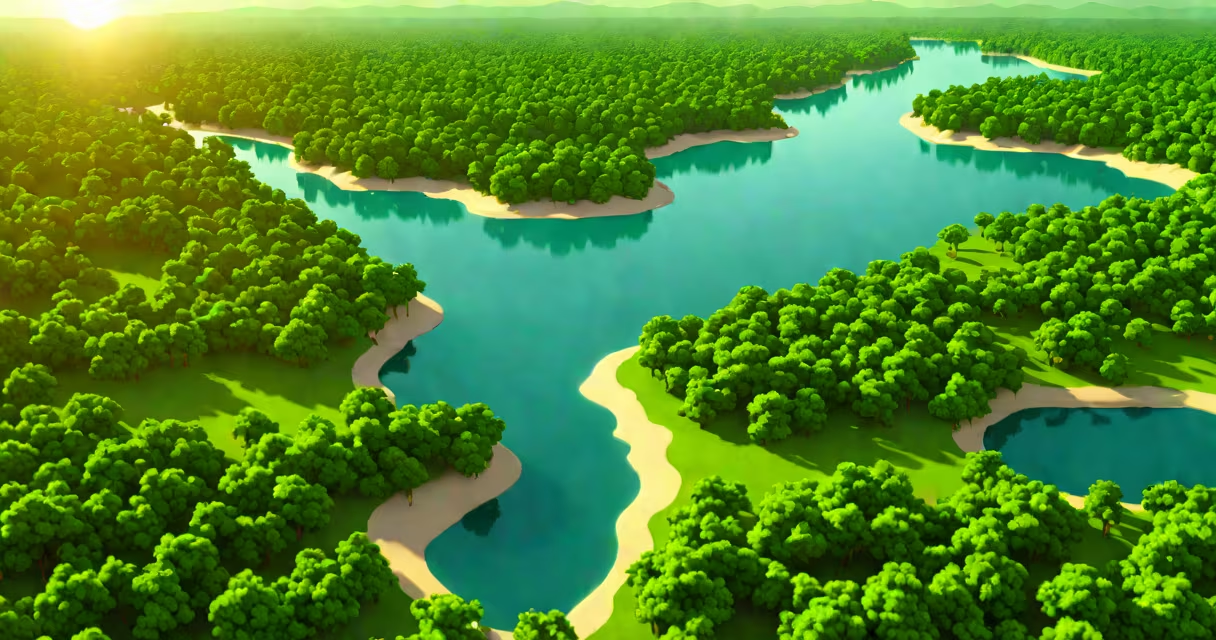
Natural resources are materials or substances found in nature that have economic value and can be used to meet human needs. They include water, air, soil, minerals, fossil fuels, plants, and animals. These resources are essential for energy, food, shelter, and industrial production.
The term "natural resources" covers both renewable and non-renewable categories. Renewable resources, such as solar energy and wind power, regenerate naturally within a human timescale. Non-renewable resources, like oil and coal, take millions of years to form and cannot be replenished quickly. The United States Geological Survey defines natural resources as "materials derived from the environment that are useful to humans."
Understanding this definition helps clarify why managing these assets responsibly is critical. Overuse leads to depletion, habitat loss, and climate impacts. The World Bank notes that unsustainable extraction of natural resources contributes to 60% of global biodiversity decline. Recognizing what counts as a natural resource prevents misclassification-such as treating manufactured goods as natural.
Natural resources function through ecological and economic systems. Solar radiation drives photosynthesis, which produces plant biomass-the foundation of food chains. Water cycles through evaporation, condensation, and precipitation, sustaining ecosystems and agriculture. Minerals form through geological processes over millennia, then get extracted via mining.
When humans harvest these resources, they enter supply chains. For example, iron ore is mined, refined into steel, and used in construction. This process transforms raw materials into usable products. But each step consumes energy and generates waste. According to the U.S. Environmental Protection Agency, extracting and processing natural resources accounts for 90% of global material footprint and 70% of biodiversity loss.
Resource flows depend on availability, accessibility, and demand. A drought reduces water availability, affecting crop yields. A new battery technology increases demand for lithium, raising mining activity in Chile and Australia. These dynamics show that natural resources aren't static-they respond to environmental conditions and human decisions.
Natural resources fall into two broad categories: renewable and non-renewable. Renewable resources can be replenished within a human lifespan. Examples include sunlight, wind, rainwater, trees, and fish populations. Non-renewable resources exist in finite quantities and take millions of years to form. Examples include petroleum, natural gas, uranium, and rare earth elements.
| Type | Examples | Replenishment Time | Use Case |
|---|---|---|---|
| Renewable | Solar energy, hydropower, timber | Hours to decades | Electricity generation, building materials |
| Non-Renewable | Petroleum, coal, copper | Millions of years | Fuel, electronics, infrastructure |
Some resources blur the line between categories. For instance, groundwater is technically renewable-but over-pumping in regions like California's Central Valley has caused aquifers to deplete faster than they recharge. The U.S. Geological Survey reports that groundwater levels dropped by 10% in key agricultural basins between 2000 and 2020 due to excessive withdrawal.
Natural resources drive economies worldwide. Countries rich in oil, such as Saudi Arabia and Russia, rely on exports for national income. Nations with abundant forests, like Canada and Sweden, build forestry-based industries. Agricultural nations like Brazil and India depend on fertile land and seasonal rainfall to grow crops.
Energy production is one of the largest uses. Fossil fuels still supply about 80% of global primary energy, according to the International Energy Agency. In contrast, renewables accounted for 30% of electricity generation in 2023. Wind farms in Texas and solar arrays in Nevada illustrate how location affects resource utilization.
Even everyday items depend on natural resources. A smartphone contains over 60 different elements, including cobalt from the Democratic Republic of the Congo and lithium from Chile. Mining these materials often involves environmental trade-offs. The extraction of one ton of lithium requires 2 million liters of water-highlighting the hidden costs behind consumer technology.
Many people mistake manufactured goods for natural resources. Plastic, for example, is derived from crude oil-a natural resource-but plastic itself is a synthetic product. Similarly, paper comes from trees, but paper is not a natural resource. Only the raw material (wood fiber) qualifies.
Another misconception is that all renewable resources are sustainable. While wind and solar are renewable, their deployment still requires land, water, and rare metals. Large-scale solar farms in Nevada occupy over 10,000 acres and affect desert wildlife. The National Park Service warns that poorly planned renewable projects can disrupt ecosystems just like fossil fuel operations.
A lesser-known fact: natural resources are not always evenly distributed. The Democratic Republic of the Congo holds over 70% of the world's cobalt reserves. This concentration creates geopolitical risks. When China controls 60% of global rare earth element refining capacity, supply chain vulnerabilities emerge. These imbalances show that access to natural resources is as much a political issue as an environmental one.
Michigan's Department of Natural Resources manages over 11 million acres of public land, including forests, wetlands, and Great Lakes shorelines. The agency oversees fishing rights, hunting seasons, and forest conservation. In 2022, it implemented a new policy to restore native oak savannas, which had declined by 90% since European settlement.
This effort illustrates how natural resources are managed at scale. The department tracks deer populations, monitors water quality in Lake Superior tributaries, and regulates logging permits. Their work shows that defining natural resources isn't academic-it shapes real-world policies that balance ecological health with human use.
I visited a state forest near Traverse City in 2021 and saw a controlled burn conducted to clear invasive species. The fire reduced underbrush that threatened native tree seedlings. That single action preserved soil integrity, improved habitat diversity, and maintained carbon sequestration-all outcomes tied to responsible natural resource use.
Natural resources are materials found in nature that serve human purposes. They include both renewable and non-renewable forms. Misidentifying them leads to poor policy and environmental harm. Sustainable management ensures long-term viability.
Understanding the natural resources definition enables better choices in consumption, investment, and policy. It's not just about what exists-but how we use it.