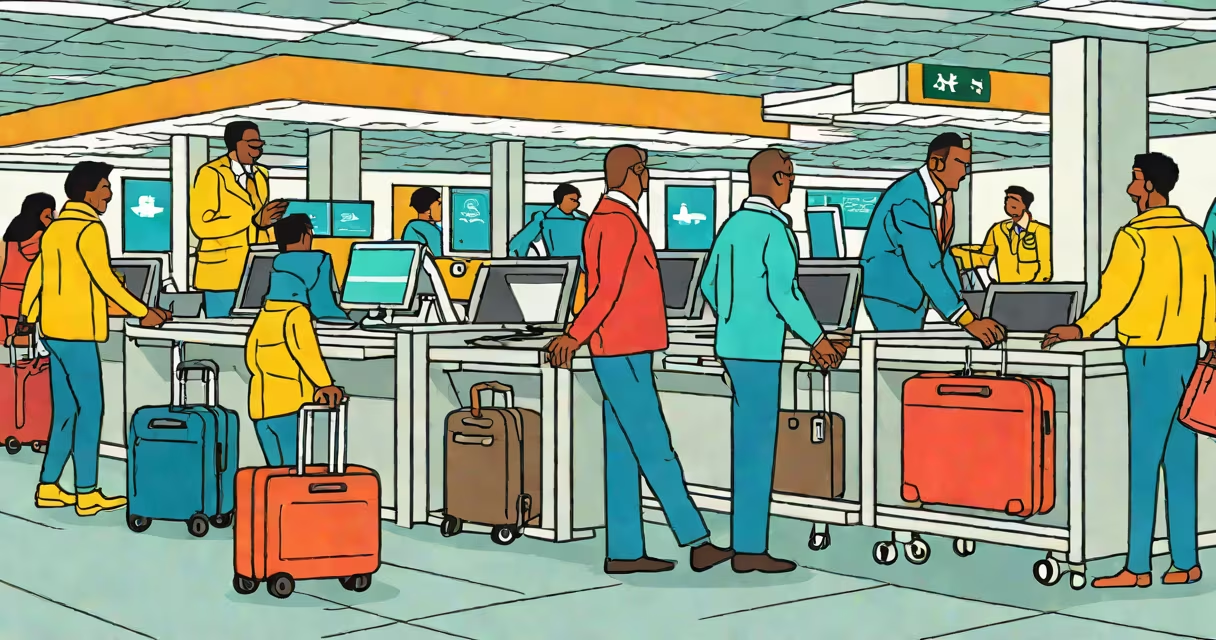
The Transportation Security Administration (TSA) allows most personal items in carry-on bags, but specific rules govern size, quantity, and form. Liquids must be in containers under 3.4 ounces (100 ml) and fit in a single quart-sized clear bag. Medications, electronics, and essential toiletries are permitted with proper screening.
Carry-on baggage must fit in overhead bins or under the seat. The standard limit is 22 x 14 x 9 inches (56 x 36 x 23 cm), though airlines may enforce stricter policies. Checked bags have different size and weight limits depending on class and route.
Items prohibited include firearms, sharp objects, flammable liquids, and explosives. Even common household products like aerosol sprays and lighters are banned unless specially approved. Always verify current rules before traveling.
At U.S. airport checkpoints, passengers remove shoes, jackets, and laptops from bags. All carry-ons go through X-ray machines. Liquids, gels, and pastes must be placed in a single clear plastic bag no larger than 1 quart (about 1 liter).
Containers must each hold 3.4 ounces (100 ml) or less. This rule applies to toothpaste, shampoo, lotion, and even condiments like mustard or ketchup. A single bag holds all such items. Multiple bags trigger inspection.
Security agents may ask to open bags or test suspicious substances. If a liquid appears to be water or another safe substance, it may be allowed through. But if it's unclear, it gets tested or denied.
Not all items are treated equally. Here's how the TSA categorizes them:
| Item Type | Allowed in Carry-On? | Notes |
|---|---|---|
| Liquids (shampoo, lotion) | Yes, if ≤3.4 oz and in clear bag | Must fit in one quart-sized bag |
| Medications | Yes, with documentation | Prescription bottles acceptable; extra doses allowed |
| Alcohol (over 140 proof) | No | Any alcohol above 140 proof is banned |
| Electronic devices | Yes | Laptops, tablets, e-readers allowed |
| Sharp objects (knives) | No | Even butter knives are restricted |
Some travelers assume that small amounts of alcohol are allowed. That's false. Any alcohol with more than 140 proof (70% alcohol by volume) cannot be carried on. Examples include certain spirits like absinthe or high-proof moonshine.
Another misconception: that prescription medication doesn't need to be declared. This is incorrect. While medications are allowed, they must be labeled. If a doctor's note accompanies the medication, it speeds up screening.
Travelers with medical conditions often bring insulin, syringes, or injectable treatments. These are permitted under TSA guidelines. You can carry syringes, insulin pens, and other injection tools in your carry-on.
For those managing chronic health issues, the TSA allows extra medication beyond what's needed for the trip. For example, someone on a 10-day vacation can bring a week's supply plus a backup. This is not a blanket rule-it depends on the agent's discretion.
I once flew with a vial of insulin and a syringe. The agent asked me to open my bag and show the items. I handed over my prescription bottle and a letter from my doctor. The process took under two minutes. No delay.
Many think that "personal items" like handbags or laptop bags don't count toward carry-on allowance. They do. The TSA defines a personal item as something that fits under the seat, such as a purse, backpack, or briefcase. It's separate from the main carry-on.
Another error: assuming that all food is banned. Solid foods-like sandwiches, fruit, or snacks-are allowed. But liquids or semi-liquids (e.g., soup, sauce, jam) must follow the 3.4 oz rule. A sandwich with mustard counts as a solid, but a jar of mustard does not.
Also, lithium batteries are regulated. Devices with batteries over 100 watt-hours (Wh) require special approval. Most phones and laptops fall below this threshold. But power banks over 100 Wh must be carried in the cabin, not checked.
The TSA website provides the most accurate and up-to-date rules. Search for "TSA carry-on items" or visit TSA's What Can I Bring? tool. It includes filters for categories like food, medicine, and electronics.
For international flights, check the airline's policy and the destination country's customs rules. Some countries ban certain foods or plants. Others restrict electronics in checked bags due to battery risks.
Always pack essentials in your carry-on. Checked bags can be delayed, lost, or opened. If you're flying internationally, consider using a secure, lockable bag with a TSA-approved lock. These allow agents to inspect without breaking the seal.
When in doubt, leave it out. The TSA prioritizes safety over convenience. A banned item leads to removal, not just refusal. If you're unsure about a product, contact the airline or TSA directly.
Understanding what can we take on a plane reduces stress and avoids delays. Follow the rules, prepare your bag in advance, and travel with confidence. Knowing the limits prevents last-minute surprises at security.