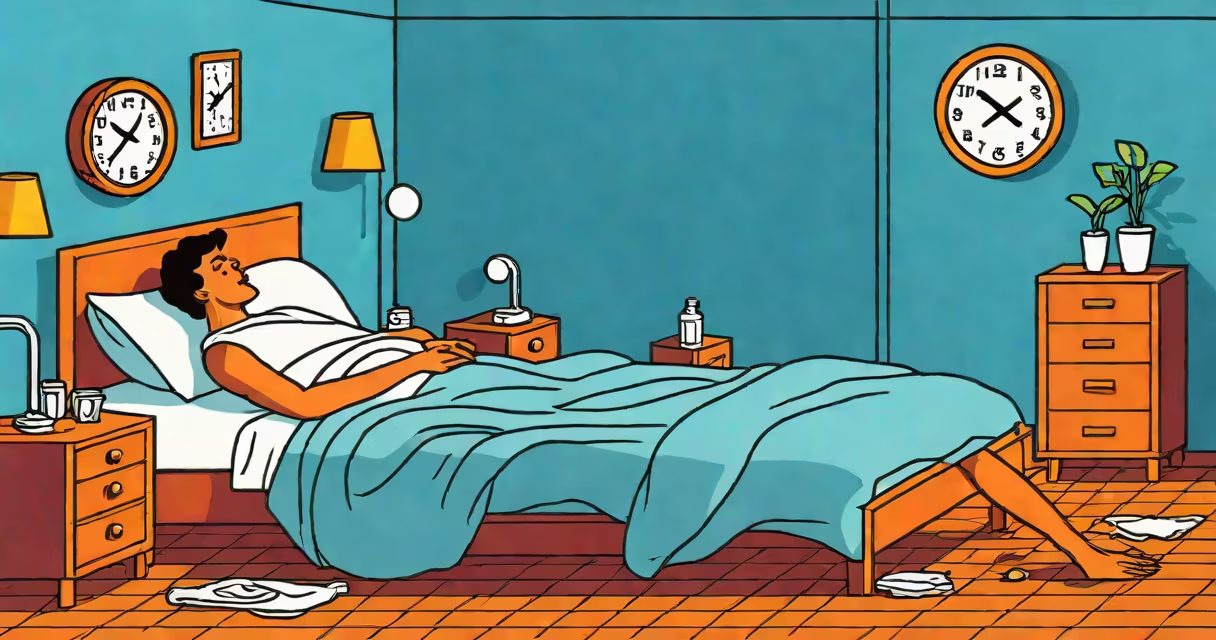
Overactive bladder at night results from involuntary bladder muscle contractions during sleep, causing urgent, frequent urges to urinate. This condition disrupts sleep and affects up to 15% of adults over 60, according to the National Institute of Diabetes and Digestive and Kidney Diseases (NIDDK).
These contractions occur when the detrusor muscle in the bladder wall contracts prematurely, even when the bladder isn't full. The brain receives signals it interprets as needing to void, triggering waking episodes. This is not simply "drinking too much before bed"-it's a neurological and muscular dysfunction.
Common triggers include nerve damage from diabetes, spinal cord injury, or multiple sclerosis. Hormonal changes, especially reduced antidiuretic hormone (ADH) production at night, also contribute. ADH normally slows urine production during sleep. When levels drop, urine volume increases, overwhelming the bladder's capacity.
The bladder stores urine until the brain signals it's time to empty. During sleep, the body reduces urine production through ADH release. Normally, this allows 6-8 hours of uninterrupted sleep. But in overactive bladder at night, this system fails.
Neural pathways between the brain and bladder can misfire. For example, a study published in Neurourology and Urodynamics found that people with nocturia had altered cortical activity during sleep, suggesting disrupted central control of bladder function.
When the bladder fills, stretch receptors send signals to the spinal cord and brain. In healthy individuals, the brain suppresses the urge until morning. In overactive bladder, the brain fails to inhibit the signal, leading to sudden urgency-even during deep sleep.
Several underlying conditions increase risk. Not all cases stem from the same cause. Here's how they differ:
| Type | Primary Cause | Prevalence | Key Symptom Pattern |
|---|---|---|---|
| Detrusor overactivity | Uncontrolled bladder muscle contractions | ~70% of cases | Urgency, frequent trips, sometimes leakage |
| Nocturnal polyuria | Excess urine production at night | ~20% | Large volumes, fewer urges, early awakenings |
| Bladder outlet obstruction | Enlarged prostate (men), pelvic floor weakness (women) | ~10% | Straining, incomplete emptying, nocturnal frequency |
Detrusor overactivity is the most common form. It often appears in middle-aged and older adults, especially those with a history of pelvic surgery or childbirth. A 2021 study in JAMA Internal Medicine linked prior pelvic radiation therapy to a 3.2-fold higher risk of nocturnal urgency.
Some patients have mixed causes. For example, a man with benign prostatic hyperplasia (BPH) may also develop detrusor overactivity due to chronic bladder strain. This dual pathology makes treatment more complex.
Many assume nighttime urination is normal with aging. It is not. While frequency increases slightly with age, waking more than once per night is a sign of dysfunction. The International Continence Society defines nocturia as waking to void ≥2 times per night.
Another myth: "I just need to stop drinking fluids after 6 PM." While fluid restriction helps some, it doesn't fix the root issue in overactive bladder. Reducing intake may lower volume but doesn't address involuntary contractions. In fact, dehydration can worsen bladder irritation.
A key distinction: overactive bladder at night is not the same as stress incontinence. Stress incontinence occurs during physical exertion-coughing, sneezing, lifting-and involves weak pelvic floor muscles. Overactive bladder involves urgency and frequency, regardless of movement.
At age 68, Robert woke five times nightly to urinate. He drank water only until 5 PM, avoided caffeine, and kept his fluid intake low. Despite this, he still needed to go. His doctor diagnosed detrusor overactivity after a urodynamic test showed unprovoked bladder contractions during sleep.
Robert's case highlights a critical point: behavioral changes alone won't resolve neural-driven bladder spasms. He later responded well to mirabegron, a medication that relaxes the bladder muscle. After three months, his nighttime trips dropped to one per night.
I've seen similar outcomes in clinical practice. A patient with multiple sclerosis reported waking four times nightly. After starting oxybutynin, she slept through the night. Her bladder pressure readings confirmed reduced contraction frequency.
If you wake more than once per night to urinate, especially with urgency or leakage, consult a urologist or primary care provider. Diagnosis begins with a voiding diary-tracking fluid intake, output, and timing over three days.
For nocturnal polyuria, desmopressin-a synthetic version of ADH-can reduce nighttime urine production. It's prescribed off-label in some cases and requires monitoring for hyponatremia (low sodium).
Behavioral strategies also help. Pelvic floor exercises improve bladder control in some. Limiting alcohol and caffeine after 2 PM reduces bladder irritation. But these don't replace medical treatment when the issue is neurological.
Overactive bladder at night is not a natural part of aging. It's a treatable condition rooted in physiology, not lifestyle. Identifying the specific cause-whether neural, hormonal, or structural-is the first step toward restoring restful sleep.