A chemical element is a substance composed of atoms with the same number of protons in their nuclei, defining its atomic number and fundamental identity. Each element exists as a distinct category in the periodic table, determined solely by proton count, not by mass or electron configuration.
The atomic number-the number of protons-is the sole identifier of a chemical element. Hydrogen has 1 proton, helium has 2, lithium has 3, and so on. This number never changes for a given element. Altering the proton count changes the element entirely. For example, adding one proton to carbon (atomic number 6) creates nitrogen (atomic number 7).
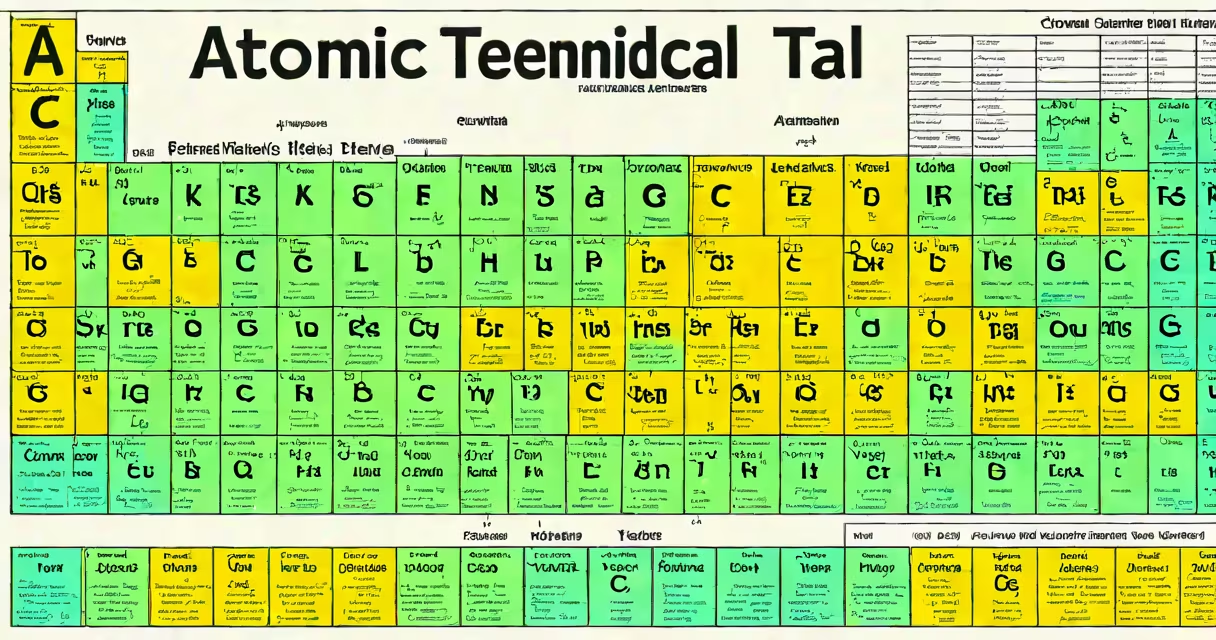
Elements are listed in the periodic table in order of increasing atomic number. The table's structure reflects recurring patterns in physical and chemical behavior. Elements in the same column (group) share similar properties due to comparable valence electron configurations. For instance, all Group 1 elements-lithium, sodium, potassium-are highly reactive metals that form +1 ions.
Atoms consist of protons, neutrons, and electrons. Protons define the element. Neutrons contribute to mass and stability but do not alter elemental identity. Electrons determine reactivity and bonding behavior. When atoms lose, gain, or share electrons, they form chemical bonds and create compounds.
For example, oxygen (atomic number 8) has 8 protons and typically 8 electrons. In its neutral state, it has 6 valence electrons and tends to form two covalent bonds, as seen in water (H₂O). Each hydrogen atom shares one electron with oxygen, completing the outer shell of both atoms.
Isotopes are variants of the same element with different neutron counts. Carbon-12 has 6 neutrons, carbon-14 has 8. Both are carbon because they have 6 protons. Carbon-14 is radioactive and used in radiocarbon dating. The existence of isotopes shows that atomic number-not mass-defines elemental identity.
Elements are categorized by physical and chemical traits. The periodic table divides them into metals, metalloids, and nonmetals. Metals dominate the left side and center. They conduct electricity, are malleable, and tend to lose electrons. Nonmetals occupy the upper right. They are poor conductors and often gain electrons. Metalloids lie along the staircase line between them and exhibit mixed properties.
| Type | Location in Periodic Table | Examples | Key Properties |
|---|---|---|---|
| Metal | Left and center | Sodium, Iron, Gold | Shiny, conductive, ductile |
| Nonmetal | Upper right | Oxygen, Chlorine, Sulfur | Brittle, poor conductors, reactive |
| Metalloid | Staircase line | Germanium, Arsenic, Antimony | Intermediate conductivity, semiconducting |
Elements are further grouped by reactivity. Alkali metals (Group 1) react violently with water. Noble gases (Group 18) rarely participate in reactions due to full valence shells. Fluorine, the most electronegative element, strips electrons from almost any substance it contacts.
Many assume that elements are defined by their appearance or weight. Iron is shiny and dense, but its identity comes from 26 protons. A sample of iron weighing 1 kg contains the same number of protons per atom as a 1-gram sample. Mass does not define the element.
Another error is equating elements with compounds. Water (H₂O) is not an element-it is a compound made of hydrogen and oxygen atoms. Similarly, salt (NaCl) combines sodium and chlorine. These mixtures are not elements, even though they contain elemental components.
Even within scientific communities, confusion persists about synthetic elements. Elements beyond uranium (atomic number 92) are man-made and unstable. They decay rapidly and exist only in particle accelerators. For example, oganesson (element 118) was synthesized in 2002 and decays in milliseconds. Despite their fleeting nature, they are still valid chemical elements because they have a defined atomic number.
Chemical elements underlie all matter. Oxygen makes up 21% of Earth's atmosphere and is essential for respiration. Silicon, the 14th element, forms the basis of semiconductor technology. Over 90% of transistors in modern electronics rely on silicon wafers derived from quartz, a mineral rich in silicon dioxide.
Consider iron (Fe, atomic number 26). It is the 26th element and the most abundant metal in Earth's crust. Iron is used in steel production, which accounts for over 90% of global metal usage. A single car uses approximately 1,200 kilograms of steel, mostly iron-based. Without iron's stable atomic structure and magnetic properties, electric motors and generators would not function.
Another example: iodine (I, atomic number 53). It is important for thyroid hormone production. A deficiency causes goiter, a condition affecting over 200 million people worldwide. Iodized salt-containing trace amounts of potassium iodide- prevents this disorder. The addition of iodine to salt is one of the most effective public health interventions in history.
In my lab work, I once observed a reaction between magnesium ribbon and hydrochloric acid. Magnesium (Mg, atomic number 12) reacted vigorously, producing hydrogen gas and heat. The fizzing was visible, and the solution warmed noticeably. After the reaction, only magnesium chloride remained-a compound formed by combining Mg²⁺ and Cl⁻ ions. This experiment confirmed that magnesium, as a chemical element, cannot be broken down further by ordinary chemical processes.
Understanding the difference between element, isotope, and ion is critical. An element is defined by proton count. An isotope varies in neutron count. An ion differs in electron count.
Take carbon: all carbon atoms have 6 protons. Carbon-12 has 6 neutrons, carbon-13 has 7, carbon-14 has 8. These are isotopes of the same element. Carbon-14 is used in archaeology to date organic remains up to 50,000 years old. The half-life of carbon-14 is 5,730 years, allowing precise age estimation.
When a carbon atom loses four electrons, it becomes a C⁴⁺ ion. This ion does not exist freely in nature but appears in high-energy environments like stellar interiors. The charge alters chemical behavior dramatically. A neutral carbon atom forms four covalent bonds; a C⁴⁺ ion would attract electrons strongly, behaving like a cation in plasma.
The International Union of Pure and Applied Chemistry (IUPAC) maintains the official list of chemical elements and assigns atomic numbers. IUPAC confirms that element 118, oganesson, was officially named in 2016 after synthesis at the Joint Institute for Nuclear Research in Dubna, Russia. The naming process required rigorous peer review and validation through multiple experimental runs.
According to the National Institute of Standards and Technology (NIST), the standard atomic weight of carbon is 12.0107 u. This value reflects the natural abundance of carbon isotopes-carbon-12 (98.9%), carbon-13 (1.1%), and trace carbon-14. NIST provides reference data used in analytical chemistry, materials science, and environmental monitoring.
These organizations ensure consistency in how elements are defined, measured, and applied across disciplines.
Understanding what chemical element means begins with atomic number. Every element is uniquely defined by its proton count. This principle governs everything from biological systems to industrial manufacturing. Recognizing elements by their atomic number-not name, color, or density-ensures accurate identification in science and engineering.