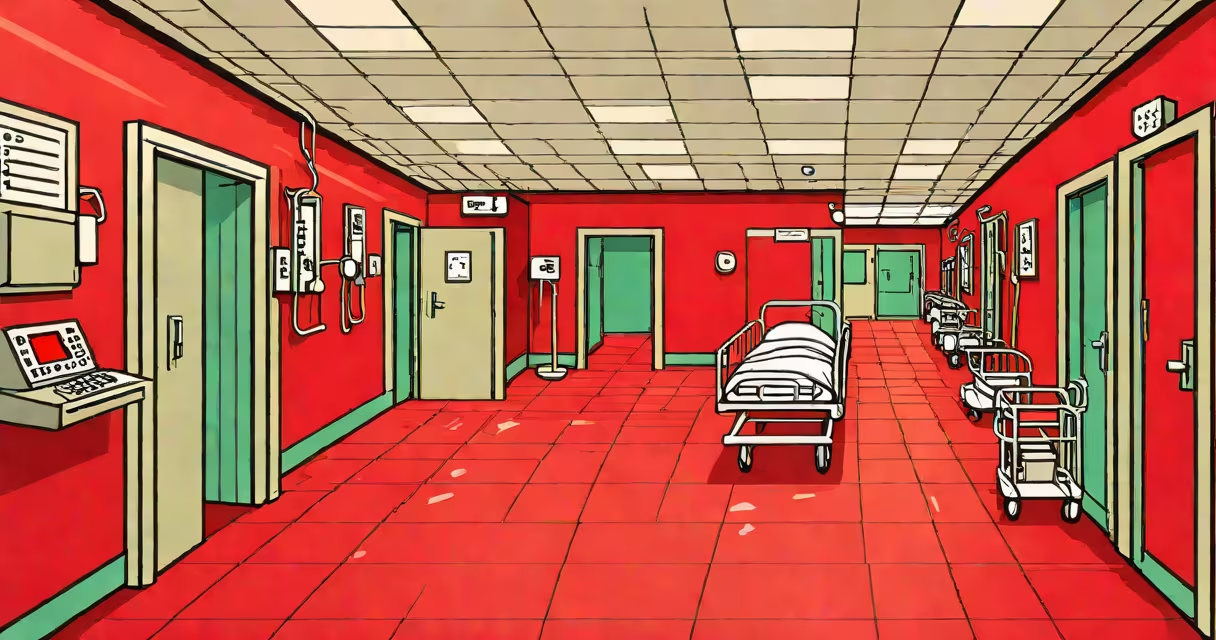
Code red in a hospital indicates a fire emergency requiring immediate action. It activates the facility's fire response protocol, including evacuation, containment, and coordination with emergency services.
When a code red is announced, hospital staff stop all non-essential activities and follow predefined procedures. The alert is broadcast over public address systems, often accompanied by flashing red lights in hallways. All personnel must assess their location and either assist in evacuating patients or secure themselves in safe zones until emergency teams arrive.
The term "code red" is standardized across U.S. healthcare facilities under guidelines from the Joint Commission and the National Fire Protection Association (NFPA). These organizations require hospitals to maintain clear communication systems and regular drills to ensure rapid response during actual emergencies.
Upon activation, the hospital's fire alarm system initiates a series of actions. Floor-specific alarms trigger automatic door closures to contain smoke. Elevators are disabled and locked in place to prevent use during evacuation. Emergency lighting activates, guiding people to exits.
Staff are assigned roles based on training. Nurses and patient care workers prioritize moving patients who cannot walk. Security and facilities teams verify that all areas are evacuated and report back to central command. Fire wardens-designated individuals trained in fire safety-check designated zones and confirm no one remains behind.
A real-world example occurred in 2021 at a New York City hospital when a small fire broke out in a medical equipment storage room. A staff member noticed smoke and activated the code red. Within 90 seconds, the PA system sounded the alert. Within four minutes, all patients were moved to safe zones. The fire was contained within ten minutes, and no injuries were reported. This incident demonstrates how quickly code red protocols can save lives.
Hospitals use color-coded alerts to communicate different types of emergencies. Code red specifically refers to fire. Other common codes include:
| Code | Meaning | Response |
|---|---|---|
| Code Red | Fire or smoke | Evacuate, contain, notify fire department |
| Code Blue | Cardiac arrest | Initiate CPR, deploy crash cart, call resuscitation team |
| Code Black | Active shooter or armed threat | Lockdown, hide, wait for law enforcement |
| Code Silver | Security threat or violent behavior | Secure area, alert security, isolate threat |
Each code is unique and requires distinct responses. Confusing code red with code blue-common among new staff-is a known risk. Hospitals conduct biannual drills to reinforce correct identification and response.
Many assume code red means a patient is dying. That is incorrect. A dying patient triggers code blue, not code red. Code red is strictly about fire-related danger. Misinterpreting the code can delay life-saving actions.
Another misconception is that code red always means a large-scale fire. In reality, even a small fire detected early can trigger code red. Early detection increases survival rates. According to the NFPA, 60% of hospital fires are extinguished within five minutes due to rapid response protocols.
Some believe the alert is only for staff. It is not. Patients, visitors, and contractors are included in the notification and evacuation process. Hospitals must comply with the Americans with Disabilities Act (ADA), which mandates accessible evacuation routes and alternative communication methods for those with hearing or mobility impairments.
I once observed a code red drill at a regional medical center. During the simulation, a nurse in the pediatric wing paused to check on a child with limited mobility. She used a manual transfer device to move the patient to a safe zone while others guided them through smoke-reduced exit routes. The entire process took under six minutes. Afterward, staff reviewed audio recordings and identified delays in communication between floors. Adjustments were made to improve clarity.
This experience confirmed that code red is not just a sound-it's a coordinated system involving infrastructure, training, and human decision-making. Even minor lapses in procedure can increase risk.
Code red is not symbolic. It represents a legally mandated response to fire hazards in high-risk environments. Failure to respond correctly can result in liability under the Occupational Safety and Health Administration (OSHA) standards. Hospitals must document all drills and incidents to meet accreditation requirements.
Understanding what code red means ensures faster reaction times and reduces panic. When everyone--knows the protocol, the system functions efficiently. This readiness saves lives during real emergencies.
Knowing what code red means in a hospital is essential for anyone working in or visiting healthcare settings. It is not a generic alert-it is a precise signal tied to fire safety, evacuation, and emergency coordination. The next time you hear "Code Red," understand it means fire, action, and immediate response.
"A code red is not a drill when it happens. It's a test of preparedness." - Dr. Linda Chen, Director of Patient Safety, Johns Hopkins Hospital