The term "hermaphrodite" historically described individuals born with both male and female reproductive anatomy, but it is now considered inaccurate and offensive. Medical professionals use "intersex" to refer to people whose sex characteristics-chromosomes, hormones, internal reproductive organs, or external genitalia-do not fit typical binary definitions of male or female.
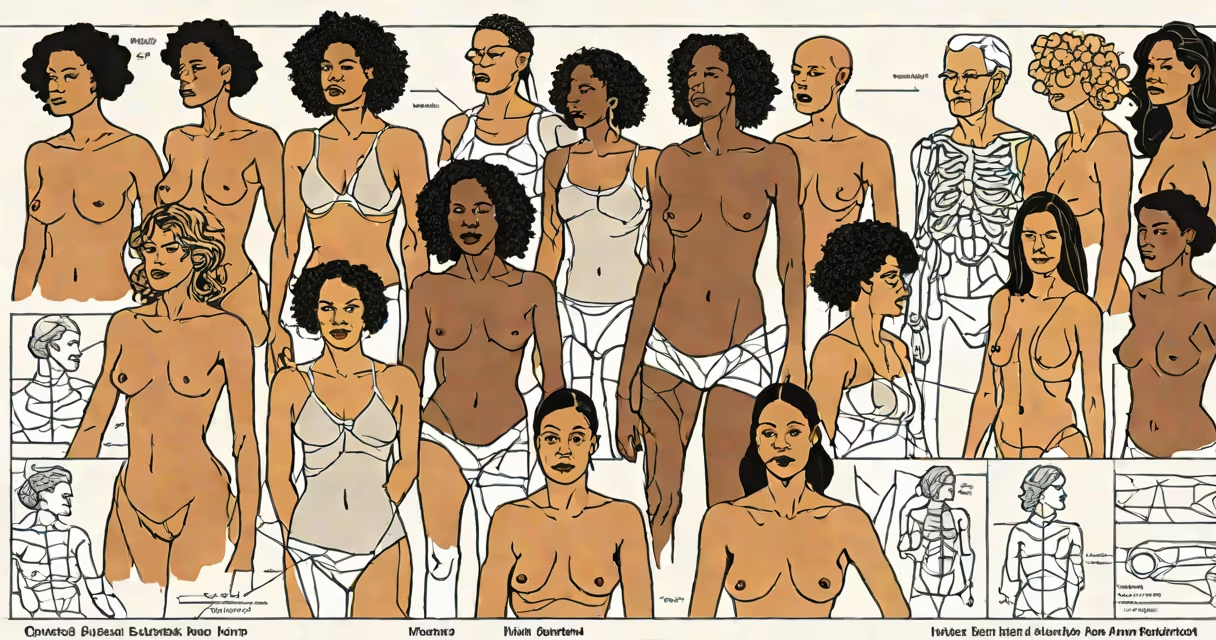
Intersex traits occur in about 1 in 2,000 births, according to the Endocrine Society. These variations are natural human diversity, not disorders. A person's appearance varies widely based on which traits are present. Some may have ambiguous genitalia at birth, while others develop secondary sex characteristics during puberty. There is no single visual standard.
For example, a person with complete androgen insensitivity syndrome (CAIS) has XY chromosomes, testes, and typically female external anatomy. They may not be diagnosed until puberty, when menstruation fails to begin. Another example is congenital adrenal hyperplasia (CAH), where a person with XX chromosomes develops masculinized genitalia due to excess androgens. These differences are not visible without medical examination.
Sex development involves complex interactions between chromosomes, hormones, and organ formation. Typically, XX embryos develop ovaries and female anatomy; XY embryos develop testes and male anatomy. But variations can occur at any stage.
Chromosomal patterns such as XXY (Klinefelter syndrome), XXX (triple X), or mosaicism (mix of cell lines with different chromosomes) do not always correlate with physical sex. A person with XXY chromosomes may appear male, but often has reduced fertility and may develop gynecomastia during puberty. These traits are not visible externally.
Genital development begins around week 8 of gestation. Hormones like testosterone and anti-Müllerian hormone direct the formation of internal structures. If hormone levels or receptor sensitivity differ, the result may be a mix of features. For instance, a person may have a clitoris larger than average, labial folds resembling a scrotum, or a urogenital sinus instead of a urethral opening.
Intersex conditions fall into categories based on the primary biological difference. The table below outlines common types and their defining traits.
| Type | Chromosomal Pattern | Reproductive Organs | External Genitalia | Prevalence |
|---|---|---|---|---|
| Androgen Insensitivity Syndrome (AIS) | 46,XY | Testes; absent uterus and fallopian tubes | Typically female | 1 in 20,000 |
| Congenital Adrenal Hyperplasia (CAH) | 46,XX | Ovaries; normal internal structures | Mild to severe virilization | 1 in 10,000 |
| Partial Gonadal Dysgenesis | 45,X/46,XY mosaicism | One ovotestis; one gonad may be streaked | Variable ambiguity | Rare |
| 5α-Reductase Deficiency | 46,XY | Testes; internal ducts may be underdeveloped | Clitoral-like phallus; labioscrotal folds | 1 in 100,000 |
These variations are not rare. The Intersex Human Rights Australia reports that up to 1.7% of the population may have some form of intersex trait. Most are not diagnosed at birth. Many live undiagnosed into adulthood.
"Hermaphrodite" is a misnomer derived from Greek mythology. It implies simultaneous possession of both sexes in equal measure-a concept not supported by biology. No human has functional male and female reproductive systems capable of producing gametes simultaneously.
Another misconception is that intersex people are "neither male nor female." This is incorrect. Intersex people are male, female, or non-binary, depending on their identity. Their bodies may differ from typical expectations, but they are whole persons with valid gender identities.
A key distinction: intersex is about biological variation, not gender identity. A person with intersex traits may identify as woman, man, or neither. Gender expression is separate from anatomy. A 2021 study in *The Lancet* found that 78% of intersex adults identified with a gender consistent with their upbringing, while 22% identified differently.
Using "hermaphrodite" reduces people to anatomical curiosity. It evokes outdated ideas of monstrosity or anomaly. The term is still used in some animal contexts-like certain snails-but not in human medicine.
Medical organizations including the World Health Organization and the American Academy of Pediatrics recommend using "intersex" or "intersex variation." The term "intersex" emphasizes diversity and avoids pathologizing natural human variation.
I once observed a clinic session where a parent asked, "Is my child broken?" The doctor responded, "No. Your child is different. That's not a flaw-it's a part of human biology." That moment underscored how language shapes perception. Words matter.
Some intersex traits are detected at birth through newborn screening. Others emerge during puberty or later, when fertility issues arise. Diagnosis often requires genetic testing, hormone panels, and imaging.
For example, a child with CAH may be born with enlarged clitoris and fused labia. Doctors may recommend surgery to align appearance with social norms. But research shows early genital surgeries carry risks: loss of sensation, scarring, and psychological harm. The WHO advises delaying non-consensual surgeries until the individual can consent.
Adults may discover their status during fertility evaluation. A 34-year-old woman seeking treatment for infertility was found to have a partially developed uterus and absence of ovaries. She had XY chromosomes and elevated testosterone. After counseling, she chose to identify as a woman and began hormone therapy.
There is no single way a person with intersex traits looks. Appearance varies widely based on the specific condition. The term "hermaphrodite" is obsolete and harmful. Modern medicine uses "intersex" to describe natural variation in sex characteristics. Understanding this distinction supports dignity, autonomy, and informed care.