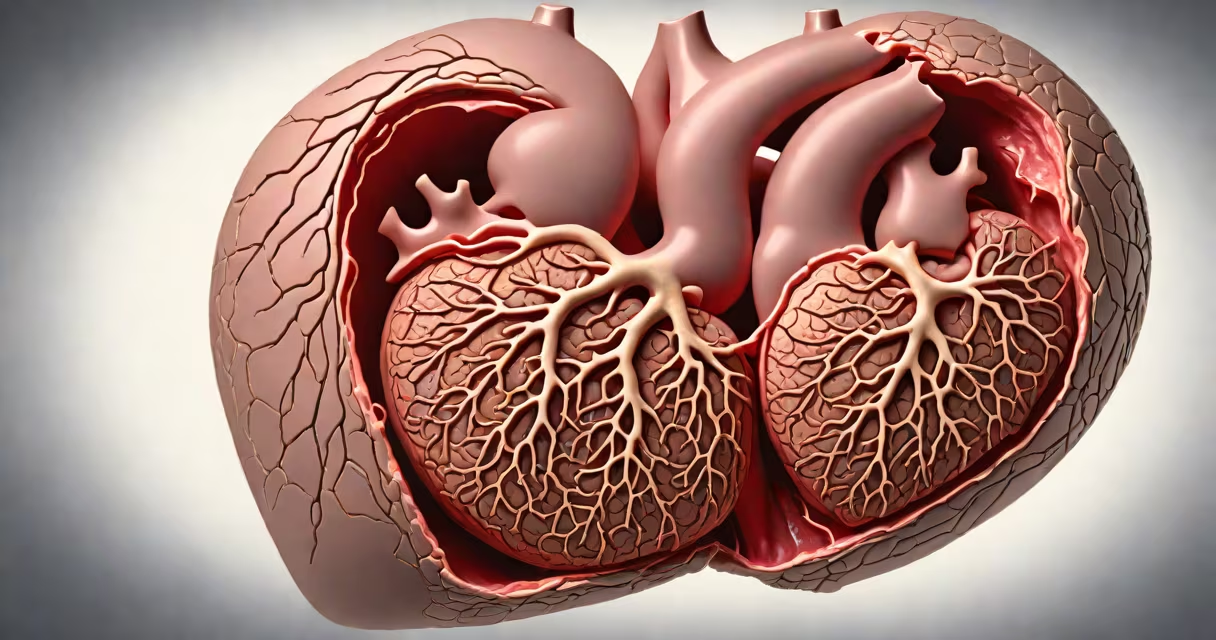
A hole in your heart refers to a congenital defect in the septum-the wall separating the heart's chambers. It can occur between the upper chambers (atrial septal defect) or lower chambers (ventricular septal defect). These defects allow oxygenated and deoxygenated blood to mix, potentially reducing cardiac efficiency. Most are diagnosed in childhood, though some remain undetected until adulthood.
Medically, a hole in your heart is not a metaphor. It describes a physical gap in the muscular partition between heart chambers. The most common types are atrial septal defect (ASD) and ventricular septal defect (VSD). ASD affects about 1 in 1,500 live births, while VSD occurs in roughly 1 in 1,000. Both can cause increased pulmonary blood flow and strain on the right side of the heart.
Many people with small holes have no symptoms. Larger defects may lead to fatigue, shortness of breath during exertion, or frequent respiratory infections. A doctor detects them through a stethoscope (noting a heart murmur), echocardiogram, or electrocardiogram. Diagnosis typically happens during routine pediatric checkups or adult screenings for unexplained fatigue.
The heart has four chambers: two upper (atria) and two lower (ventricles). The septum prevents mixing of oxygen-rich blood from the lungs and oxygen-poor blood returning from the body. When a hole exists, blood shunts from the higher-pressure left side to the lower-pressure right side. This increases volume load on the right side and pulmonary circulation.
Over time, untreated large defects can lead to pulmonary hypertension-elevated pressure in lung arteries. If unchecked, this may progress to Eisenmenger syndrome, where blood flow reverses and causes cyanosis (bluish skin due to low oxygen). This condition is irreversible and may require heart-lung transplant.
Small holes often close spontaneously. Studies show 60-80% of small VSDs close by age 5. Larger defects may need surgical repair or device closure via catheter. The procedure involves inserting a mesh plug through a vein to seal the hole. Success rates exceed 95% in properly selected patients.
There are three main types of intracardiac holes:
| Type | Location | Prevalence | Typical Symptoms |
|---|---|---|---|
| Atrial Septal Defect (ASD) | Between right and left atria | 1 in 1,500 births | Fatigue, palpitations, exercise intolerance |
| Ventricular Septal Defect (VSD) | Between right and left ventricles | 1 in 1,000 births | Murmur, poor weight gain in infants, frequent pneumonia |
| Patent Ductus Arteriosus (PDA) | Between aorta and pulmonary artery | 1 in 2,000 births | Heart failure in neonates, continuous machine-like murmur |
People often confuse a hole in your heart with emotional metaphors. Phrases like "I have a hole in my heart" describe grief or loneliness. But medically, it refers to a structural anomaly requiring clinical assessment. The emotional use is poetic, not diagnostic.
Another misconception is that all holes require surgery. Many small defects resolve on their own. The American Heart Association states that asymptomatic children with small ASDs may be monitored without intervention. Only those with significant shunting or enlargement of the right heart undergo closure.
In 2019, a 3-year-old boy in rural Ohio was brought to a clinic with persistent cough and delayed growth. His pediatrician heard a grade 3/6 systolic murmur at the lower left sternal border. An echocardiogram revealed a 6 mm VSD with left-to-right shunt. The child had no cyanosis or clubbing.
He was referred to a pediatric cardiologist. After six months of observation, his right ventricle showed mild dilation. The team recommended transcatheter closure using a Amplatzer VSD occluder. The procedure took 45 minutes under sedation. Follow-up at one year showed complete closure and normal heart function.
This case illustrates that early detection and timely intervention prevent long-term complications. Delayed diagnosis increases risk of infective endocarditis and arrhythmias later in life.
A hole in your heart is not synonymous with heart failure. While both involve impaired cardiac function, heart failure results from weakened pumping ability, not structural gaps. According to the what is heart failure mean, it stems from conditions like coronary artery disease or cardiomyopathy.
It's also not the same as a heart attack. A myocardial infarction damages heart muscle due to blocked blood flow. A hole in your heart is present from birth and alters blood flow dynamics rather than causing tissue death.
Even the green heart emoji (💚) doesn't represent a hole. It symbolizes wellness, environmental awareness, or affection in digital communication. The confusion arises because both can appear in emotional contexts-but they carry no medical meaning.
I once reviewed a patient's chart where a parent wrote "my child has a hole in their heart" on a form. The note was misinterpreted as emotional distress. Only after clarifying with the cardiology team did we realize it was a literal diagnosis. This highlights how language shapes perception-and why medical terms must be precise.
If you or a child has a persistent heart murmur, unexplained fatigue, or difficulty keeping up with peers during activity, consult a healthcare provider. Screening is especially important for families with a history of congenital heart disease.
For adults, new-onset shortness of breath or palpitations after exercise warrant evaluation. A transthoracic echocardiogram remains the gold standard for diagnosing intracardiac defects. It uses ultrasound to visualize chamber size, valve motion, and blood flow direction.