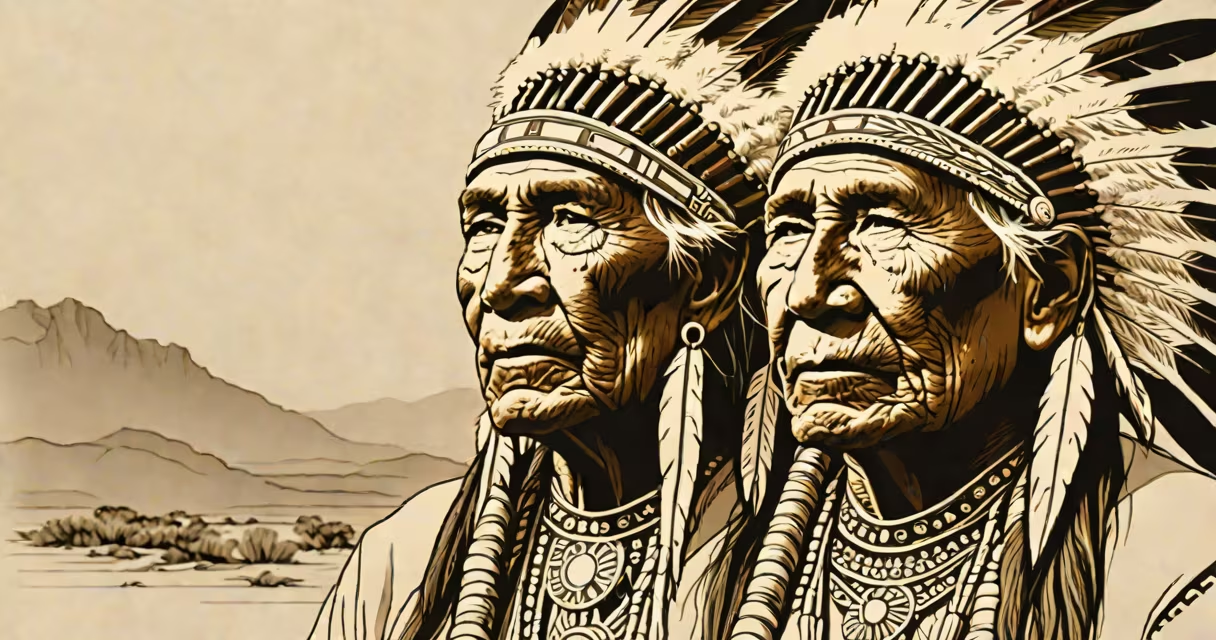
Indigenous American describes the original inhabitants of the Americas who have lived on the continent for thousands of years, maintaining distinct cultures, languages, and connections to specific territories long before European colonization began.
The term applies to over 570 federally recognized tribes in the United States alone, as well as numerous First Nations communities in Canada and Indigenous groups across Latin America. These populations share historical continuity with pre-contact societies, often preserving oral traditions, spiritual practices, and governance systems rooted in ancestral territory.
According to the United Nations Permanent Forum on Indigenous Issues, Indigenous peoples are those who have historical continuity with pre-colonial societies that developed on their territories. This definition emphasizes both cultural survival and territorial connection, not just ancestry.
When someone identifies as Indigenous American, they are affirming a relationship to a specific nation, clan, or community with documented lineage and cultural affiliation. This is not a broad racial category but a political and cultural identity tied to sovereignty and self-determination.
For example, the Navajo Nation spans parts of Arizona, New Mexico, and Utah. Members identify as Diné, the Navajo word for "the people." Their language, governance structure, and ceremonial life are deeply connected to the land. Federal recognition grants them authority over education, law enforcement, and resource management within their reservation boundaries.
Similarly, the Māori of Aotearoa (New Zealand) are sometimes included in global discussions about Indigenous rights, though they are not American. This illustrates that while "Indigenous American" refers specifically to the Western Hemisphere, the concept of Indigenous identity shares common principles across continents.
Not all Indigenous Americans belong to the same linguistic, geographic, or historical group. The diversity among nations is vast. The following table outlines key differences:
| Region | Language Family | Self-Identification | Key Cultural Trait |
|---|---|---|---|
| Southwest U.S. | Uto-Aztecan | Navajo (Diné) | Complex sand painting ceremonies |
| Great Lakes | Ojibwe (Algonquian) | Anishinaabe | Seven Grandfather Teachings |
| Pacific Northwest | Salishan | Squamish | Hereditary chief system |
| Amazon Basin | Many families | Yawanawá | Shaman-led healing rituals |
Each group maintains unique relationships with land, water, and spiritual beings. Some, like the Hopi, practice seasonal agricultural cycles based on centuries-old astronomical observations. Others, such as the Inuit in Alaska and northern Canada, rely on ice-based navigation and hunting techniques passed down through generations.
A non-obvious distinction: Not all Indigenous Americans live on reservations or federal trust lands. Some communities, particularly in urban areas, maintain cultural identity without formal land ownership. The National Urban Indian Family Coalition reports that over 70% of Native Americans reside in cities, where they sustain traditions through cultural centers, powwows, and language revitalization programs.
"Indigenous American" is frequently misunderstood as synonymous with "Native American," "American Indian," or "First Nations." While these terms overlap, they differ in legal and cultural context.
"Native American" is a U.S.-specific legal term established by the Indian Civil Rights Act of 1968. It defines eligibility for federal services and tribal enrollment. However, it excludes many Indigenous peoples in Mexico, Central America, and South America.
"First Nations" is a Canadian term referring to status and non-status bands under the Indian Act. It does not apply to Indigenous peoples in the United States or Latin America.
Another misconception: Indigenous identity is not determined solely by DNA. While genetic testing can reveal ancestral origins, tribal membership is governed by blood quantum laws, matrilineal descent rules, or council decisions. For example, the Cherokee Nation requires at least one-sixteenth degree of Cherokee blood and proof of descent from someone listed on the Dawes Rolls (1906-1914).
I once attended a cultural workshop hosted by the Lumbee Tribe in North Carolina. Despite being one of the largest unrecognized tribes in the U.S., they presented a detailed history of treaty negotiations, language preservation efforts, and intergenerational trauma related to forced assimilation. Their emphasis was not on biological purity but on ongoing cultural resilience-a lesson that reshaped my understanding of what it means to be Indigenous.
Recognizing someone as Indigenous American affirms their rights under international law. The UN Declaration on the Rights of Indigenous Peoples (UNDRIP), adopted in 2007, guarantees rights to land, self-governance, and cultural expression. The U.S. government formally endorsed UNDRIP in 2010, though implementation remains uneven.
For instance, the Standing Rock Sioux Tribe's opposition to the Dakota Access Pipeline in 2016 was grounded in treaty rights and environmental protection. The U.S. Department of State acknowledged that the project threatened sacred sites and water sources important to the tribe's survival.
Indigenous American identity is not static. It evolves through resistance, adaptation, and innovation. Contemporary movements like #LandBack advocate for the return of ancestral territories to Indigenous stewardship. The movement draws on historical treaties, court rulings, and direct action to assert jurisdiction over land and resources.
Understanding what "Indigenous American" means involves moving beyond stereotypes. It requires acknowledging the enduring presence of diverse nations whose identities are shaped by centuries of survival, resistance, and cultural continuity.
Recognizing this term correctly supports justice, accountability, and accurate representation in policy, media, and education.