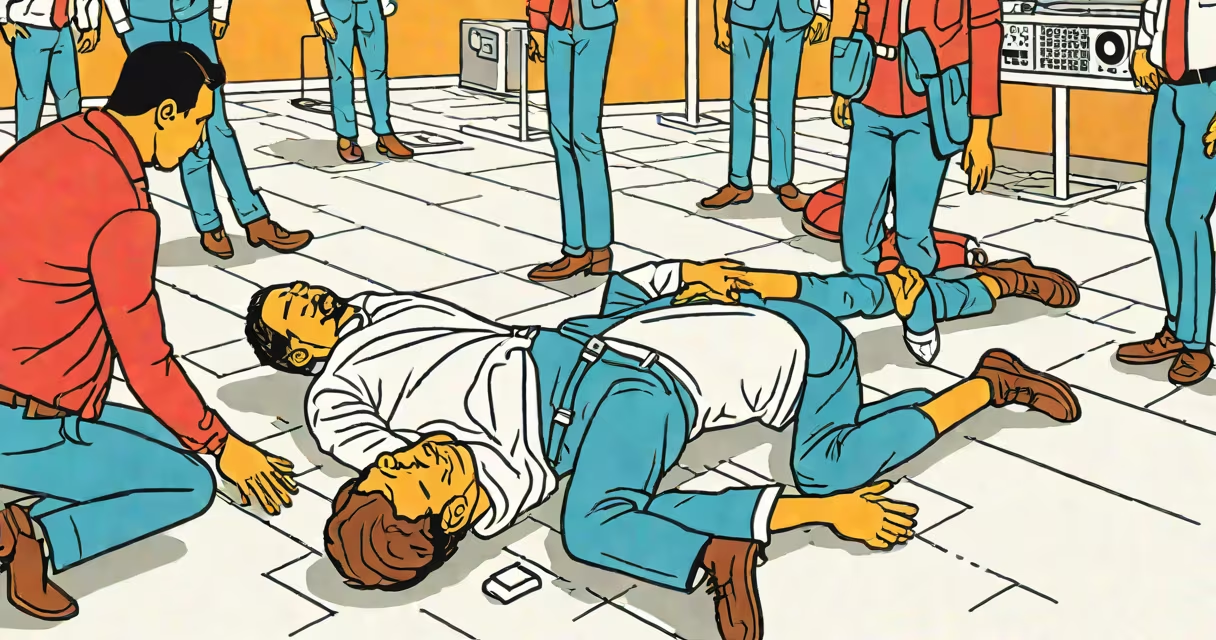
Cardiac arrest occurs when the heart suddenly stops beating effectively, halting blood flow to the brain and important organs. Without immediate intervention, death follows within minutes. This is not a heart attack-it's a failure of the heart's electrical system.
Cardiac arrest results from ventricular fibrillation, a chaotic quivering of the heart's lower chambers. The heart cannot pump blood, leading to loss of consciousness and absence of pulse within seconds. Brain damage begins after 4 minutes without oxygenated blood. Survival drops by 10% per minute beyond that.
According to the American Heart Association, about 356,000 out-of-hospital cardiac arrests occur annually in the U.S., with survival rates below 12%. Yet, with bystander CPR and early defibrillation, survival increases to 60% in some urban areas. The key factor is time-every second counts.
Within 10 seconds of cardiac arrest, a person loses consciousness. Breathing stops or becomes gasping. Pulse vanishes. The body enters a state of circulatory collapse. Without blood flow, cells begin dying due to lack of oxygen.
Brain cells are especially vulnerable. Neurons start deteriorating after 4 minutes without oxygen. After 6 minutes, irreversible damage is likely. By 10 minutes, recovery is extremely rare even with advanced care. This timeline underscores why rapid response is critical.
During arrest, the body may exhibit agonal gasps-irregular, labored breaths lasting 10 to 30 seconds. These are not normal breathing and indicate the brain is still receiving minimal blood. Bystanders often mistake them for signs of life, delaying CPR. Recognizing agonal gasps as a sign of arrest improves response speed.
Cardiac arrest is not a single condition. It stems from several underlying causes, most of which involve abnormal heart rhythms.
| Cause | Frequency | Key Risk Factors |
|---|---|---|
| Ventricular fibrillation (VF) | ~70% | Coronary artery disease, prior heart attack |
| Asystole (flatline) | ~20% | Severe hypoxia, trauma, drug overdose |
| Pulseless electrical activity (PEA) | ~10% | Electrolyte imbalance, pulmonary embolism |
VF is the most treatable form. Defibrillation within 3 minutes can restore normal rhythm in up to 70% of cases. Asystole and PEA have lower survival rates because they don't respond to shock. Treatment focuses on reversing the underlying cause-such as correcting potassium levels or treating a massive blood clot.
A common misconception is that cardiac arrest always happens in older adults with heart disease. While risk increases with age, 10% of cases occur in people under 35. Causes in younger individuals include congenital heart defects, arrhythmias like long QT syndrome, and drug use (especially stimulants).
Survival hinges on three actions: recognizing arrest, calling emergency services, and starting CPR. The chain of survival begins with bystander recognition.
When someone collapses and doesn't respond, check for breathing and pulse. If absent, shout for help and activate emergency services. Begin chest compressions at 100-120 per minute, pushing hard and fast in the center of the chest. Compression-only CPR is effective for lay responders and reduces hesitation.
For every minute without defibrillation, survival decreases by 7-10%. Automated external defibrillators (AEDs) are designed for public use. They analyze heart rhythm and deliver a shock if needed. AEDs are safe-only shocking when necessary. In cities with widespread AED access, survival rates nearly double.
I witnessed this in action during a training session at a community center. A man collapsed while using the treadmill. A staff member recognized the signs, called 911, and retrieved the AED from the wall. Within 3 minutes, the device advised a shock. The man regained a pulse and was transported to hospital. He survived with no neurological deficits. This outcome wasn't luck-it was the result of preparedness and timely action.
Cardiac arrest is often mistaken for a heart attack. A heart attack occurs when blood flow to part of the heart is blocked, usually by a clot. It may cause chest pain, shortness of breath, and nausea-but the heart keeps beating. A heart attack can lead to cardiac arrest, but they are distinct events.
Another error is assuming that only medical professionals can save someone. Bystander CPR doubles survival odds. The American Heart Association reports that 45% of cardiac arrest survivors received CPR from a layperson. Training takes less than 30 minutes and can be learned through free online courses.
Some believe defibrillation is dangerous or requires expertise. AEDs are programmed to deliver shocks only when indicated. They provide voice prompts and visual cues. Even children as young as 8 can use them correctly under supervision.
Survivors of cardiac arrest face a high risk of complications. About 50% experience cognitive impairment, memory loss, or mood disorders after discharge. Neurological recovery depends on how quickly blood flow was restored.
Post-arrest care includes therapeutic hypothermia-cooling the body to 32-34°C for 24 hours-to reduce brain swelling and improve outcomes. This treatment is standard in hospitals with specialized cardiac units.
Recovery varies. Some patients return to work within months. Others require long-term rehabilitation. Survivors often undergo implantable cardioverter-defibrillator (ICD) placement to prevent future episodes. ICDs monitor heart rhythm and deliver shocks automatically if VF recurs.
Survival is not guaranteed. But every second of delay reduces the chance of meaningful recovery. That's why public access to AEDs and CPR training is essential. Communities with high bystander intervention rates see better outcomes-even in rural areas.
Understanding what happens when someone goes into cardiac arrest clarifies why immediate action saves lives. Recognizing the signs, calling emergency services, performing CPR, and using an AED are proven steps that increase survival by up to sixfold. Knowing this changes outcomes-and potentially saves a life.