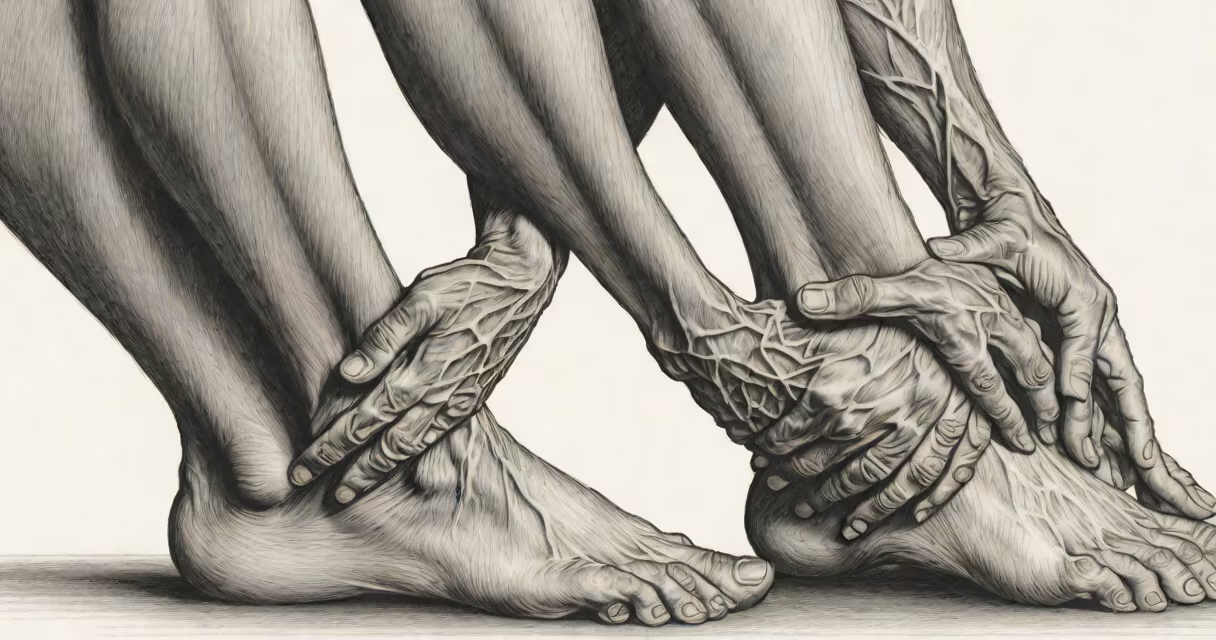
When your muscle cramps, a sudden, involuntary contraction occurs in a skeletal muscle, causing sharp pain and temporary immobility. This happens due to disrupted nerve signals or electrolyte imbalances, often during physical exertion or at night. The affected muscle tightens and remains contracted until the spasm resolves, typically within seconds to minutes.
Cramping results from a misfire in the communication between nerves and muscles. Normally, nerves send signals to relax muscles after contraction. When this system fails, the muscle stays locked in place. The most common sites are calves, feet, thighs, and hands. Cramps are usually brief but can be intense enough to wake someone from sleep or halt activity mid-exercise.
Research from the American Journal of Physiology - Regulatory, Integrative and Comparative Physiology confirms that muscle cramps are linked to altered neuromuscular control rather than just dehydration or low potassium. A 2017 study showed that athletes who experienced cramps had higher levels of neural excitability in their motor neurons during endurance events, suggesting the root cause lies in nerve signaling, not just mineral depletion.
Cramps begin when sensory feedback from muscles-like stretch or tension-is misinterpreted by the spinal cord. This triggers a reflexive contraction that overrides voluntary control. The process is automatic and cannot be stopped by willpower alone. Once initiated, the muscle contracts forcefully and resists relaxation.
Electromyography (EMG) studies show that during a cramp, muscle fibers fire continuously at high frequency, sometimes exceeding 100 impulses per second. This sustained firing leads to the hard, knotted sensation people describe. The pain arises from both the mechanical stress on tissues and activation of nociceptors-pain-sensing nerve endings.
A real-world example: a runner completing a half-marathon may develop a calf cramp during the last mile. Despite hydration and salt intake, the prolonged repetitive motion fatigues the muscle's ability to regulate contraction cycles. The nervous system responds by increasing motor neuron output, leading to a cramp that forces the runner to stop and walk.
Not all cramps are the same. They fall into categories based on timing and cause:
| Type | Common Causes | Typical Timing | Example |
|---|---|---|---|
| Exercise-associated | Dehydration, electrolyte loss, fatigue | During or shortly after activity | Runner's cramp in the calf |
| Nocturnal | Low calcium or magnesium, reduced blood flow | At night, while sleeping | Leg cramp waking someone up |
| Occupational | Prolonged standing or repetitive movement | During work hours | Office worker with hand cramps from typing |
| Medical condition-related | Peripheral artery disease, nerve compression, pregnancy | Unpredictable, often recurring | Pregnant woman experiencing frequent leg cramps |
While dehydration and low potassium are frequently blamed, recent evidence shows they're less central than once believed. The International Olympic Committee consensus statement on muscle cramps (2016) states that muscle fatigue is the primary trigger, especially in endurance sports. Electrolytes play a supporting role, but correcting them doesn't always prevent cramps.
Cramps are often confused with other muscle issues. A muscle spasm is a brief, localized twitch-usually harmless and not painful. A strain involves tearing of muscle fibers, causing lingering soreness and swelling. A cramp is distinct because it's sudden, severe, and short-lived.
Another misconception is that cramps always mean you're dehydrated. While fluid balance affects muscle function, studies show that even well-hydrated individuals experience cramps. A 2019 study published in Medicine & Science in Sports & Exercise found that cramp incidence among marathon runners didn't correlate with urine concentration (a marker of hydration), but did correlate with race pace and muscle fatigue.
I once witnessed a cyclist collapse mid-race due to a severe thigh cramp. He was drinking electrolyte solution regularly and had adequate salt intake. After stopping and stretching, he recovered in under a minute. The event wasn't about fluids-it was about neuromuscular fatigue. That moment confirmed that cramps aren't just about what's in your body, but how your nervous system manages muscle control under stress.
Most cramps resolve on their own. Immediate relief comes from stretching the affected muscle. For a calf cramp, stand and press the foot flat against the floor while leaning forward. Hold for 15-30 seconds. This stretches the muscle and resets nerve signals.
Prevention focuses on gradual training, proper warm-ups, and consistent stretching. A 2020 randomized trial found that daily calf stretching reduced nocturnal cramps by 50% in older adults. No supplement or drink replaced the benefit of consistent movement.
Understanding what happens when your muscle cramps reveals that it's not a failure of the muscle itself, but a breakdown in the nervous system's regulation. The body doesn't "run out" of potassium or water-it misinterprets signals under stress. Recognizing this shifts focus from blaming diet to managing fatigue and movement patterns.
Knowing the difference between a cramp and other muscle issues prevents unnecessary worry. Most episodes are brief and manageable. But persistent or unexplained cramps require medical evaluation. What happens when your muscle cramps is not just pain-it's a signal from your neuromuscular system that something needs attention.