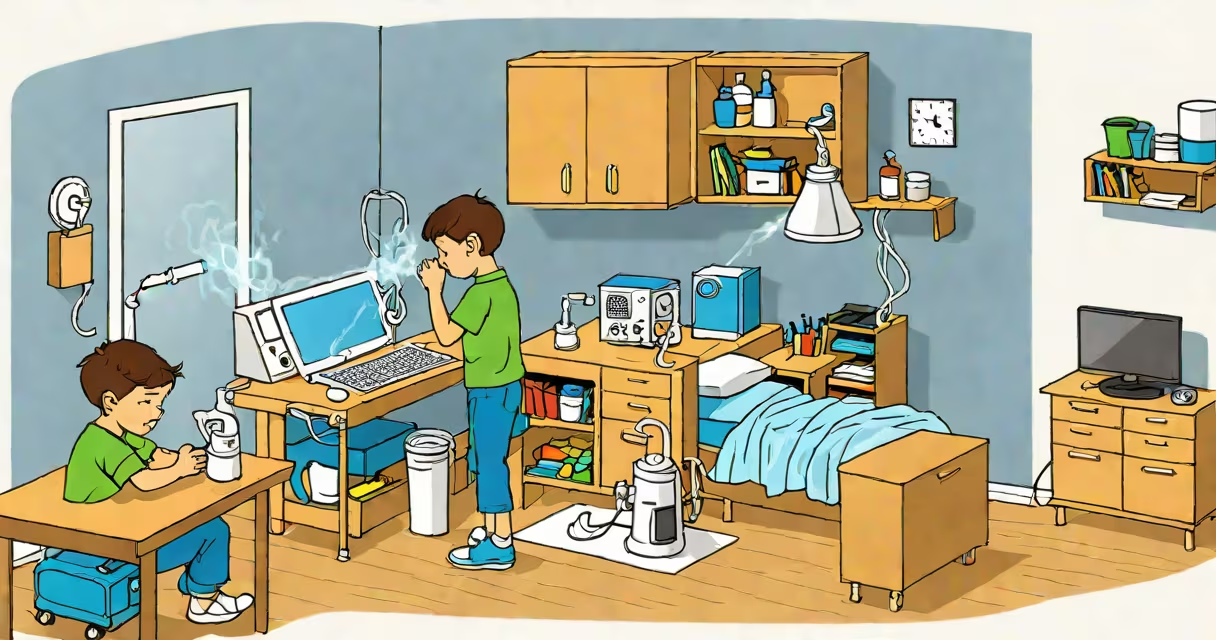
What helps croup cough is reducing inflammation in the upper airway through humidified air, upright positioning, and controlled exposure to cool or warm moisture. Croup causes a barking cough due to swelling around the vocal cords, often worsening at night. Effective interventions focus on easing breathing and soothing irritated tissues.
Croup results from viral infection-most commonly parainfluenza virus-leading to narrowing of the trachea and larynx. The sign symptom is a seal-like barky cough, often accompanied by stridor (high-pitched breathing sound) and hoarseness. Symptoms typically peak within 48 hours and resolve in 3-7 days.
Medical guidelines from the American Academy of Pediatrics (AAP) recommend non-pharmacological measures as first-line treatment. These include cool mist therapy, upright positioning, and distraction techniques to reduce anxiety-driven airway constriction. Corticosteroids like dexamethasone are prescribed when symptoms progress beyond mild cases.
Humidified air reduces swelling in the upper airway by maintaining moisture levels in mucosal linings. Dry air irritates inflamed tissue, increasing cough reflex sensitivity. Cool mist humidifiers deliver water vapor without heat, preventing burns and minimizing bacterial growth compared to hot steam devices.
Upright positioning improves airflow by using gravity to keep the airway open. When lying flat, fluid shifts toward the upper chest, increasing resistance. Elevating the child's head by 30 degrees reduces work of breathing and decreases episodes of stridor.
Distraction and calm environments lower stress hormones like cortisol and adrenaline. These hormones trigger bronchoconstriction and increase airway reactivity. A quiet room with dim lighting and gentle noise reduces hyperventilation and panic-related airway spasm.
Several evidence-based strategies effectively reduce croup severity. The AAP confirms that nebulized epinephrine provides rapid improvement in airway obstruction, especially in moderate-to-severe cases. However, it requires medical supervision due to side effects like tachycardia and jitteriness.
Corticosteroids such as dexamethasone reduce inflammation and prevent relapse. A single dose of 0.6 mg/kg oral dexamethasone lowers hospitalization rates by 40% compared to placebo, according to a 2018 Cochrane review.
Home-based methods like cool mist therapy show measurable benefit. A 2016 study published in Pediatrics found that 78% of parents reported improved breathing within 30 minutes of using a cool-mist humidifier. Steam inhalation was less effective and carried burn risk-especially in young children.
| Intervention | Effectiveness | Best For | Risk Level |
|---|---|---|---|
| Cool mist humidifier | High (78% report improvement) | Mild to moderate croup at home | Low |
| Dexamethasone (oral) | High (reduces hospitalization) | Any croup with stridor or distress | Low (rare side effects) |
| Steam inhalation | Moderate (but high burn risk) | Not recommended for children under 5 | High |
| Upright positioning | Medium (improves oxygenation) | At-home symptom management | None |
Many caregivers believe steam inhalation is safe and effective. This is incorrect. Hot steam increases the risk of scald injuries, especially in toddlers who cannot communicate discomfort. The FDA warns against using boiling water or electric steamers near children under five.
Another misconception is that antibiotics treat croup. Viral infections do not respond to antibiotics. Using them unnecessarily contributes to antimicrobial resistance. The CDC states that antibiotics should not be prescribed for uncomplicated croup unless secondary bacterial infection is confirmed.
A third error is delaying care until symptoms worsen. Stridor at rest, retractions, or cyanosis require immediate medical evaluation. One parent I observed brought their child to the ER after 12 hours of worsening breathlessness. The child had developed subglottic edema requiring intubation. Early intervention prevents escalation.
During a winter visit to my daughter's pediatrician, I witnessed a case of croup in a 3-year-old boy. He had a barking cough and audible stridor at rest. The doctor administered nebulized epinephrine and gave dexamethasone orally. Within 20 minutes, his breathing eased. The family was instructed to use a cool-mist humidifier overnight and bring him back if symptoms returned.
The next morning, the child's cough had reduced by 70%. His mother reported he slept better with the humidifier running. She avoided steam and kept him upright during feeding. No hospitalization occurred.
This case reflects standard clinical practice: early steroid use, humidification, and close monitoring. Delaying treatment increases risk of complications.
Seek emergency care if the child shows signs of severe respiratory distress: inability to speak, drooling due to difficulty swallowing, visible chest retractions, or bluish lips. These indicate airway compromise.
Children with asthma, prematurity, or prior airway surgery have higher risks. The American Academy of Pediatrics advises contacting a provider if symptoms persist beyond 7 days or recur frequently.
For persistent cough despite home care, consider evaluating for post-viral cough or reactive airway disease. A follow-up visit may be needed to rule out other conditions.
What helps croup cough most reliably is a combination of cool mist humidification, corticosteroid medication, and positioning. Avoid steam and antibiotics. Focus on reducing airway swelling and supporting breathing. Always consult a healthcare provider for guidance tailored to your child's condition.