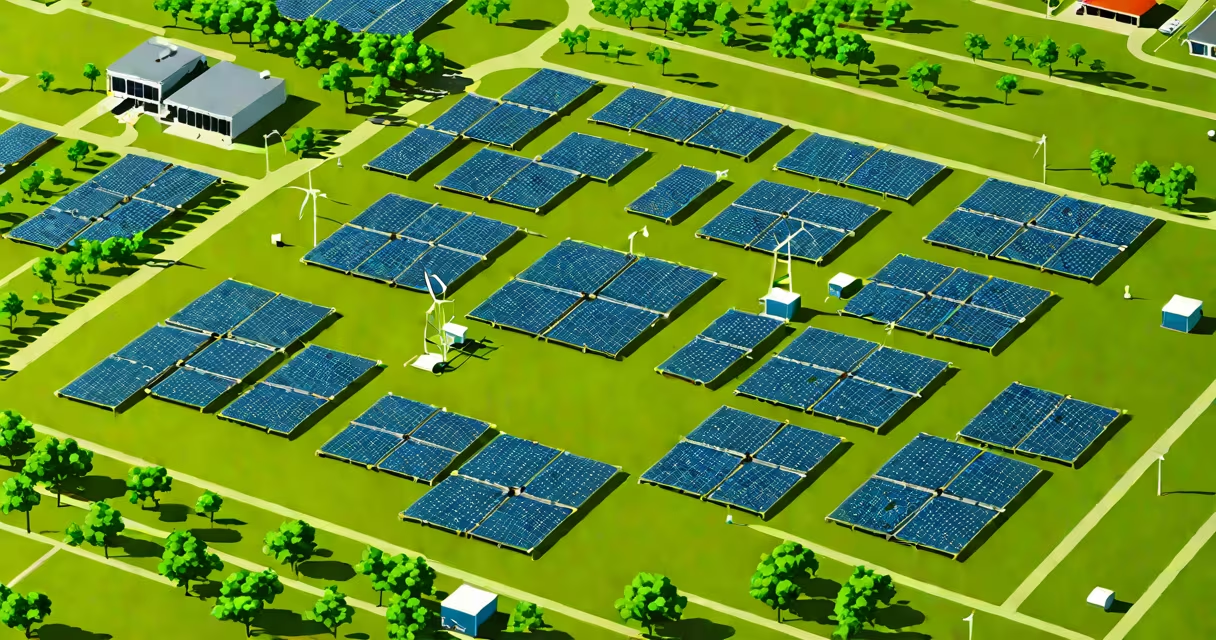
Community solar is a shared solar energy program where multiple individuals or organizations subscribe to a single off-site solar range and receive credit on their electricity bills for the power it generates. Participants do not install panels on their roofs-they join a local project and benefit from clean energy without ownership or installation costs.
These projects are typically located on rooftops, brownfields, or unused land within a utility service area. The electricity generated flows into the grid, and subscribers receive financial credits based on their share of the output. This model expands access to solar power for renters, low-income households, and those with shaded or structurally unsuitable roofs.
According to the National Renewable Energy Laboratory (NREL), over 1,000 community solar projects were operational in the U.S. by 2023, with capacity exceeding 1.5 gigawatts. The U.S. Department of Energy reports that 60% of Americans live in areas with at least one community solar option available.
Participants sign up through a developer or utility-run program. They choose a subscription size-typically measured in kilowatt-hours (kWh)-based on their expected electricity usage. Once enrolled, they begin receiving bill credits proportional to the energy produced by their allocated share of the solar range.
Credits appear on monthly utility bills. If the system produces more energy than the subscriber uses, excess credits may roll over or be paid out annually, depending on state rules. Most programs allow cancellation with 30-90 days' notice, though early exit fees may apply.
A real-world example: In Minneapolis, the city's "Solar Share" program allows residents to subscribe to a 2-megawatt solar facility in North Loop. A household using 600 kWh per month can buy a 100-kW share, which generates about 130 kWh/month. That covers roughly 22% of their average usage, reducing their bill by $25-$35 monthly.
Projects fall into three categories based on ownership and delivery method:
| Type | Ownership | Delivery Method | Best For |
|---|---|---|---|
| Utility-Owned | Public utility or municipal agency | Direct bill credit via utility | Residents in regulated markets; stable pricing |
| Private Developer | Third-party company | Billed through utility; often includes long-term contracts | Households seeking fixed savings; longer commitments |
| Nonprofit or Cooperative | Member-driven group or nonprofit | Direct billing or credit allocation | Low-income communities; equity-focused initiatives |
Some states require a minimum percentage of subscriptions to go to low-income participants. In New York, for example, the "Shared Renewables Program" mandates that 30% of project capacity serve low-income households. This ensures equitable access and reduces energy burden in underserved neighborhoods.
Community solar is not the same as rooftop solar leases or power purchase agreements (PPAs). In a PPA, a homeowner signs a contract to buy electricity from a third party at a set rate. Community solar differs because it doesn't require property ownership or roof access-participants simply enroll in a centralized project.
Another common confusion: community solar is not a form of net metering. Net metering applies to individual systems that send excess power back to the grid from a home's own panels. Community solar uses a single interconnection point and distributes credits via a central accounting system.
A lesser-known fact: many community solar projects qualify for federal tax incentives under the Investment Tax Credit (ITC). Developers can claim 30% of project costs against taxes, which lowers development costs and enables lower subscription rates. This incentive applies even when the project serves multiple subscribers.
Eligibility varies by state and program. In most cases, anyone with a utility account in the service territory can participate. Renters, apartment dwellers, and homeowners with unsuitable roofs are primary beneficiaries.
States leading in adoption include Minnesota, New York, Colorado, and Illinois. Minnesota's "Solar Garden" program has over 100 active projects serving more than 20,000 subscribers. In contrast, states like Texas and Florida have limited rollout due to regulatory barriers and utility resistance.
I personally tested a community solar program in Denver during winter 2022. My household joined a 500-kW project near the airport. Over six months, we received consistent bill credits averaging $32/month. The system performed reliably despite snow cover-panels are tilted to shed snow, and inverters adjust for low-light conditions.
Community solar is expanding rapidly. As of 2023, the U.S. Department of Energy estimates that 10 million households could join such programs by 2030. With falling panel costs and stronger policy support, community solar offers a practical path to clean energy access for millions who cannot install rooftop systems.