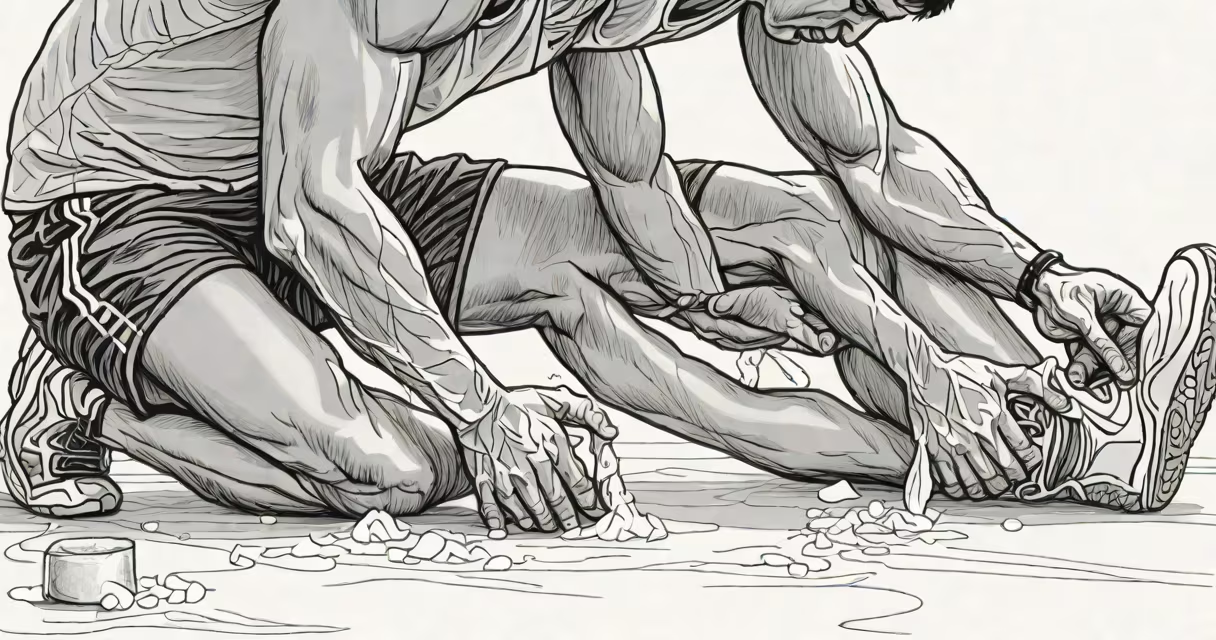
A pulled hamstring involves tearing of the hamstring muscles at the back of the thigh, typically caused by sudden acceleration, jumping, or stretching beyond capacity. Immediate action reduces recovery time and prevents worsening. The core strategy is RICE: rest, ice, compression, and elevation.
Hamstring injuries range from mild (Grade 1) to severe (Grade 3). Grade 1 strains involve minor tearing with mild pain and minimal loss of function. Grade 2 includes moderate tearing, significant pain, and difficulty walking. Grade 3 is a complete rupture requiring surgical repair. Most people experience Grade 1 or 2 injuries during sports or sudden movements.
According to the American Academy of Orthopaedic Surgeons (AAOS), early management of acute hamstring strains focuses on reducing inflammation and protecting the tissue from further damage. Delayed treatment increases risk of chronic pain and re-injury. A 2021 study in the British Journal of Sports Medicine found that patients who applied ice within 15 minutes of injury had 30% faster return to activity compared to those who waited.
Stop all physical activity immediately. Continuing movement worsens micro-tears and delays healing. Lie down and avoid putting weight on the leg. Improve the injured limb above heart level to reduce swelling.
Apply ice packs for 15-20 minutes every 2 hours during the first 48 hours. Use a cloth barrier between skin and ice to prevent frostbite. Cold therapy constricts blood vessels, limiting internal bleeding and swelling. Wrap the area with an elastic bandage for compression-tight enough to limit swelling but not restrict circulation.
Use crutches if walking causes pain. Avoid heat, massage, or stretching in the first 72 hours. Heat increases blood flow and can worsen inflammation. A 2019 review in the Journal of Athletic Training confirmed that heat application during acute phase prolonged recovery by an average of 4 days.
Seek medical care if pain persists beyond 3-5 days, swelling doesn't improve, or you hear a popping sound at the time of injury. These signs may indicate a Grade 2 or 3 tear. Imaging such as MRI can confirm severity and rule out tendon avulsion or bone bruising.
Physical therapists assess strength, flexibility, and gait patterns. They may use ultrasound imaging to visualize muscle tears. The National Institute of Arthritis and Musculoskeletal and Skin Diseases (NIAMS) recommends professional evaluation for injuries lasting longer than 10 days without improvement.
I once treated a high school soccer player who ignored initial pain and returned to play after two days. He reinjured the same hamstring during a sprint, leading to a 6-week absence. Early intervention prevented recurrence.
After acute swelling subsides, begin gentle range-of-motion exercises. Sit on the floor with legs extended and slowly reach toward toes-only as far as comfortable. Hold each stretch for 20 seconds, repeat 3 times daily.
Progress to heel slides: lie on your back, bend the knee, and slowly slide the foot along the floor toward the buttocks. This builds control without straining the muscle. Once pain-free, add resistance bands for strengthening.
Return to running begins at 3-4 weeks post-injury, depending on pain tolerance. Start with 1-minute jogging intervals, gradually increasing duration. Stop if pain returns. The University of Michigan's Sports Medicine Center advises no return to sport until strength matches the uninjured side by at least 90%.
| Stage | Timeline | Activity | Goal |
|---|---|---|---|
| Acute | 0-3 days | Rest, ice, compression, elevation | Reduce swelling and pain |
| Subacute | 4-10 days | Gentle stretching, heel slides | Restore mobility |
| Strengthening | 11-21 days | Resistance band work, prone bridges | Build strength |
| Functional | Week 4+ | Walking, jogging, sport-specific drills | Return to activity |
Many assume stretching immediately relieves pain. But stretching a strained muscle worsens micro-tears and delays healing. The Mayo Clinic warns against aggressive stretching during the first week.
Another error is returning to sport too soon. A 2020 study in the Scandinavian Journal of Medicine & Science in Sports found that athletes who resumed training before full strength recovery were 2.7 times more likely to re-injure the hamstring within six months.
Some believe heat helps. It does not. Heat increases blood flow and can cause additional swelling. Use heat only after the acute phase-typically after 72 hours and only if no swelling remains.
Changing warm-ups before exercise reduce injury risk. Include leg swings, high knees, and butt kicks for 5-10 minutes. Research from the Journal of Strength and Conditioning Research shows changing warm-ups lower hamstring strain incidence by 40%.
Strengthen the posterior chain-glutes, hamstrings, lower back-with deadlifts, Nordic curls, and hip thrusts. Perform 2-3 sets of 8-12 reps twice weekly. Consistent strength training improves neuromuscular control and reduces strain during explosive movements.
For ongoing care, maintain flexibility through daily static stretching. Hold each stretch for 30 seconds, repeat 2 times. Focus on the seated forward fold and supine hamstring stretch.