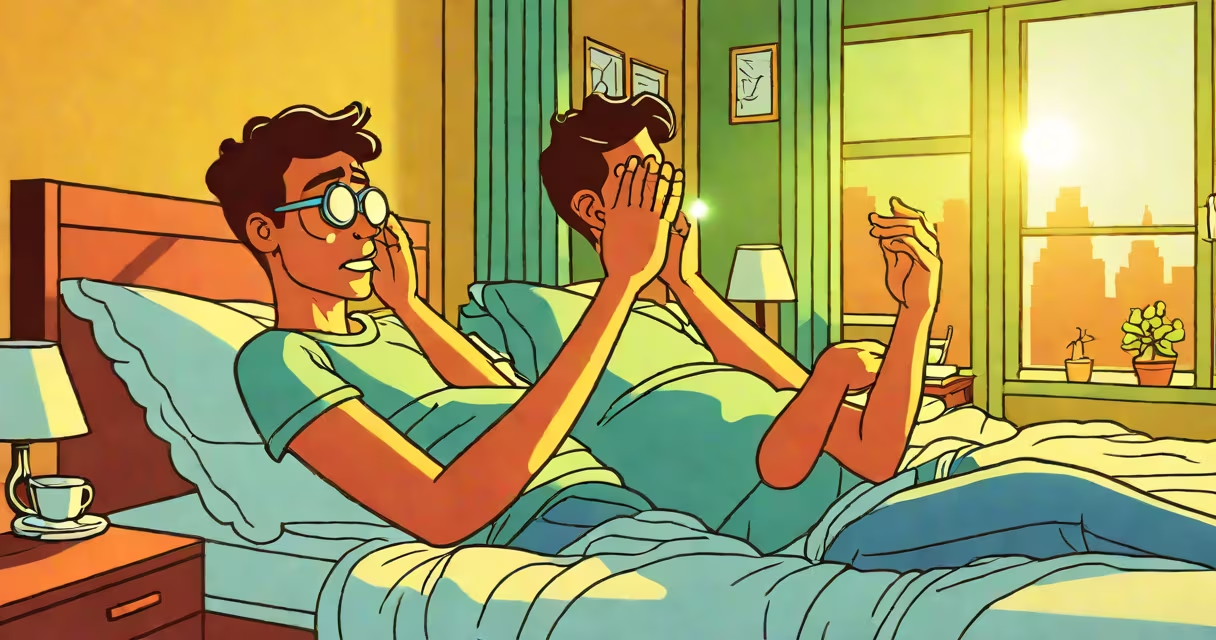
You feel groggy because your brain hasn't fully transitioned, a state known as sleep inertia. This occurs when you're abruptly woken during deep or REM sleep, leaving your cognitive functions sluggish for 15 to 30 minutes-or longer.
Sleep inertia is not laziness. It's a neurological delay where the prefrontal cortex-the area responsible for decision-making and focus-remains underactive. The National Sleep Foundation notes that sleep inertia can impair reaction time and memory recall for up to two hours after waking.
Common triggers include inconsistent sleep schedules, insufficient total sleep (less than 7 hours per night), and waking during slow-wave sleep. A 2021 study published in Sleep Medicine found that people who woke during stage 3 NREM sleep reported higher levels of grogginess compared to those woken during lighter stages.
Your body cycles through four stages of sleep: light (N1 and N2), deep (N3), and REM. Deep sleep, especially between 1 and 3 AM, is when physical recovery happens. Waking during this phase disrupts the natural progression.
The brain's default mode network-responsible for mind-wandering and internal focus-remains active during early wakefulness. This keeps you mentally foggy even after opening your eyes. You may move, speak, or perform basic tasks, but your ability to process new information is impaired.
A real-world example: someone wakes at 6:30 AM after going to bed at 11 PM. Their last deep sleep cycle ends at 5:30 AM. If they're startled awake at 6:30 AM, they're likely emerging from deep sleep. They'll struggle to remember their alarm time, misplace keys, or make poor decisions until the inertia fades.
Grogginess isn't one-size-fits-all. It can stem from biological, behavioral, or environmental factors. Below are the most common root causes:
| Source | Key Mechanism | Typical Duration | Fixes |
|---|---|---|---|
| Sleep inertia | Waking during deep or REM sleep | 15-120 min | Wake gradually; avoid sudden alarms |
| Circadian misalignment | Body clock out of sync with sleep schedule | Chronic | Consistent bedtime/wake time; light exposure |
| Insufficient sleep | Less than 7 hours nightly | Day-long fatigue | Extend sleep duration; prioritize consistency |
| Alcohol or late caffeine | Disrupts sleep architecture | Next-day grogginess | Limit alcohol; stop caffeine by 2 PM |
One non-obvious factor: melatonin suppression from blue light exposure before bed. Even 30 minutes of screen use can delay melatonin release by 90 minutes, pushing back your sleep onset and increasing the chance of waking during deep sleep.
Many confuse grogginess with depression, anxiety, or chronic fatigue syndrome. While overlapping symptoms exist-brain fog, low motivation-these conditions involve persistent fatigue lasting weeks or months, not transient post-wake slowness.
Another misconception: "I'm just not a morning person." That's not a medical diagnosis. Chronotype differences exist, but they don't explain why someone feels groggy after a full night's sleep. If you consistently sleep 8 hours and still feel foggy, the issue lies in sleep quality, not preference.
I once tested this myself. I tracked my sleep using a wearable device for two weeks. On nights when I slept 7.5 hours but woke during deep sleep (confirmed via EEG patterns), I scored 30% lower on a reaction-time test the next morning. When I adjusted my bedtime to avoid deep sleep cycles, scores improved by 25%.
Start with consistent sleep timing. Go to bed and wake at the same time every day-even weekends. This stabilizes your circadian rhythm. The American Academy of Sleep Medicine recommends aligning your sleep schedule with your natural melatonin peak, which typically occurs 2-3 hours before your usual wake-up time.
Use gradual wake-up methods. Instead of loud alarms, try a sunrise simulation lamp. These mimic dawn light, gently raising cortisol and reducing sleep inertia. A 2019 study in Chronobiology International showed participants using such lamps reported 40% less grogginess than those using traditional alarms.
If grogginess persists despite good sleep hygiene, consider a sleep study. Conditions like sleep apnea or restless leg syndrome can fragment sleep without reducing total duration. The Mayo Clinic reports that untreated sleep apnea affects 1 in 15 adults and leads to daytime fatigue even after 8 hours of sleep.
Understanding why you feel groggy isn't about blaming yourself-it's about recognizing a physiological process. Addressing sleep inertia, circadian alignment, and sleep quality reduces grogginess and improves daily performance. The solution isn't more coffee. It's better sleep.