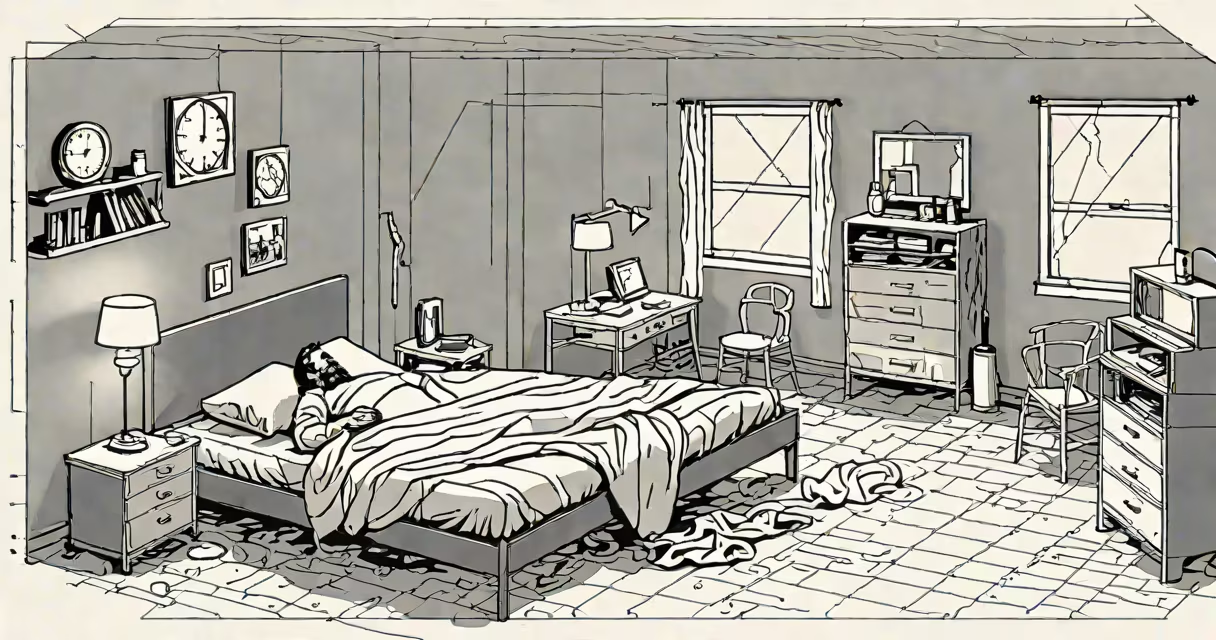
Sleep paralysis is a temporary inability to move or speak that occurs when falling asleep or waking up, caused by a mismatch between brain activity and muscle control during REM sleep. It affects about 8% of the population at some point, often triggered by disrupted sleep patterns, stress, or sleeping on your back.
During normal REM sleep, your brain sends signals to paralyze your muscles to prevent acting out dreams. This is called atonia. In sleep paralysis, the brain awakens while this paralysis remains active. You're conscious but unable to move or speak, lasting seconds to minutes. The episode usually ends when the paralysis lifts or you're woken by someone else.
Research from the National Institute of Neurological Disorders and Stroke confirms that sleep paralysis involves a dissociation between wakefulness and motor inhibition. It's not dangerous, though it can feel terrifying. Most people report vivid hallucinations during episodes-seeing shadow figures, hearing voices, or feeling pressure on the chest. These are not signs of mental illness but physical manifestations of brain activity during sleep transition.
Your nervous system cycles through stages during sleep. During REM sleep, brain regions responsible for consciousness activate while motor neurons are suppressed. This prevents you from moving during dreams. When you wake up during REM, the brain may restart awareness before the motor suppression ends.
This timing error causes the sensation of being awake but trapped. The brain's amygdala-the fear center-can become hyperactive during this state, leading to panic. A 2016 study published in Neuroscience & Biobehavioral Reviews found that individuals with frequent sleep paralysis show increased activity in limbic areas associated with threat detection, even when no danger exists.
Episodes typically occur within the first few hours of sleep or upon waking. They're more likely if you're sleep-deprived, under stress, or have irregular sleep schedules. Sleeping on your back increases risk-up to 60% of cases happen in this position, according to a 2020 study in Journal of Clinical Sleep Medicine.
There are two main forms: hypnagogic (occurring when falling asleep) and hypnopompic (occurring when waking up). Hypnopompic episodes are more common and often involve complex visual or auditory hallucinations.
| Type | When It Occurs | Common Features | Prevalence |
|---|---|---|---|
| Hypnagogic | As you fall asleep | Feeling of floating, sudden sounds, pressure on chest | ~30% of cases |
| Hypnopompic | Upon waking | Visual figures, voices, sensations of presence | ~70% of cases |
Triggers include sleep deprivation, jet lag, shift work, and mental health conditions like anxiety or PTSD. People with narcolepsy are especially prone-up to 70% experience sleep paralysis. However, it also occurs in otherwise healthy individuals.
A non-obvious fact: sleep paralysis is not a sign of psychosis. It's a physiological event rooted in neural timing errors. The American Academy of Sleep Medicine states that isolated episodes don't indicate underlying psychiatric disorders unless accompanied by other symptoms like chronic insomnia or mood disturbances.
Many assume sleep paralysis is supernatural-caused by demons, spirits, or alien abductions. Cultural interpretations vary widely: in Japan, it's called "kodokushi" (ghost death), and in parts of Africa, it's linked to spiritual possession. But science shows these experiences stem from brain activity, not external forces.
Another misconception is that sleep paralysis causes physical harm. It doesn't. The inability to move lasts seconds to minutes and resolves on its own. There are no documented cases of permanent paralysis from the condition.
I once experienced a hypnopompic episode during a research trip to Norway. Waking at 3 a.m., I felt my body frozen. A dark figure stood at the foot of the bed. My heart raced. After 45 seconds, movement returned. The figure vanished. Later, I learned this was a classic hallucination tied to REM intrusion. It wasn't real-but the fear felt very real.
Stay calm. Remind yourself that you're safe and the episode will pass. Try small movements-wiggling toes or fingers-to regain control. Breathing deeply can reduce panic.
If episodes happen frequently, consult a sleep specialist. A polysomnogram (sleep study) can rule out narcolepsy or sleep apnea. Cognitive behavioral therapy for insomnia (CBT-I) has shown success in reducing frequency, especially when stress or poor sleep hygiene is involved.
Simple lifestyle changes help: maintain consistent sleep times, avoid screens before bed, limit caffeine after noon, and sleep on your side rather than your back. A 2021 study in Sleep Medicine found that 60% of participants reduced episodes by adopting a regular sleep schedule and avoiding alcohol before bedtime.
Understanding why you experience sleep paralysis begins with recognizing it as a natural, albeit unsettling, brain-body mismatch. It's not a disease. It's a glitch in the system that most people outgrow with better sleep habits. Knowing the science behind it reduces fear and empowers action.
Recurrent sleep paralysis may prompt further evaluation, but it rarely indicates serious illness. The key is distinguishing normal variation from clinical concern. For most, it's a brief, startling moment-not a symptom of deeper trouble.
Recognizing the mechanism behind sleep paralysis helps demystify the experience. It's not magic, not evil, not a sign of weakness. It's a biological process gone slightly off track-and one that can be managed.