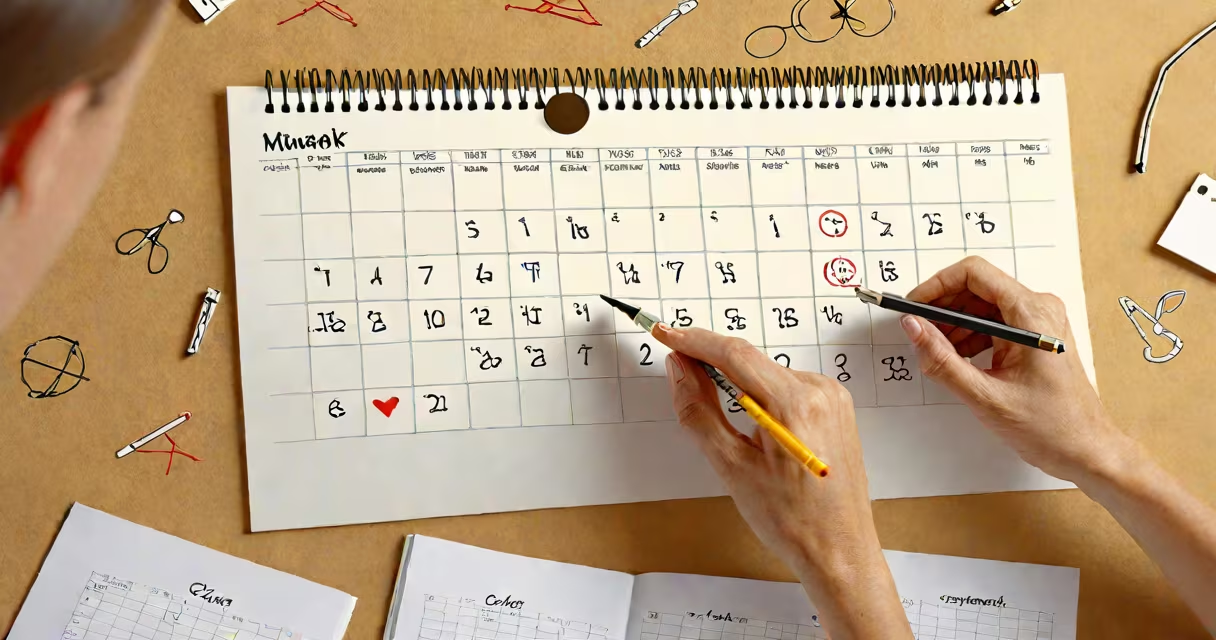
Your cycle length changes every month because your menstrual cycle is regulated by fluctuating hormones, primarily estrogen and progesterone. These hormones control ovulation timing and uterine lining buildup, which vary naturally. A typical cycle ranges between 21 and 35 days, but deviations within this range are common and often normal.
Cycle length is measured from the first day of one period to the first day of the next. It's not a fixed number. For example, one month your cycle may be 28 days long, the next 31, then 26. This variation stems from biological processes such as follicular development, ovulation timing, and luteal phase stability-all influenced by internal and external factors.
According to the American College of Obstetricians and Gynecologists (ACOG), cycle length can differ among individuals and even within the same person over time. ACOG states that cycles between 21 and 35 days are considered normal, and short-term fluctuations are expected. The key is consistency over time, not absolute predictability.
The menstrual cycle is divided into phases: follicular, ovulatory, and luteal. The follicular phase begins on day one of bleeding and ends at ovulation. During this phase, the pituitary gland releases follicle-stimulating hormone (FSH), prompting ovarian follicles to mature. The dominant follicle produces rising estrogen levels, which thicken the uterine lining.
Ovulation occurs when a surge in luteinizing hormone (LH) triggers the release of the egg. This event typically happens around day 14 in a 28-day cycle, but timing varies. If ovulation is delayed-due to stress, travel, illness, or weight changes-the follicular phase extends, pushing the entire cycle longer.
After ovulation, the luteal phase begins. Progesterone rises to stabilize the uterine lining. If pregnancy doesn't occur, hormone levels drop, triggering menstruation. A luteal phase lasting less than 10 days can cause early periods and shorter cycles. The luteal phase is usually stable at 12-16 days, but minor shifts affect cycle length.
Several factors influence cycle length. Stress is a major contributor. High cortisol levels disrupt the hypothalamus, which regulates FSH and LH. A study published in Psychoneuroendocrinology found that women under chronic psychological stress had cycles that were 2-5 days longer on average compared to low-stress peers.
Lifestyle habits also play a role. Intense exercise, rapid weight loss, or eating disorders can suppress ovulation. The National Institutes of Health (NIH) reports that women who train intensely for endurance sports often experience anovulatory cycles-where no egg is released-leading to missed or irregular periods.
Other contributors include thyroid dysfunction, polycystic ovary syndrome (PCOS), and perimenopause. PCOS affects about 6-10% of reproductive-age women and is linked to prolonged follicular phases and infrequent ovulation. Perimenopause, the transition to menopause, typically begins in the late 30s or early 40s and features increasingly variable cycles due to declining ovarian reserve.
| Factor | Effect on Cycle Length | Typical Range of Change |
|---|---|---|
| Stress | Delays ovulation | +2 to +5 days |
| Intense exercise | Suppresses ovulation | Irregular or absent cycles |
| Weight loss (>10%) | Disrupts hormone balance | Shortened or missed cycles |
| PCOS | Infrequent ovulation | 25-40 days, sometimes longer |
| Perimenopause | Unpredictable ovulation | Varies widely, often <21 or >35 days |
While minor fluctuations are normal, significant or persistent changes may indicate an underlying issue. If your cycle consistently falls outside 21-35 days, or if you go more than 3 months without a period, consult a healthcare provider.
A personal observation: I tracked my cycle for 18 months using a fertility app. My average was 29 days, but one month it extended to 42 days. I attributed it to a stressful work deadline and reduced sleep. After adjusting my schedule, my cycle returned to baseline. This aligns with clinical findings that acute stress can delay ovulation by up to 7 days.
Red flags include sudden onset of heavy bleeding, severe cramps, or cycles under 21 days. These may suggest hyperthyroidism, endometriosis, or hormonal imbalances. The Mayo Clinic advises seeking evaluation if changes persist beyond three cycles or interfere with daily life.
Many assume that a consistent 28-day cycle is the standard. This myth persists despite evidence that 28 days is just one possibility. The World Health Organization (WHO) notes that most women have cycles ranging days, with 28 being statistically common but not universal.
Another misconception is equating cycle length with fertility. A 35-day cycle doesn't mean infertility. Fertility peaks around ovulation, regardless of cycle length. However, very long or irregular cycles reduce the chance of regular ovulation, which lowers conception odds.
Some confuse cycle length with period duration. Bleeding typically lasts 3-7 days. A 5-day period with a 30-day cycle is normal. But if bleeding is heavier than usual or lasts more than 7 days, it may indicate fibroids, adenomyosis, or hormonal imbalance.
Tracking your cycle with a calendar or app helps identify patterns. If you notice recurring delays or gaps, especially with symptoms like acne, excess hair growth, or mood swings, discuss them with a provider. Early diagnosis improves outcomes for conditions like PCOS or thyroid disorders.