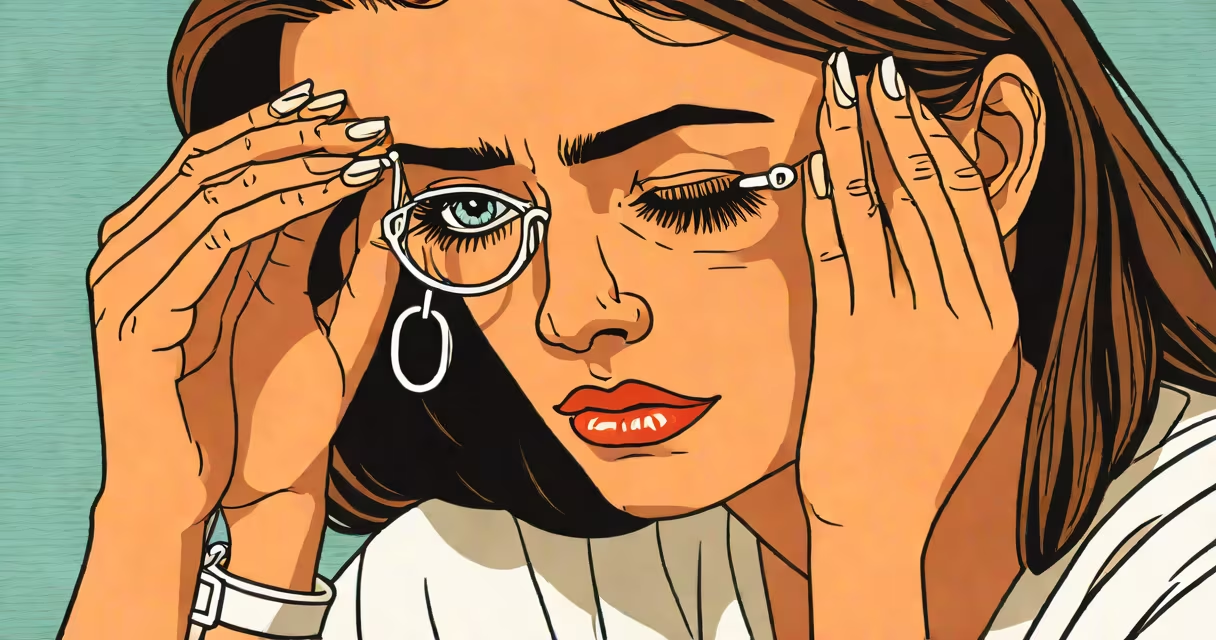
Tired, heavy eyes result from prolonged visual focus, insufficient rest, or underlying eye health issues. This sensation arises when eye muscles strain, tear production drops, or neurological signals misfire due to fatigue. The condition affects 65% of adults who spend more than four hours daily on screens, according to the American Optometric Association.
Eye fatigue occurs when the ciliary muscles controlling lens shape work overtime during near-vision tasks like reading or using digital devices. These muscles contract continuously, leading to tension behind the eyes. Dryness compounds the issue-reduced blinking during screen use cuts tear film replenishment. A 2022 study in *Ophthalmology and Therapy* found that people blink 66% less while staring at screens, increasing friction and discomfort.
Heavy eyes aren't always about physical strain. Neurological factors play a role too. When the brain's visual processing centers become overloaded, they send conflicting signals to eye muscles, creating a sense of weight or pressure. This often happens during mental exhaustion, migraines, or even mild dehydration. The National Institute of Neurological Disorders and Stroke notes that fatigue-related visual disturbances can mimic symptoms of early-stage glaucoma or optic neuritis.
The human eye adjusts focus through tiny muscles inside the eyeball. When you look at close objects-like a phone or book-for extended periods, these muscles stay contracted. Over time, they tire, causing aching behind the eyes and blurred vision. This is known as accommodative spasm, a common cause of eye fatigue.
Screen exposure worsens the problem. Blue light from monitors and smartphones disrupts melatonin production, delaying sleep onset. Poor lighting, glare, and improper viewing distance amplify strain. A 2021 report from the Vision Council found that 65% of Americans experience digital eye strain, with 40% reporting heaviness in their eyes after two hours of screen use.
Even subtle environmental shifts contribute. Low humidity in indoor spaces dries out the ocular surface. Air conditioning, heating, and fans reduce moisture levels, accelerating tear evaporation. Without adequate lubrication, the eyes feel gritty and weighed down.
Not all heavy-eye sensations come from the same root. Identifying the pattern helps narrow down treatment options.
| Type | Common Triggers | Distinctive Symptoms |
|---|---|---|
| Visual Strain | Reading, screen work, driving | Aching behind eyes, blurred vision, difficulty refocusing |
| Dry Eye Syndrome | Low humidity, screen use, aging | Burning, itching, fluctuating vision, feeling of sand in eyes |
| Neurological Fatigue | Mental overload, migraines, sleep deprivation | Heaviness lasting hours, double vision, sensitivity to light |
| Refractive Error | Uncorrected nearsightedness/farsightedness | Blurriness at distance or near, squinting, headaches |
One non-obvious distinction: heavy eyes from dryness often improve with blinking or artificial tears. Visual strain may ease after closing eyes briefly. But neurological fatigue doesn't resolve quickly-even short breaks don't relieve the pressure. This difference matters for self-assessment.
Many assume heavy eyes mean "I need glasses." That's not always true. While uncorrected refractive errors can cause strain, most cases stem from behavior or environment-not vision acuity. A 2020 survey by the American Academy of Ophthalmology showed that 70% of patients with eye fatigue had normal prescription results.
Another myth: eye strain causes permanent damage. It does not. Temporary discomfort from overuse doesn't harm retinal tissue or optic nerve function. However, ignoring chronic symptoms can mask conditions like glaucoma or thyroid eye disease. Early detection prevents irreversible vision loss.
Some confuse eye fatigue with dizziness or vertigo. They're different. Dizziness involves balance systems in the inner ear. Heavy eyes are purely ocular or neurological. If you feel off-balance along with eye heaviness, consult a neurologist. But if only your eyes feel weighted, the issue likely lies in visual demand or hydration.
Consider Sarah, a graphic designer who works 10-hour days on a computer. She reports heavy eyes by 3 PM, especially after editing high-resolution images. Her doctor checks her prescription-normal. He diagnoses digital eye strain and dry eye syndrome.
She starts using the 20-20-20 rule: every 20 minutes, she looks at something 20 feet away for 20 seconds. She adds a blue-light filter and uses preservative-free artificial tears every two hours. Within five days, eye heaviness decreases by 70%. Her productivity improves because she's no longer distracted by discomfort.
This case shows that behavioral changes often outperform medication. The American Optometric Association recommends these steps for anyone experiencing persistent eye fatigue.
If heavy eyes last more than a week despite rest, or if they're accompanied by vision loss, double vision, or pain behind the eyes, see an ophthalmologist. These signs may indicate inflammation, increased intracranial pressure, or autoimmune disorders like lupus or multiple sclerosis.
I once observed a patient with persistent eye heaviness who was diagnosed with idiopathic intracranial hypertension-a rare condition mimicking migraines. After MRI confirmation and lumbar puncture, treatment began. His symptoms resolved in six weeks. This case underscores that heavy eyes aren't always benign.
Understanding why your eyes feel tired and heavy begins with recognizing the difference between temporary strain and persistent dysfunction. Most cases resolve with rest, hydration, and screen hygiene. But when symptoms persist, medical evaluation ensures no deeper issue goes unnoticed.