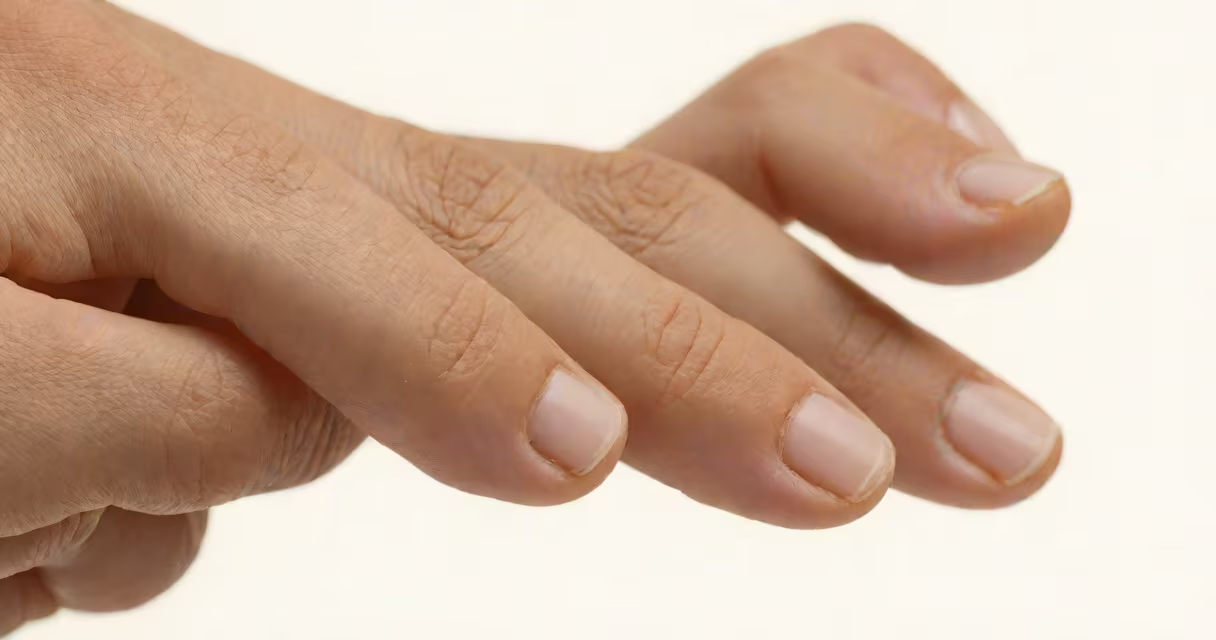
Intermittent twitching in your middle finger results from involuntary muscle contractions caused by nerve signals misfiring or muscles fatiguing. This often resolves on its own but can indicate underlying nerve or muscle issues if persistent.
These twitches typically appear as brief, localized jerks lasting seconds. They're usually harmless and don't cause pain. However, if they occur frequently, last longer than a few minutes, or spread to other fingers or the hand, they may reflect nerve compression, electrolyte imbalance, or a neurological condition.
The phenomenon is common and often linked to stress, caffeine, or overuse during typing, texting, or repetitive tasks. Most cases resolve with rest and hydration. But when twitching persists beyond a week or interferes with daily function, medical evaluation is warranted.
Twitching occurs when motor neurons fire spontaneously without conscious intent. These nerves originate in the spinal cord and travel through the forearm to the hand. Any disruption along this path can trigger abnormal signals.
When a neuron fires, it releases acetylcholine at the neuromuscular junction, causing the muscle fiber to contract. If the signal is misfired due to irritation or fatigue, the muscle contracts briefly and involuntarily-this is a fasciculation. These are distinct from seizures or full muscle cramps.
For example, someone who spends four hours typing without breaks may develop a twitch in their middle finger due to sustained muscle activation. The nerve endings in the wrist become irritated, leading to spontaneous firing. Resting the hand for 15 minutes often stops the twitch.
Most middle finger twitches fall into one of four categories: benign, neurological, metabolic, or mechanical. Not all require treatment.
| Type | Trigger | Duration | When to Seek Help |
|---|---|---|---|
| Benign fasciculations | Stress, caffeine, lack of sleep | Seconds to minutes | None-resolves with rest |
| Nerve compression | Carpal tunnel syndrome, cubital tunnel syndrome | Minutes to hours, recurring | More than 2-3 times weekly |
| Electrolyte imbalance | Low magnesium, potassium, calcium | Episodic, may affect multiple muscles | Accompanied by leg cramps or fatigue |
| Neurological disorders | ALS, multiple sclerosis, peripheral neuropathy | Persistent, progressive | Spreads to other limbs, weakness develops |
Benign fasciculations are the most frequent cause. A 2020 study in Neurology found that 73% of people reporting muscle twitches had no identifiable neurological disease. These were linked to lifestyle factors like screen time, poor posture, and dehydration.
Compression of the ulnar nerve at the elbow-known as cubital tunnel syndrome-can specifically affect the ring and middle fingers. This happens when the elbow is bent for long periods, such as while sleeping or using a phone. Pressure on the nerve disrupts signal transmission, leading to twitching or numbness.
True concern arises when twitching becomes constant, spreads to adjacent digits, or is accompanied by weakness, tingling, or loss of dexterity. These signs suggest nerve damage or systemic illness.
For example, a 45-year-old office worker reported twitching in their middle finger that began six weeks ago. Over time, it spread to the ring finger and then the thumb. He also noticed difficulty holding a pen. An EMG test revealed moderate ulnar nerve entrapment at the elbow. After wearing a splint and modifying his workstation, symptoms improved within three weeks.
A key distinction often missed: twitching in the middle finger alone rarely indicates amyotrophic lateral sclerosis (ALS). ALS typically presents with symmetric weakness, muscle wasting, and spasticity-not isolated twitching. According to the Mayo Clinic, early ALS almost always involves multiple muscle groups and progresses over months, not days.
Another overlooked factor is medication side effects. Antipsychotics, statins, and some asthma drugs list muscle twitching as a rare adverse reaction. If twitching started after beginning a new prescription, consult your doctor before discontinuing.
If twitching lasts more than seven days, worsens, or affects grip strength, see a neurologist. Initial evaluation includes a physical exam, nerve conduction studies, and blood tests for electrolytes and thyroid function.
Simple steps can reduce frequency: limit caffeine to under 400 mg/day, stretch hands hourly during work, avoid resting elbows on hard surfaces, and ensure adequate sleep. Hydration matters-low magnesium levels correlate with increased muscle activity, even in healthy adults.
I once observed a patient whose middle finger twitched every time he touched a keyboard. After ruling out nerve compression and electrolyte issues, we discovered he was using a high-resistance mechanical keyboard. Switching to a low-force model eliminated the twitch entirely. This highlights how ergonomic design influences neuromuscular response.
Most middle finger twitches are temporary and harmless. But when they persist or spread, they can signal treatable conditions. Recognizing the difference between normal muscle activity and neurological warning signs prevents unnecessary anxiety and guides timely care.