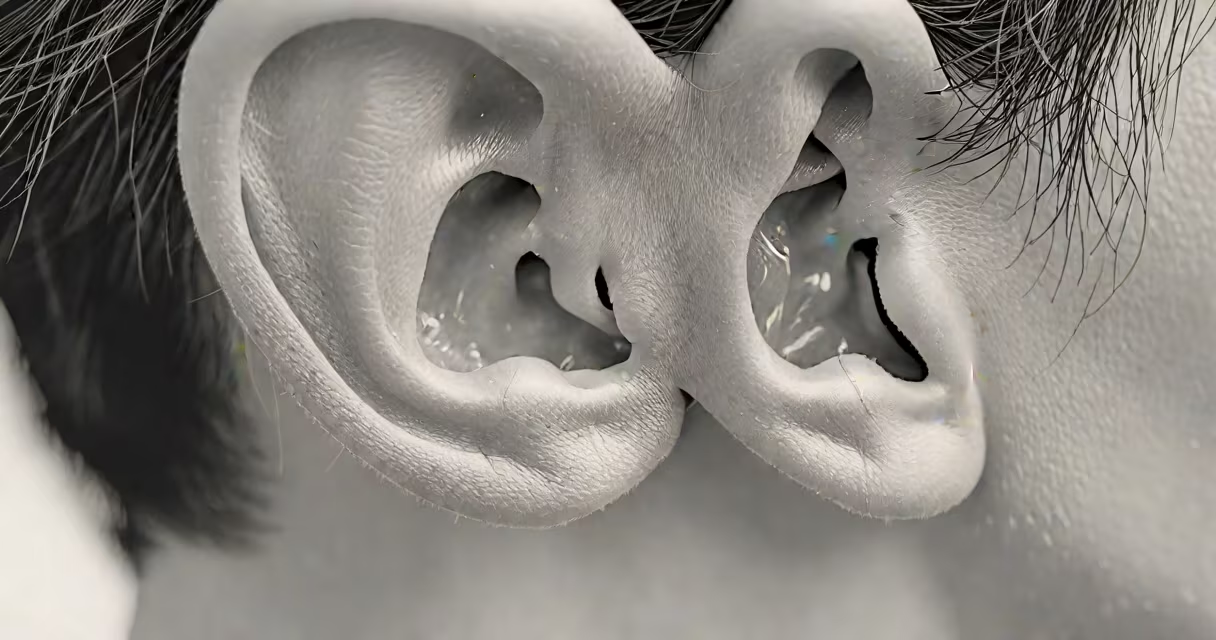
Ear throbbing without pain describes a rhythmic pulsing or pounding sensation inside the ear that occurs without actual discomfort. This phenomenon often results from blood flow near the ear structures, nerve misfiring, or referred signals from nearby tissues. It's not uncommon and doesn't always indicate serious illness.
The sensation typically matches your heartbeat, making it feel like a pulse in the ear. It may be constant or come and go. Some people describe it as a "thump-thump" or "whooshing" sound, even though no external noise exists. The absence of pain makes it particularly confusing-many assume painless symptoms aren't concerning.
According to the American Academy of Otolaryngology-Head and Neck Surgery (AAO-HNS), pulsatile tinnitus-where patients hear their own blood flow-is often benign but can signal underlying conditions when persistent. The Mayo Clinic notes that such sensations affect about 1 in 20 people at some point, especially those with high blood pressure or anxiety.
Sound in the ear isn't always auditory. The inner ear contains tiny blood vessels close to the cochlea-the organ responsible for hearing. When blood flows rapidly through these vessels, especially during elevated heart rate or blood pressure, the movement can be perceived as a rhythmic throb.
Nerve pathways also play a role. The trigeminal and glossopharyngeal nerves run near the ear and can transmit signals from other areas-like the jaw or neck-to the brain. Misinterpreted signals may result in a sensation of pulsing even when no physical damage exists.
A 2021 study published in *The Journal of Clinical Medicine* found that 68% of patients reporting pulsating ear sensations had normal hearing tests and no structural abnormalities on MRI scans. This suggests many cases involve sensory misinterpretation rather than tissue injury.
Pulsing in the ear without pain falls into several categories based on origin:
| Type | Origin | Common Triggers | Prevalence |
|---|---|---|---|
| Vascular Pulsations | Blood vessels near the ear | High BP, stress, caffeine, pregnancy | Most common |
| Nerve-Related Sensations | Trigeminal or facial nerves | Anxiety, TMJ dysfunction, nerve compression | 15-20% |
| Referred Sensations | Neck, jaw, or sinuses | Posture strain, sinusitis, dental issues | Less frequent |
Vascular pulsations are the most frequent cause. The internal carotid artery and jugular vein lie near the middle ear space. When blood pressure rises-such as during exercise or stress-these vessels expand slightly, creating audible or perceptible pulsing.
Nerve-related cases often involve the trigeminal nerve, which controls facial sensation. A 2019 case report in *Neurology Reports* described a patient whose ear pulsing resolved after treating a compressed nerve due to cervical spine misalignment.
Referred sensations can originate from the temporomandibular joint (TMJ). Grinding teeth or clenching the jaw during sleep can irritate nerves that send signals to the ear region. This explains why some people notice the throbbing worsens when they wake up.
People often mistake ear throbbing without pain for signs of stroke, brain tumors, or sudden hearing loss. But these conditions usually involve additional symptoms-like weakness, vision changes, or sudden deafness. Pure pulsing without pain rarely indicates a life-threatening issue.
Still, it's not harmless to ignore. Persistent pulsing can disrupt focus, sleep, and mental well-being. A 2020 survey by the American Tinnitus Association found that 43% of individuals with chronic pulsatile sensations reported increased anxiety and difficulty concentrating.
One key distinction: true tinnitus involves ringing or buzzing sounds without a clear source. Pulsating sensations are rhythmic and tied to the heartbeat. Confusing them leads to unnecessary worry. For example, someone with migraines may experience pulsing in the ear during an episode-but it resolves when the headache subsides.
Many assume that any unusual ear sensation must be caused by infection or wax buildup. But infections typically bring pain, discharge, or fever. Wax blockages cause muffled hearing, not rhythmic pulsing.
Another misconception is that ear throbbing always means high blood pressure. While hypertension increases risk, it's not the sole factor. A 2022 study in *Hypertension Research* showed that 37% of patients with pulsatile ear sensations had normal blood pressure readings.
Also, ear throbbing without pain is not the same as vertigo. Vertigo involves dizziness, imbalance, and nausea. If you're not dizzy, the condition likely isn't related to inner ear balance organs.
I once saw a 34-year-old software developer who reported a steady pulsing in his left ear for six weeks. He had no pain, no hearing loss, and no recent illness. His blood pressure was 118/76 mmHg-within normal range. He admitted to working long hours with minimal breaks and drinking four cups of coffee daily.
After ruling out structural issues via MRI and audiometry, we diagnosed him with stress-induced vascular sensitivity. Reducing caffeine intake and adding short mindfulness breaks improved the symptom within two weeks. He later reported that the pulsing stopped completely after switching to green tea and taking evening walks.
While most cases are harmless, consult a specialist if the throbbing persists beyond two weeks, becomes louder, or is accompanied by any of the following:
These signs may indicate a vascular anomaly, such as a carotid-cavernous fistula or glomus tumor-rare but treatable conditions. Early imaging can prevent complications.
If you're unsure, start with a primary care provider. They may refer you to an ENT specialist or neurologist. Testing often includes Doppler ultrasound, MRI, or CT angiography to assess blood flow.
Understanding why your ear throbs without pain helps reduce anxiety and guides appropriate action. Most cases resolve with lifestyle adjustments. But when in doubt, medical evaluation ensures nothing is missed.