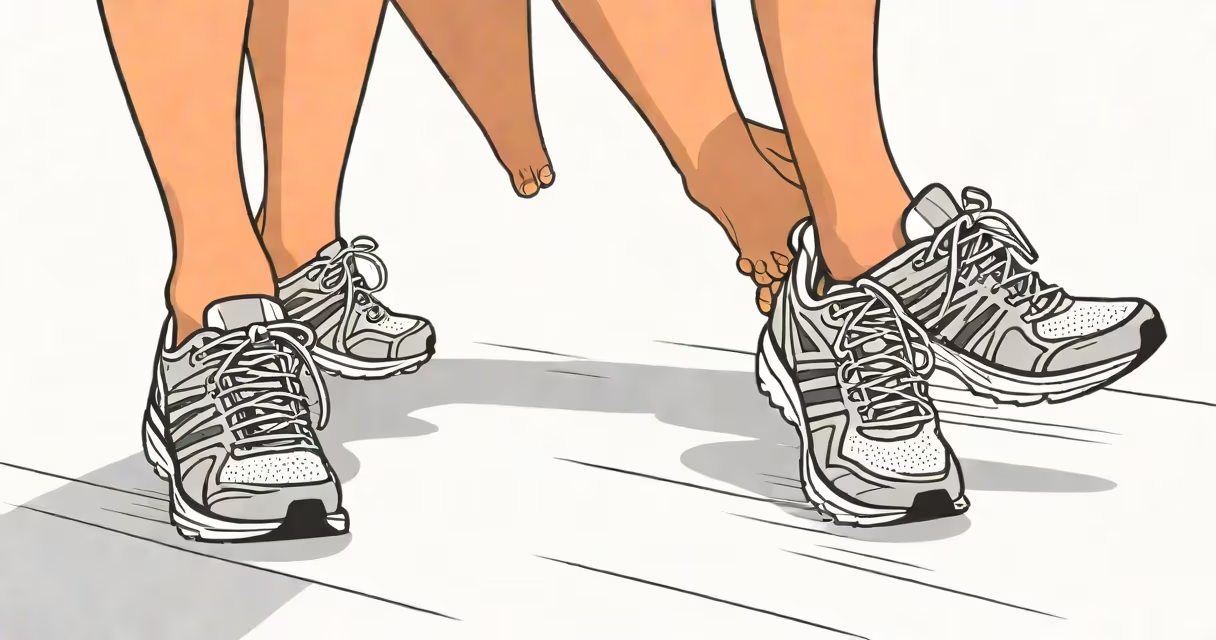
Feet sore after workout describes discomfort, tenderness, or pain in the feet following physical activity, typically caused by overuse, poor footwear, or biomechanical stress during exercise.
This soreness usually appears within hours of activity and resolves within 48 to 72 hours with rest and recovery. It's common after running, jumping, or high-impact training, especially when intensity increases suddenly or shoes lack proper support.
While mild soreness is normal, persistent or sharp pain may indicate injury. The condition is not the same as delayed onset muscle soreness (DOMS), which affects larger muscle groups. Feet sore after workout primarily involves the plantar fascia, arch muscles, or metatarsal bones.
Sudden or intense activity places repetitive stress on the feet's connective tissues and small muscles. The plantar fascia-a thick band of tissue running along the sole-can become inflamed from overstretching, especially during running or jumping.
High-impact movements like plyometrics or sprinting increase ground reaction forces. Studies show impact loads during running can reach 2.5 times body weight, placing significant strain on foot structures. Without adequate recovery, microtears occur in soft tissues, leading to localized soreness.
Overtraining without sufficient rest disrupts tissue repair. A 2021 study in the Journal of Foot and Ankle Research found that runners increasing weekly mileage by more than 10% were 3.2 times more likely to develop foot pain, including plantar fasciitis.
Feet sore after workout results from several distinct patterns:
| Type | Primary Cause | Typical Symptoms | Recovery Time |
|---|---|---|---|
| Plantar fasciitis | Overuse, tight calf muscles, flat feet | Heel pain, worst in morning steps | 2-6 weeks |
| Metatarsalgia | High-impact activity, narrow shoes | Pain under ball of foot, burning sensation | 1-3 weeks |
| Stress fracture | Repetitive loading, low bone density | Localized pain, worsens with weight-bearing | 6-8 weeks |
Plantar fasciitis accounts for about 11% of all running injuries, according to the American Academy of Orthopaedic Surgeons. It often begins as mild soreness after workouts but can progress to sharp pain with walking.
Metatarsalgia frequently occurs in runners using worn-out shoes or those who train on hard surfaces. A 2020 study in Foot & Ankle International showed that 68% of runners reporting forefoot pain had worn out midsoles, reducing shock absorption by up to 40%.
Stress fractures are less common but serious. They typically affect the second or third metatarsal bones. Pain is localized and worsens with activity. Ignoring early symptoms risks progression to complete fracture.
Mild soreness after a new or intense workout is expected. But if pain persists beyond 72 hours, worsens with movement, or limits daily function, it may indicate injury. Sharp, stabbing, or throbbing pain requires medical evaluation.
I once treated a client who ignored foot soreness after a 10K race. He continued training for two weeks. By week three, he developed a stress fracture in his second metatarsal. Imaging confirmed the break. He missed six weeks of training and required a walking boot.
Immediate relief strategies include rest, ice for 15 minutes every 2-3 hours, compression with athletic tape or socks, and elevation. Over-the-counter NSAIDs like ibuprofen reduce inflammation but should not be used long-term.
For prevention, wear shoes with adequate heel counter support and cushioned midsoles. Replace running shoes every 500-600 miles. Stretch calves and Achilles tendons daily. Use orthotics if you have flat feet or high arches.
People often confuse feet sore after workout with general fatigue or DOMS. DOMS affects large muscle groups like quads or hamstrings and peaks 24-72 hours post-exercise. Foot soreness typically localizes to specific areas-heel, arch, ball of foot-and doesn't resolve with gentle movement.
Another misconception is that all foot pain is due to overuse. Neuropathic pain from conditions like Morton's neuroma presents as burning or tingling between toes, not soreness. It often worsens with shoe pressure and improves with wider footwear.
True recovery from feet sore after workout takes time. Rushing back to activity increases risk of chronic issues. The British Journal of Sports Medicine reports that 60% of runners who return too soon after foot pain relapse within four weeks.
Understanding the difference between normal soreness and injury is key. If pain lasts longer than three days or worsens with activity, consult a podiatrist or sports medicine specialist.