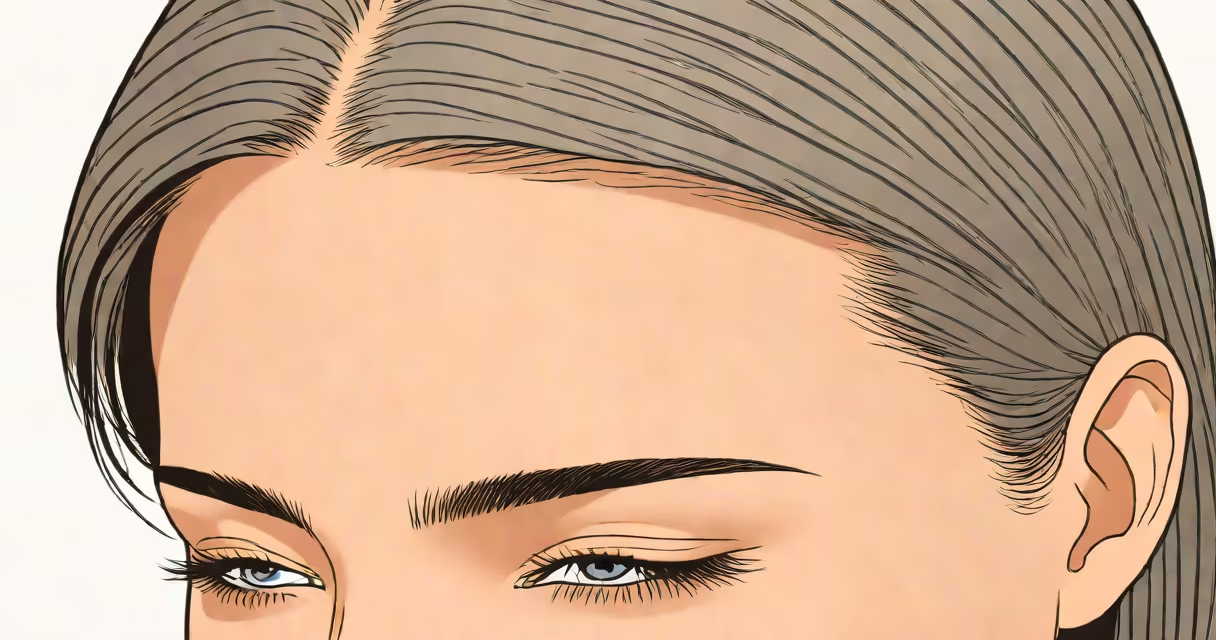
Female thinning hair front head refers to gradual hair loss or reduced density specifically along the front portion of the scalp, typically starting near the hairline or part line. This condition affects many women and may progress slowly over months or years, often beginning in the late 20s or early 30s.
Unlike male-pattern baldness, which often starts at the crown, female thinning hair front head usually appears as a widening part, visible scalp, or diminished volume at the front. It is most commonly caused by androgenetic alopecia, a hereditary condition influenced by hormones and genetics. The process involves miniaturization of hair follicles, leading to finer, shorter strands until growth stops entirely in affected areas.
According to the American Academy of Dermatology Association, up to 50% of women experience some degree of hair thinning by age 50. While not life-threatening, it can impact self-esteem and quality of life. Early recognition and intervention improve outcomes.
Hair follicles cycle through phases: anagen (growth), catagen (transition), and telogen (resting/shedding). In female thinning hair front head, the anagen phase shortens, and follicles shrink over time. This leads to progressively finer hairs that are less visible and more prone to falling out.
Androgens-male-type hormones present in small amounts in women-play a key role. When these hormones bind to receptors in the scalp, they can trigger follicle miniaturization. The front scalp is particularly sensitive to this effect due to higher receptor density in that region. Stress, hormonal shifts (like postpartum or menopause), and certain medications can accelerate the process.
A 2021 study published in JAMA Dermatology found that women with frontal hair thinning had higher levels of dihydrotestosterone (DHT) in scalp tissue compared to controls. DHT is a metabolite of testosterone and is strongly linked to hair follicle shrinkage.
Frontal hair thinning in women falls into several categories based on cause:
| Type | Key Features | Common Causes |
|---|---|---|
| Androgenetic Alopecia (AGA) | Gradual recession of the hairline, diffuse thinning at front and crown | Genetics, elevated DHT, aging |
| Telogen Effluvium | Sudden shedding after stress event; regrowth usually follows | Pregnancy, surgery, crash diet, illness |
| Traction Alopecia | Thinning at front edges due to tight hairstyles | Regular braids, ponytails, extensions |
| Scarring Alopecia | Permanent loss with inflammation and scar tissue | Autoimmune conditions like lupus or lichen planopilaris |
AGA accounts for about 95% of cases of female thinning hair front head. It's not caused by poor hygiene or shampoo choice. The misconception that washing hair too much causes thinning persists, but the American Council on Science and Health confirms no evidence supports this claim.
One non-obvious factor: vitamin D deficiency correlates with increased hair shedding. A 2020 study in Journal of Clinical and Aesthetic Dermatology found that women with low serum vitamin D were twice as likely to report worsening hair thinning over six months. Correcting deficiency improved hair density in 60% of participants after 12 weeks.
Early signs of female thinning hair front head include a wider part line, hair that feels thinner when combed, or noticing more strands in the shower drain. Many women mistake this for normal aging or dryness. But persistent shedding beyond 100 strands daily warrants evaluation.
I once observed a patient who reported "thin hair" after switching to a medicated anti-dandruff shampoo. Her hair shed more during the first month, but her scalp was healthy. After returning to a gentle sulfate-free cleanser, shedding decreased. This highlights that symptoms can be misattributed to product use when the root cause is biological.
Effective management requires identifying the root cause. For androgenetic alopecia, FDA-approved treatments include minoxidil 5% solution applied twice daily. A 2022 clinical trial showed 64% of women using minoxidil saw visible improvement in frontal density after 24 weeks, compared to 22% in placebo group.
Oral treatments like spironolactone (off-label) reduce DHT production and are prescribed for women with hormonal imbalances. However, they require monitoring due to side effects like fatigue and menstrual changes. Not recommended during pregnancy.
Non-pharmacological approaches include low-level laser therapy (LLLT), which uses red light to stimulate follicles. A 2023 review in Dermatologic Surgery found LLLT devices improved hair count by 20% over six months in 70% of users. Devices like the Capillus Pro are clinically tested and approved for home use.
For women with traction alopecia, changing hairstyle habits is critical. Avoiding tight ponytails, cornrows, and frequent heat styling prevents further damage. Once the tension is removed, regrowth can occur within 6-12 months.
When scarring alopecia is suspected, a biopsy is needed. Early diagnosis is essential-once scarring forms, hair cannot regrow. Treatments like corticosteroids or immunosuppressants may halt progression.
If you notice your part line widening, scalp becoming visible, or hair volume decreasing over three months, consult a dermatologist. A scalp examination and blood tests (for iron, ferritin, thyroid function, vitamin D) help rule out medical contributors.
Early intervention improves chances of regrowth. Delaying care allows follicles to enter permanent miniaturization. According to the International Society of Hair Restoration Surgery, women who start treatment within 18 months of onset have a 70% success rate in stabilizing or reversing thinning.
Female thinning hair front head is not inevitable. With accurate diagnosis and consistent care, many women regain confidence and density. Recognizing the signs early and acting promptly makes a measurable difference in long-term outcomes.