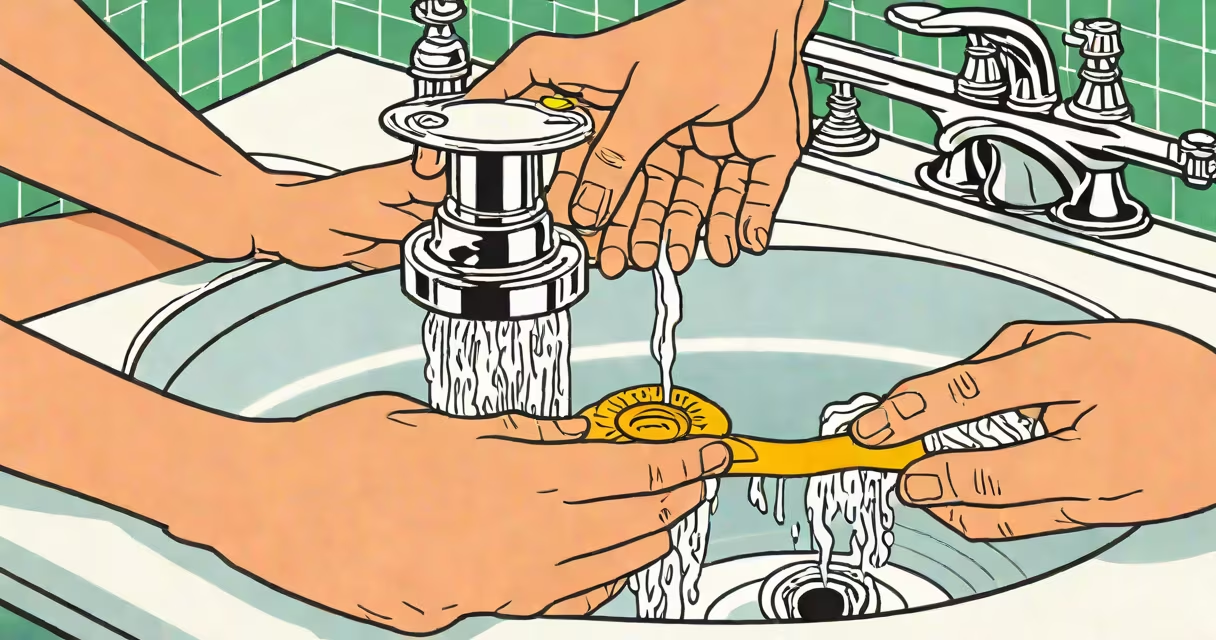
A blocked bathroom sink results from accumulated hair, soap scum, and debris in the drain trap. To clear it, remove the stopper, extract visible debris, flush with hot water, and use a plunger or drain snake if needed. This process restores flow within minutes.
Most bathroom sink clogs form in the P-trap-a U-shaped pipe under the sink that holds water to prevent sewer gases from entering. Hair and soap residue collect here over time, reducing water flow until the sink drains slowly or stops entirely. The issue typically develops over weeks, not suddenly.
According to the Plumbing & Mechanical Contractors Association (PMCA), 68% of residential drain issues stem from organic buildup in the trap, not structural damage. A blocked sink rarely indicates a broken pipe unless accompanied by gurgling sounds or sewage odors.
Clearing a blocked bathroom sink requires basic tools: rubber gloves, a bucket, a flashlight, a drain snake (also called a hand auger), and a plunger. You may also use baking soda and vinegar for mild cases.
For safety, turn off the water supply to the sink and place a bucket under the P-trap to catch residual water. A flashlight helps inspect the trap's interior. A drain snake is effective because it can twist through tight bends and dislodge compacted material.
Plumbing experts recommend using a 25-foot flexible drain snake for bathroom sinks. These are sold at hardware stores for $15-$30. Avoid chemical drain cleaners-they degrade pipes and pose health risks if mixed with other substances.
Begin by removing the sink stopper. Most bathroom sinks have a lift-and-turn stopper. Pull it out and inspect for trapped hair and gunk. Use tweezers or fingers (gloved) to pull out visible debris.
If the stopper is missing or damaged, check the drain opening directly. Shine a flashlight into the pipe. Use a bent wire hanger or a small hook to retrieve hair clumps. Do not push debris deeper into the trap.
Flush the drain with boiling water. Pour 2 cups of near-boiling water down the drain in two stages, waiting 30 seconds between pours. This dissolves soap scum and loosens minor blockages. For stubborn clogs, mix ½ cup baking soda with 1 cup white vinegar, pour into the drain, cover for 15 minutes, then flush with hot water.
If flushing doesn't restore flow, insert a drain snake into the drain opening. Rotate the handle clockwise while pushing forward. When resistance increases, twist and pull. Repeat until the snake meets no resistance or pulls out debris.
For sinks with a pop-up stopper, use a plunger. Place the rubber cup over the drain and pump vigorously for 15 seconds. The pressure can dislodge clogs trapped in the trap. After 3-5 pumps, remove the plunger and test drainage.
Some users mistake a slow drain for a clog. A slow drain often results from mineral deposits or thin film buildup. In such cases, a 10-minute soak with vinegar and baking soda clears the surface layer. If flow remains sluggish after three attempts, the trap may be partially blocked and require manual extraction.
Many people attempt to clear a clog by pouring liquid drain cleaner down the drain. The Environmental Protection Agency (EPA) warns that these chemicals corrode PVC and metal pipes and release toxic fumes when mixed with other substances. They also fail to remove solid debris-only dissolve grease and organic matter.
Another error is forcing a plunger into a sink with standing water. This creates splashing and spreads bacteria. Always ensure the sink is empty before plunging. If water remains, use a sponge to remove excess before starting.
Some homeowners assume a clog is in the main drain line. This is rare in bathroom sinks. The main drain affects multiple fixtures. If both the bathroom sink and shower drain slowly, then the issue may be shared. But a single fixture failure points to the local trap.
| Method | Best For | Time Required | Risk Level |
|---|---|---|---|
| Hot water flush | Light soap scum, early-stage clogs | 5 minutes | Low |
| Baking soda + vinegar | Organic buildup, odor control | 20 minutes | Very low |
| Drain snake | Hair and debris in trap | 10-15 minutes | Medium (if improper use) |
| Plunger | Partial blockage, pop-up stoppers | 5-10 minutes | Medium (splashing risk) |
I once cleared a sink clog in a rental apartment using only a wire hanger and vinegar. The stopper was missing, and hair had formed a dense mat in the drain. After pulling out 3 inches of matted hair, I poured vinegar and baking soda down the drain. Within five minutes, water drained normally. The sink hadn't been cleaned in six months.
After clearing the blockage, run hot water for 30 seconds daily for three days to prevent re-clogging. Install a drain screen to catch hair before it enters the pipe. Replace screens every three months.
For recurring issues, consider replacing the P-trap with a newer model that resists buildup. Some modern traps feature a removable filter that captures debris without needing disassembly.
Understanding how to clear blocked bathroom sink prevents costly repairs and maintains hygiene. Regular maintenance reduces the chance of backups and keeps your plumbing system functioning efficiently.