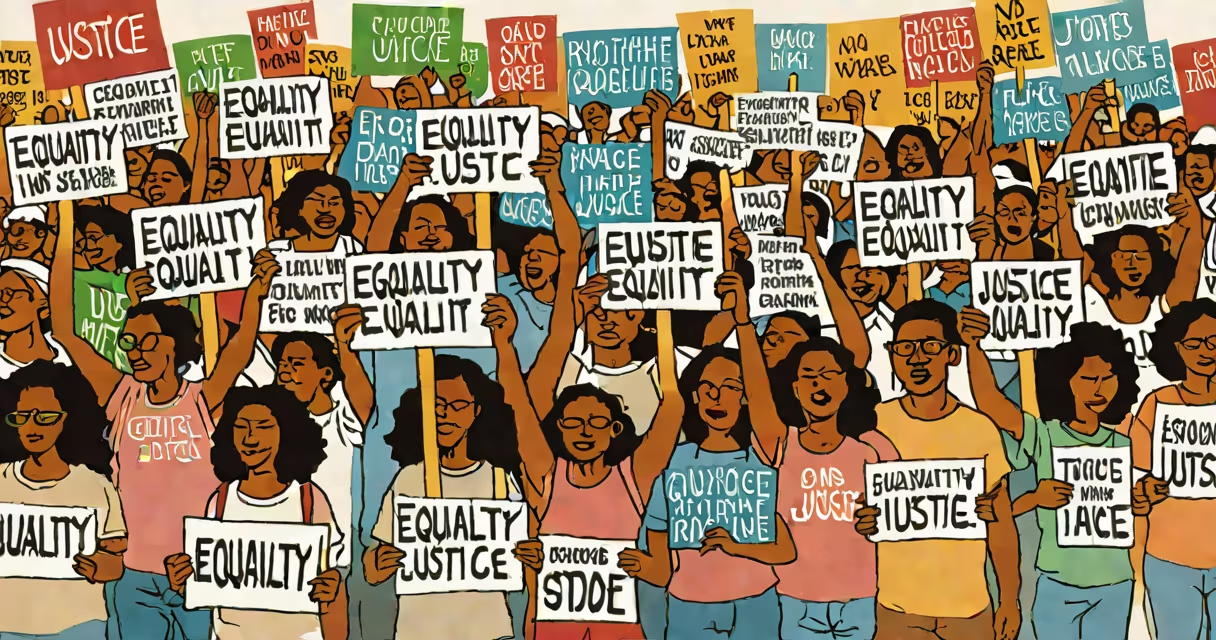
Civil rights are legally protected entitlements that guarantee fair treatment under the law, regardless of race, gender, religion, national origin, disability, sexual orientation, or other personal characteristics. These rights stem from constitutional amendments, federal statutes, and court rulings designed to prevent discrimination and uphold individual dignity.
The concept originated in the 19th century with the abolition of slavery and gained formal structure through the 13th, 14th, and 15th Amendments to the U.S. Constitution. The 14th Amendment's Equal Protection Clause specifically prohibits states from denying any person equal protection of the laws-a foundational principle for modern civil rights enforcement.
Today, civil rights apply to areas such as employment, housing, education, voting, public accommodations, and access to government services. They are distinct from civil liberties, which focus on freedoms from government interference (like speech or religion), though both are essential components of American constitutional life.
When someone experiences discrimination based on protected characteristics, civil rights laws provide a legal structure to challenge that treatment. For example, if a qualified job applicant is denied employment because of their ethnicity, the employer may have violated Title VII of the Civil Rights Act of 1964.
Individuals can file complaints with agencies like the U.S. Equal Employment Opportunity Commission (EEOC) or sue in federal court. Remedies may include reinstatement, back pay, damages, or policy changes within institutions. The burden of proof lies with the complainant, who must demonstrate that discrimination occurred and was based on a protected trait.
A key precedent is Brown v. Board of Education (1954), where the Supreme Court ruled that racial segregation in public schools violated the Equal Protection Clause. This decision overturned Plessy v. Ferguson (1896), which had previously upheld "separate but equal" facilities. The shift illustrates how civil rights evolve through judicial interpretation and societal pressure.
Various federal laws enforce different aspects of civil rights. The table below outlines major categories, their governing statutes, and common applications.
| Type | Governing Law | Protected Characteristics | Common Application |
|---|---|---|---|
| Employment | Title VII of the Civil Rights Act of 1964 | Race, color, religion, sex, national origin | Prohibits hiring bias, workplace harassment, unequal pay |
| Housing | Fair Housing Act (1968) | Race, color, religion, sex, familial status, disability | Bars landlords from refusing rentals based on family size or disability |
| Educational Access | Equal Educational Opportunities Act (1974) | National origin, language proficiency | Requires schools to support English learners with appropriate resources |
| Voting Rights | Voting Rights Act of 1965 (amended 1970, 1975, 1982) | Race, language minority status | Prohibits voter suppression tactics like literacy tests |
Each law includes specific procedures for filing claims and timelines for resolution. For instance, Title VII requires a charge to be filed with the EEOC within 180 days of the alleged discriminatory act.
Civil rights are often conflated with social justice movements or political advocacy. While civil rights activism played a critical role in advancing legislation, civil rights themselves are codified legal standards-not moral ideals or campaign slogans.
Another frequent error is assuming civil rights apply only to race. The Civil Rights Act of 1964 explicitly covers race, color, religion, sex, and national origin. Later amendments extended coverage to disability (Americans with Disabilities Act, 1990) and age (Age Discrimination in Employment Act, 1967).
A lesser-known distinction: civil rights are enforceable through litigation. In contrast, civil liberties-such as freedom of speech-are typically defended against government overreach. For example, a person can sue for wrongful termination due to religious observance (a civil rights issue), but challenging a government ban on protest speech involves civil liberties.
In 2015, the U.S. Department of Justice found systemic violations of civil rights by the Baltimore Police Department. An investigation revealed patterns of excessive force, unlawful searches, and discriminatory stops targeting Black residents.
As a result, the DOJ negotiated a consent decree requiring reforms including mandatory training on de-escalation techniques, improved oversight mechanisms, and data collection on use-of-force incidents. The settlement demonstrated how civil rights enforcement can lead to institutional change beyond individual cases.
This case also shows that civil rights violations aren't always obvious. They can emerge from routine practices that disproportionately affect marginalized groups-even when no single officer acted maliciously.
I once reviewed a housing discrimination complaint involving a disabled veteran denied rental approval despite meeting all financial criteria. The landlord cited "noise concerns," but the tenant used a service dog and had no history of disturbances.
After reviewing documentation and local fair housing regulations, we submitted a complaint to HUD. Within six months, the agency ordered the landlord to accept the application and pay $10,000 in damages. The case highlighted how civil rights protections function even when discrimination is disguised as policy or convenience.
Civil rights are enforced through multiple channels: administrative agencies, courts, and congressional oversight. The U.S. Department of Justice's Civil Rights Division investigates allegations and brings lawsuits when necessary. State attorneys general also play a role in enforcing state-level civil rights laws.
For example, in 2022, the DOJ sued the state of Texas over a law restricting transgender students' access to school sports teams. The suit argued the law violated Title IX and the Equal Protection Clause. The case remains pending, illustrating ongoing challenges in interpreting civil rights in new contexts.
Understanding what civil rights mean allows individuals to recognize when their rights are at risk and take action. Knowing your rights empowers participation in democratic society and strengthens accountability across institutions.