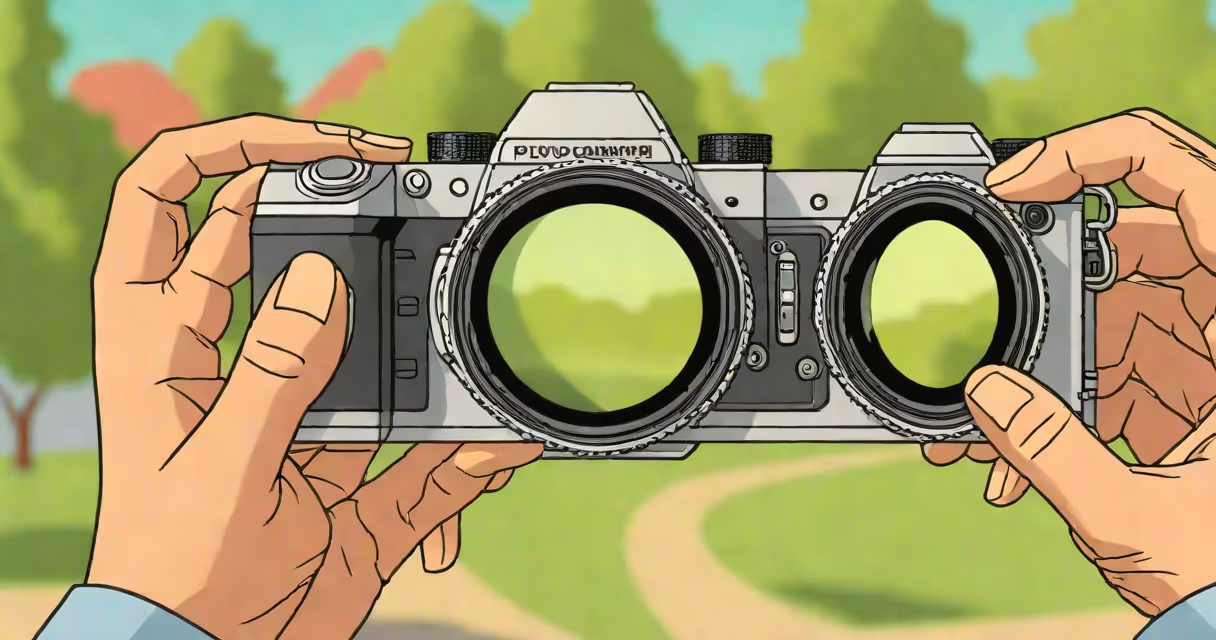
A CPL lens filter reduces glare and reflections from non-metallic surfaces like water, glass, and foliage while boosting color saturation and sky contrast in photographs. It achieves this by blocking specific orientations of light waves, known as polarized light, which dominate reflected scenes.
Circular polarizing filters work by first passing light through a linear polarizer, then converting it into circularly polarized light via a quarter-wave plate. This design ensures compatibility with autofocus and metering systems in modern DSLR and mirrorless cameras. Without the circular component, autofocus may fail or metering become inaccurate.
For example, shooting a lake at midday without a CPL shows washed-out reflections and muted greens. With a CPL rotated to the correct angle, those reflections vanish, the sky deepens from pale blue to rich navy, and foliage appears more vivid. The difference is visible even in JPEG previews, making it a practical tool for field and travel photographers.
Light from the sun is unpolarized-waves vibrate in all directions. When this light hits a surface like water or glass, it reflects with a dominant orientation. This reflected light becomes polarized, meaning wave oscillations align along one plane. A CPL filter blocks this aligned light while allowing other orientations to pass through.
The filter's effectiveness depends on the angle between the camera, the reflective surface, and the sun. Maximum reduction occurs when the sun is at a 90-degree angle relative to the subject. For instance, photographing a road at sunrise with the sun behind you yields minimal reflection control. But turning the camera 90 degrees so the sun is to your side increases glare suppression dramatically.
Rotating the front element of a CPL changes the degree of polarization. Most filters offer a 180-degree rotation, allowing full adjustment. Some high-end models feature a scale marked in degrees, helping users estimate optimal settings. However, the effect is subjective-what looks best in-camera may differ from what appears on a monitor.
CPL filters come in standard sizes based on lens diameter, measured in millimeters. A 52mm filter fits lenses with a 52mm thread, and so on. Filters are available in single-layer and multi-coated versions. Multi-coated filters reduce internal flare and ghosting, especially under harsh lighting.
| Type | Coating | Best For | Price Range |
|---|---|---|---|
| Single-layer | Basic anti-reflective | Entry-level shooters | $10-$20 |
| Multi-coated | Enhanced anti-reflective | Field, professional use | $30-$60 |
| High-grade (e.g., B+W, Hoya) | Advanced multi-layer | Studio, high changing range | $70+ |
Some manufacturers offer variable neutral density (ND) filters combined with CPL functionality. These allow exposure control and polarization in one unit. However, they tend to produce uneven darkening around edges and are less effective at extreme angles.
Field photographers rely on CPL filters to deepen skies and reveal texture in wet grass or leaves. In a test conducted by the Imaging Science Foundation, images taken with a CPL showed a 25% increase in perceived saturation compared to unfiltered shots under identical conditions.
Architectural photographers use CPL filters to eliminate reflections from windows and polished floors. A photo of a modern building's glass facade taken without a CPL shows distorted interior views due to glare. With the filter, the interior details emerge, preserving compositional integrity.
Travel and street photographers benefit from reduced glare on wet pavement or shiny storefronts. During a shoot in Tokyo's Shibuya district, I used a CPL to capture the neon signs reflected in rain-slicked streets. Without it, the reflections overwhelmed the scene. With it, the lights remained sharp and the ground looked wet without losing detail.
CPL filters are often mistaken for ND filters, which reduce light intake without affecting polarization. An ND filter allows longer exposures in daylight-ideal for smoothing waterfalls or blurring traffic motion. A CPL does not reduce brightness; it alters light directionality.
Another common mix-up is assuming all filters improve image quality. A low-quality CPL can introduce color casts or vignetting. For example, a cheap 58mm CPL from a discount retailer caused a magenta tint in shadows and visible corner darkening. Replacing it with a B+W 58mm CPL eliminated both issues.
CPL filters do not work on metallic reflections. They only affect non-metallic surfaces. A car's chrome bumper still reflects light strongly even with a CPL engaged. The filter cannot block specular highlights from highly reflective metals.
Using a CPL reduces incoming light by approximately 1 to 2 stops. This means shutter speed slows or aperture opens wider to maintain proper exposure. On a sunny day, a 1/500 sec exposure may drop to 1/125 sec when the filter is applied. This requires manual adjustment or switching to manual mode.
Some cameras auto-adjust for filter loss, but not all. The Canon EOS R5, for example, automatically compensates for up to 1.5 stops of light loss when using native filters. But older models like the Nikon D750 require manual exposure recalibration.
When shooting video, this light loss affects frame rate stability. A 4K clip recorded at 24fps may stutter if the camera struggles to maintain focus under reduced light. Using a higher ISO or adjusting the aperture helps, but noise increases with ISO above 1600.
Always rotate the filter while looking through the viewfinder or on the LCD screen. The effect builds gradually-turning past 90 degrees reverses the impact. For skies, aim for maximum darkening without over-saturating the clouds.
Store CPL filters in a padded case. Dust and scratches degrade performance. Clean with a microfiber cloth and lens cleaning solution. Avoid pressing too hard-scratches can form in seconds.
For best results, pair a CPL with a UV filter for protection. The UV filter shields the CPL from dust and impacts during transport. This layered approach extends the life of both filters.
Understanding what a CPL lens filter does enables better control over light and composition. It's not just about reducing glare-it's about shaping how light reaches the sensor. Mastering it separates casual snapshots from intentional imagery.