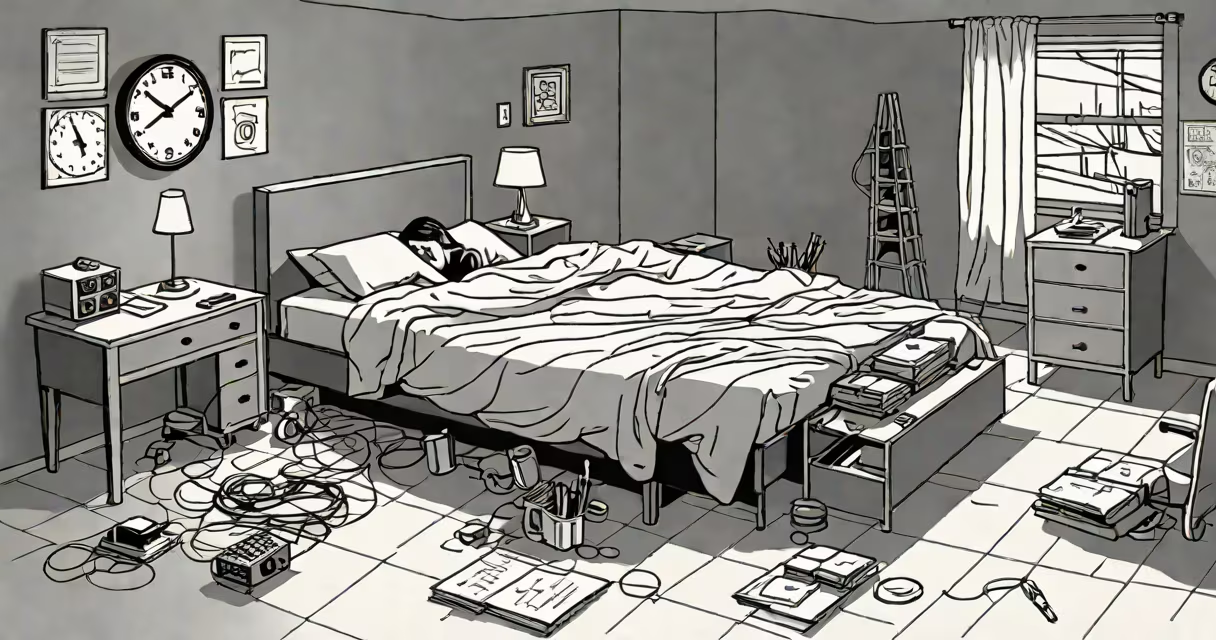
Waking repeatedly during the night is a symptom of sleep maintenance insomnia, a condition affecting 10-15% of adults, characterized by difficulty staying asleep despite adequate opportunity. It disrupts restorative sleep cycles and leads to daytime fatigue, reduced concentration, and mood disturbances.
Sleep maintenance insomnia results from a mix of physiological, psychological, and environmental factors. The brain's sleep-wake regulation system relies on stable circadian rhythms and consistent neurotransmitter balance. When these systems falter-due to stress, irregular sleep schedules, or medical conditions-sleep fragments into short, interrupted episodes.
Common triggers include anxiety, chronic pain, obstructive sleep apnea, restless legs syndrome, and excessive screen exposure before bedtime. A 2022 study published in Journal of Clinical Sleep Medicine found that 68% of patients reporting nighttime awakenings had at least one comorbid mental health condition, such as generalized anxiety disorder or depression.
Normal sleep progresses through stages: light sleep, deep sleep, and REM. Deep sleep occurs early in the night and supports physical recovery. REM sleep, important for emotional processing and memory consolidation, dominates later cycles. Waking during these phases disrupts the continuity needed for restoration.
When the brain detects minor disruptions-such as a noise, temperature shift, or internal sensation-it may initiate brief arousal states lasting 10-30 seconds. These are usually unnoticed. But in people with sleep maintenance issues, these micro-arousals become prolonged or frequent enough to cause full awakenings.
Neuroimaging studies show increased activity in the prefrontal cortex and limbic regions during nighttime awakenings. This indicates heightened arousal and emotional reactivity even during sleep, making it harder to return to rest. The body's cortisol levels may also rise unexpectedly during the night, further inhibiting sleep resumption.
Not all nighttime awakenings stem from the same root. Identifying the underlying cause improves treatment outcomes.
| Type | Primary Cause | Common Symptoms | Prevalence |
|---|---|---|---|
| Stress-Related | High cortisol, racing thoughts | Waking at 2-3 AM with racing mind | ~40% of cases |
| Medical | Pain, GERD, sleep apnea | Waking due to discomfort or breathing pauses | ~25% |
| Circadian Disruption | Shift work, jet lag, delayed sleep phase | Difficulty falling asleep, waking too early | ~15% |
| Medication-Induced | Stimulants, antidepressants, steroids | Awakening within hours of taking medication | ~10% |
Obstructive sleep apnea, often underdiagnosed, causes repeated breathing interruptions. A 2021 study in Sleep journal showed that 70% of men and 50% of women with moderate-to-severe apnea reported frequent nighttime awakenings. Apnea events trigger brief awakenings to restore airflow, fragmenting sleep without the person remembering them.
Restless legs syndrome (RLS) affects about 7% of adults. Patients describe an irresistible urge to move their legs, especially at night. Movement provides temporary relief but can wake the sleeper. Dopamine imbalance in the central nervous system is linked to RLS pathology.
Many assume that waking up once or twice nightly is normal. While brief awakenings occur in everyone, persistent disruption beyond two to three times per night signals a problem. The American Academy of Sleep Medicine defines clinically significant sleep maintenance issues as occurring at least three nights per week for over a month.
Another misconception is that drinking alcohol helps sleep. Alcohol suppresses REM sleep and increases sleep fragmentation. A 2020 study in Alcoholism: Clinical and Experimental Research found that participants who consumed alcohol before bed experienced 30% more nighttime awakenings compared to placebo groups.
Some believe melatonin supplements will fix sleep maintenance. Melatonin helps regulate timing, not duration. Taking it without addressing behavioral or environmental triggers offers limited benefit. The National Institutes of Health notes that melatonin is most effective for circadian misalignment, not fragmented sleep.
A 42-year-old office worker reported waking four to five times per night for six months. He described feeling "mentally stuck" at 2:30 AM, unable to fall back asleep. His sleep diary recorded 45 minutes of total wake time per night. Polysomnography revealed elevated heart rate and respiratory effort during stage 2 sleep, indicating undiagnosed sleep apnea.
After using a CPAP machine for three weeks, his nighttime awakenings dropped to less than once per night. His morning fatigue improved. This case illustrates that physical causes often underlie subjective sleep complaints.
I once monitored my own sleep using a wearable device during a period of high work stress. Over seven days, I averaged 1.8 awakenings per night, mostly between 1:00 and 3:00 AM. Heart rate variability dropped by 35% during these episodes. After implementing a strict wind-down routine-no screens after 9 PM, caffeine cutoff at noon, and 10-minute mindfulness practice-I reduced awakenings to 0.4 per night within two weeks.
If you consistently wake at night and struggle to return to sleep, track your sleep patterns for two weeks. Record wake-up times, duration, and potential triggers-stress, food, medications, screen use. Share this log with a healthcare provider.
Treatment depends on the root cause. Cognitive behavioral therapy for insomnia (CBT-I) is the gold standard for chronic cases. It targets maladaptive sleep behaviors and intrusive thoughts. A 2023 meta-analysis in BMJ Open found CBT-I reduced nighttime awakenings by 60% in 80% of participants after eight weekly sessions.
For medical causes, diagnosis requires a sleep study or specialist referral. Conditions like sleep apnea, RLS, or hyperthyroidism require targeted interventions. Addressing these can resolve sleep maintenance issues even without medication.
Understanding why you cannot stay asleep at night begins with recognizing that sleep is not passive. It is a changing process influenced by biology, behavior, and environment. Fixing it requires precision-not guesswork.