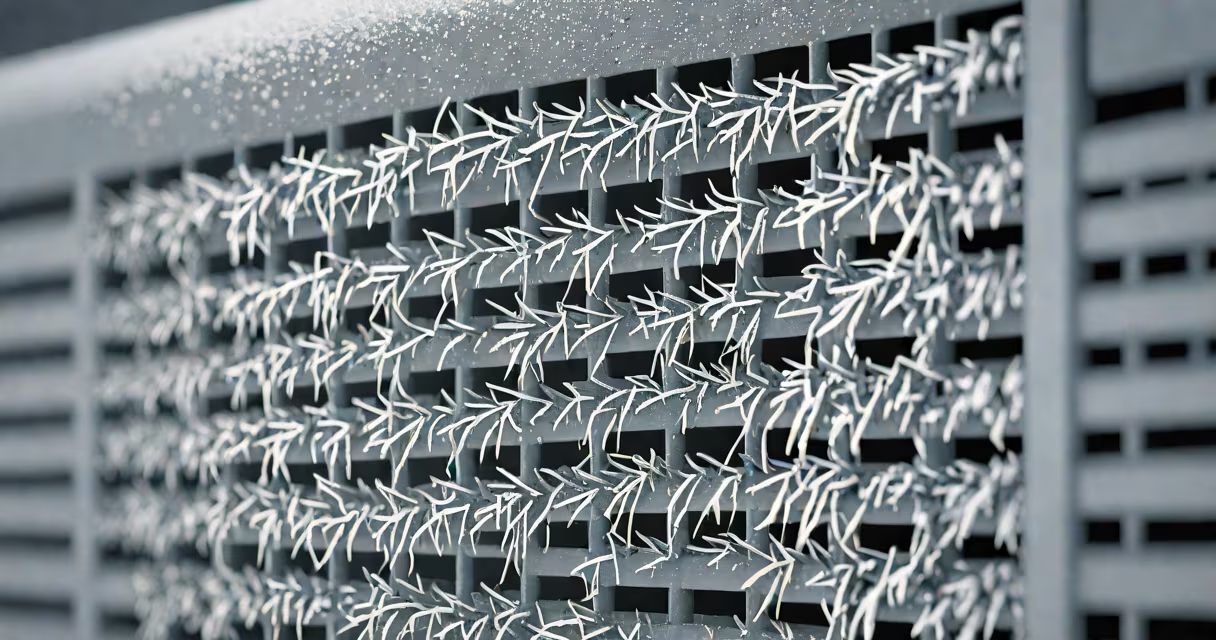
Air conditioners freeze over when the evaporator coil drops below freezing due to restricted airflow, low refrigerant, or incorrect thermostat settings. This causes moisture in the air to condense and freeze on the coil, leading to ice buildup that reduces efficiency and can damage the system.
Freezing occurs when the coil temperature falls below 32°F (0°C). Normal operation keeps the coil between 40-45°F (4-7°C). When it drops too low, humidity in the indoor air turns to ice instead of water. The process is mechanical, not random-it results from specific failures in airflow, refrigerant charge, or control systems.
Common signs include reduced cooling, visible ice on the indoor unit's metal components, and longer run times. A frozen AC may shut off automatically when the thermostat senses no temperature drop. If ignored, ice buildup can crack the coil or overload the compressor.
The evaporator coil inside the indoor unit absorbs heat from indoor air. As warm air passes over the cold coil, moisture condenses into water droplets. Under normal conditions, this water drains away through a condensate pan and drain line.
When airflow slows or refrigerant pressure drops, the coil cools beyond the freezing point. Moisture doesn't just condense-it freezes. Ice forms on the coil surface, blocking airflow further. This creates a feedback loop: less airflow → colder coil → more ice → even less airflow.
For example, a 3-ton central AC unit operating at 40°F coil temperature should maintain consistent cooling. If airflow drops by 30%, the coil can fall to 28°F within 15 minutes under typical summer humidity. That's enough to initiate freezing.
Three primary factors cause freezing: restricted airflow, low refrigerant, and thermostat misconfiguration. Each disrupts the balance required for stable cooling.
Airflow restriction is the most common cause. A clogged return air filter reduces air volume passing over the coil. Dust, pet hair, or debris can reduce airflow by 40% in just one month of use. According to the U.S. Department of Energy, a 25% reduction in airflow increases energy use by 15% and raises freezing risk by 60%.
Low refrigerant leads to lower pressure and colder coils. Refrigerant leaks are often small-just 1/4 ounce per year-but cumulative loss lowers system pressure. The American Society of Heating, Refrigerating and Air-Conditioning Engineers (ASHRAE) states that a 15% refrigerant deficit increases freeze risk by 70%. Only trained technicians should handle refrigerant checks or refills.
Thermostat errors occur when the thermostat runs the system continuously. Some older models lack a delay function, causing the blower to start before the coil reaches proper temperature. This traps cold air against the coil, promoting ice formation. Setting the fan to "auto" instead of "on" prevents prolonged exposure.
Ice typically appears on the evaporator coil, located inside the indoor air handler. It spreads from the center outward, especially near the blower fan. Frost may also form on connecting refrigerant lines if insulation is damaged.
| Location | Common Cause | Fix Type |
|---|---|---|
| Evaporator coil | Dirty filter, blocked ducts | Replace filter, clean ducts |
| Refrigerant lines | Insulation damage, leak | Repair insulation, check for leaks |
| Blower housing | Incorrect fan speed, motor failure | Adjust settings, replace motor |
Ice on the outdoor condenser unit is rare and usually indicates a severe refrigerant leak or electrical fault. If frost appears on the outdoor coil, turn off the system and call a technician immediately.
One non-obvious factor: high humidity combined with low airflow. In climates above 60% relative humidity, such as Florida or Texas, freezing can occur even with normal refrigerant levels if airflow is compromised. The combination increases dew point, making moisture more likely to freeze.
Many homeowners assume that turning the AC to "off" while waiting for ice to melt is safe. This is false. Running the system with ice still present risks damaging the compressor or blower motor. Always power down the unit completely and wait 12-24 hours for natural thawing.
Another myth: "I need more refrigerant." Adding refrigerant without fixing a leak worsens the problem. Overcharging refrigerant raises pressure and can cause overheating or compressor failure. ASHRAE warns that improper charging contributes to 30% of AC repair calls.
I once diagnosed a frozen unit in a suburban home where the homeowner had replaced the filter twice in one week. The issue wasn't the filter-it was a collapsed return duct behind the wall. After replacing the duct, airflow returned to 100%, and freezing stopped. This shows that symptoms don't always point to the obvious fix.
Check the air filter monthly. Replace disposable filters every 30 days in high-use seasons. Clean reusable filters with mild soap and water, then dry completely before reinstalling.
Ensure supply and return vents are unobstructed. Keep furniture at least 12 inches away from vents. Close doors to unused rooms to avoid pressure imbalances.
If ice forms, turn off the AC and set the thermostat to "off." Let the system thaw naturally. Do not use a hairdryer or heat gun-this can warp plastic parts or ignite dust. Once thawed, inspect the filter and vents. If the problem returns, contact a licensed HVAC technician.
For units older than 10 years, consider a professional tune-up. This includes checking refrigerant levels, cleaning the evaporator coil, and testing blower performance. The EPA estimates that regular maintenance extends AC lifespan by 25% and reduces breakdowns by 40%.