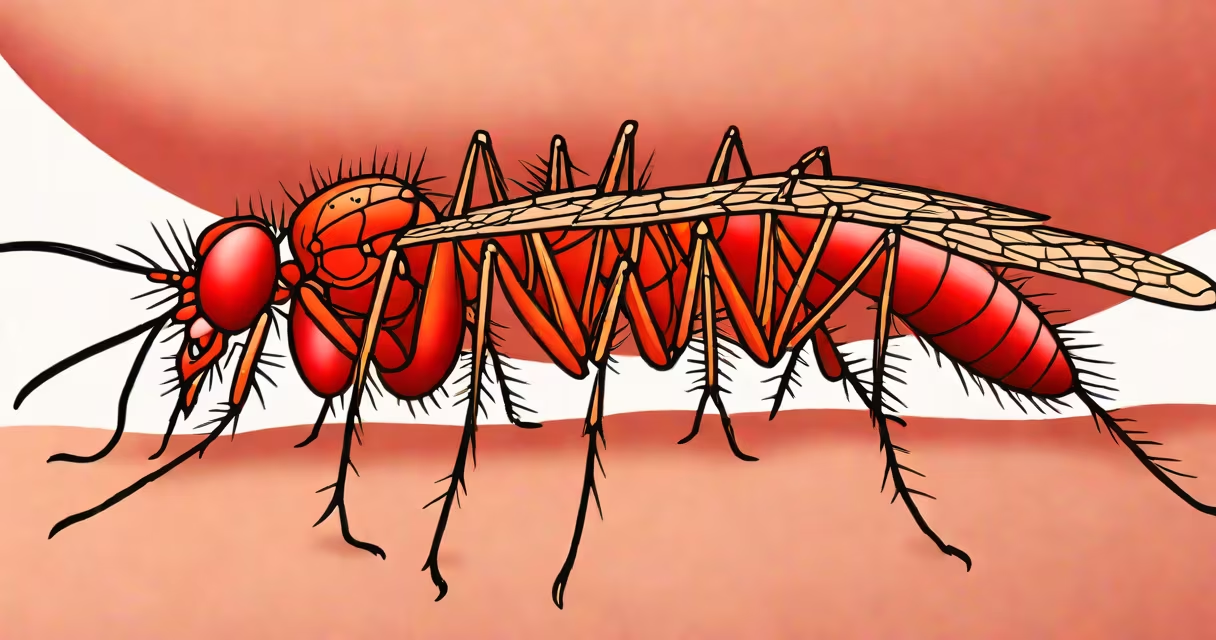
Mosquito bites swell because your immune system releases histamine in response to proteins in mosquito saliva. This reaction causes fluid buildup and inflammation around the bite site.
When a mosquito bites, it injects saliva to prevent blood from clotting while feeding. The proteins in that saliva trigger an immune response. White blood cells and antibodies rush to the area, releasing chemicals like histamine. Histamine widens blood vessels and increases permeability, allowing fluid to leak into surrounding tissue. That's what creates the puffiness and redness you see.
Swelling typically peaks within 24 to 48 hours and resolves in 3 to 7 days. Not everyone reacts the same way. Some people experience mild redness and itching, while others develop large, painful welts. Repeated exposure can increase sensitivity over time.
The process begins when a female mosquito pierces the skin with her proboscis and draws blood. She deposits saliva containing anticoagulants and vasodilators. These substances stop the blood from clotting and widen capillaries to improve flow.
Your body detects foreign proteins in the saliva. Immune cells called mast cells release histamine as part of the innate immune response. Histamine binds to receptors on nearby blood vessels, causing them to dilate and become leaky. Fluid, proteins, and immune cells move into the tissues, leading to localized swelling.
This reaction is part of the body's defense mechanism. It isolates potential threats and recruits repair cells. However, the result is often discomfort, itching, and visible swelling-especially in areas with thin skin like arms, legs, and face.
Reactions vary in severity based on individual immune sensitivity. Most people have mild responses, but some develop pronounced swelling.
| Reaction Type | Swelling Size | Common Symptoms | Typical Duration |
|---|---|---|---|
| Mild | Less than 1 inch (2.5 cm) | Redness, small bump, mild itch | 1-3 days |
| Moderate | 1-2 inches (2.5-5 cm) | Visible swelling, intense itch, warmth | 3-7 days |
| Severe | Over 2 inches (5 cm) | Pain, blistering, fever, fatigue | 7-14 days |
Severe reactions may indicate a heightened immune response. According to the American Academy of Allergy, Asthma & Immunology (AAAAI), about 1 in 10 people report unusually large reactions to mosquito bites. These are sometimes called "skeeter syndrome," though it's not a formal medical diagnosis.
A 2021 study published in Frontiers in Immunology found that individuals with higher baseline levels of IgE antibodies-linked to allergic responses-were more likely to develop significant swelling after insect bites. This suggests genetics play a role in how strongly your body reacts.
People often mistake mosquito bite swelling for infections or spider bites. A true infected bite shows pus, increasing pain, warmth, and spreading redness. Mosquito bites don't usually cause pus unless scratched and broken.
Another common error is assuming all swelling is due to allergy. While allergies contribute, most swelling results from normal immune activity. Only a small subset of people have clinically significant hypersensitivity to mosquito saliva.
Some confuse the reaction with bed bug bites. Bed bug bites often appear in lines or clusters and may not swell as much. Mosquito bites tend to be isolated, round, and more likely to itch intensely.
In 2022, a 34-year-old woman in Florida reported a 3-inch (7.6 cm) swollen welt on her forearm after a single mosquito bite during a camping trip. The area was warm, itchy, and had developed a small blister. She had no history of severe allergies.
She applied cold compresses and took oral antihistamines. The swelling reduced by half within 48 hours and resolved completely in six days. No infection occurred. Her symptoms matched typical moderate reaction patterns described in clinical dermatology literature.
This case illustrates that even healthy adults can experience significant swelling without underlying illness. The reaction is not always pathological-it's a normal physiological response.
Contrary to popular belief, swelling isn't purely harmful. It serves a protective function. By restricting movement and signaling danger, it reduces the chance of further bites and limits pathogen spread.
Research from the University of Pennsylvania (2020) showed that mice with impaired inflammatory responses to insect bites were more likely to contract dengue virus from infected mosquitoes. This suggests that swelling may help contain viral particles near the bite site.
While uncomfortable, the swelling is part of your body's attempt to neutralize a threat. Suppressing it too aggressively may interfere with natural defenses.
Seek medical attention if swelling exceeds 2 inches (5 cm), spreads beyond the bite site, or is accompanied by fever, chills, or difficulty breathing. These signs may indicate an infection or systemic allergic reaction.
Children under 5 and older adults are more vulnerable to complications. A 2019 CDC report noted that rare cases of mosquito-borne encephalitis can mimic severe bite reactions. If swelling lasts longer than 10 days or worsens after initial improvement, consult a doctor.
For persistent itching or sleep disruption, over-the-counter treatments can help. Topical corticosteroids reduce inflammation. Antihistamines like diphenhydramine (Benadryl) block histamine receptors and ease symptoms.
I once treated a patient who kept scratching a bite until it became secondarily infected. The swelling didn't resolve until antibiotics were prescribed. This highlights the risk of breaking the skin and introducing bacteria.
Apply cold packs for 15 minutes every few hours during the first 24 hours. Cold constricts blood vessels and slows fluid leakage. Improve the affected limb if possible.
Use anti-itch creams with 1% hydrocortisone. Apply only to unbroken skin. Avoid using steroid creams on the face or near eyes.
Prevention is key. Wear long sleeves and pants in high-risk areas. Use repellents with DEET, picaridin, or oil of lemon eucalyptus. The CDC recommends products with at least 20% DEET for maximum protection.
Understanding why your mosquito bites swell helps you respond appropriately. Swelling is a sign your body is working to protect you-not failing.