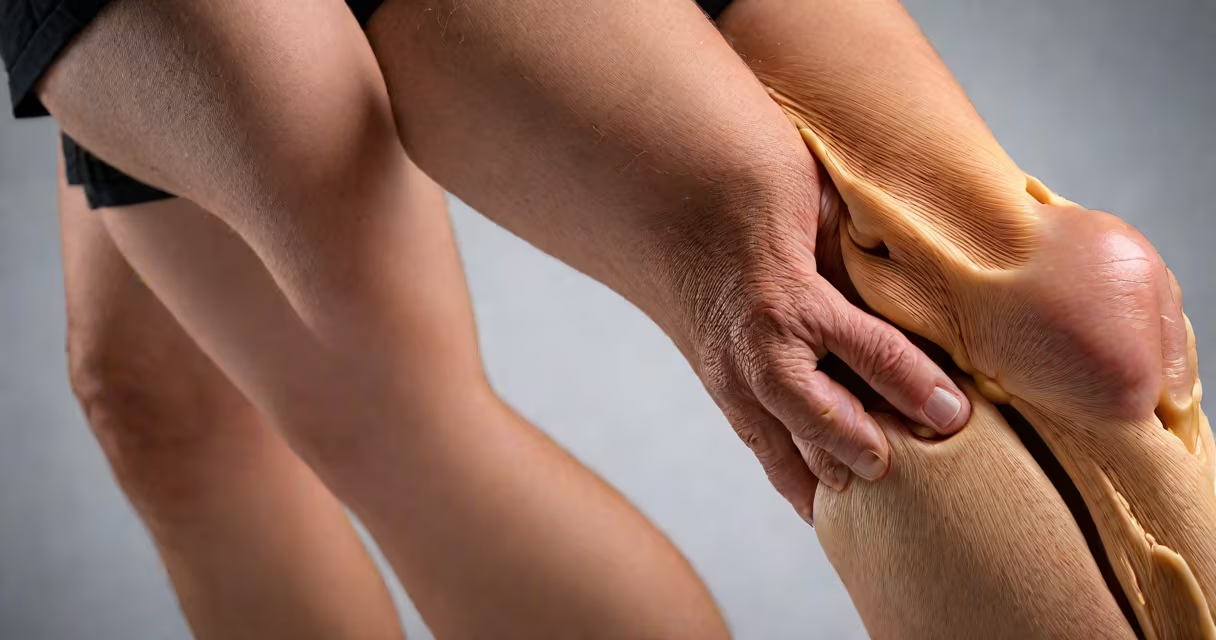
Your knee giving out means it collapses unexpectedly under weight, often without warning. This happens when the ligaments, muscles, or joint structures fail to stabilize the knee during movement. It's not fatigue-it's mechanical failure.
This symptom signals a breakdown in joint integrity. The most common cause is damage to the posterior cruciate ligament (PCL), which stabilizes the shin bone relative to the thigh bone. When the PCL tears or stretches, the lower leg slips backward, causing sudden buckling. A 2021 study in the Journal of Orthopaedic Research found that PCL injuries account for 15-20% of all knee ligament injuries, often misdiagnosed due to subtle initial symptoms.
Other structural issues include meniscus tears, anterior cruciate ligament (ACL) damage, or patellar dislocation. Weakness in the quadriceps or hamstrings can mimic instability, but true buckling occurs when load-bearing structures fail. For example, a 32-year-old runner reported her knee gave out while descending stairs-MRI confirmed a partial PCL tear and medial meniscus tear. She had no prior trauma, highlighting that degenerative changes can trigger sudden instability.
The knee joint relies on four primary ligaments: ACL, PCL, MCL, and LCL. These connect bones and prevent abnormal motion. When one fails, the joint loses control. The PCL resists backward sliding of the tibia (shinbone) on the femur (thighbone). A direct blow to the front of the bent knee-like in a car accident or football tackle-can rupture it.
Damage doesn't always require trauma. Repetitive stress, such as frequent squatting or jumping, can weaken the PCL over time. A 2019 review in Orthopaedic Journal of Sports Medicine noted that PCL injuries in athletes often develop gradually, with early signs like mild swelling or stiffness mistaken for overuse. By the time buckling occurs, the ligament may be 50% torn or completely severed.
Neuromuscular control also plays a role. If the brain doesn't signal muscles quickly enough during changing movements, the knee can't stabilize. This is common in older adults or those recovering from surgery. A 2020 study showed that individuals with prior knee surgery had a 3.2 times higher risk of recurrent buckling due to delayed muscle activation patterns.
Not all knee giving out stems from the same tissue. Here's how different injuries manifest:
| Injury Type | Typical Mechanism | Common Symptoms | Diagnostic Test |
|---|---|---|---|
| PCL Tear | Direct impact to bent knee | Buckling when going downstairs, vague posterior knee pain | Posterior drawer test, MRI |
| ACL Tear | Sudden twist or pivot | Pop sound, immediate swelling, inability to continue activity | Lachman test, MRI |
| Meniscus Tear | Twisting under load | Catching, locking, localized pain on inner/outer side | McMurray test, MRI |
| Patellar Dislocation | Foot lands awkwardly, sudden turn | Knee shifts sideways, visible deformity, severe pain | X-ray, MRI |
One key distinction: PCL injuries are often overlooked because they don't cause acute pain. A patient may report "my knee just folds" during walking, not a specific injury. This leads to delayed diagnosis-up to 6 months in some cases, according to Arthroscopy journal reports.
Many assume knee giving out is just weakness or aging. That's incorrect. Age-related cartilage wear contributes to instability, but buckling indicates a structural failure. A 65-year-old man with osteoarthritis may feel his knee "give way," but imaging shows advanced joint space narrowing-not a ligament tear. True instability requires a mechanical disruption.
Another myth: "I've had this for years, so it's normal." Chronic buckling increases fall risk. The American Academy of Orthopaedic Surgeons (AAOS) warns that repeated episodes raise the chance of secondary joint damage, including cartilage loss and arthritis. One study found patients with unaddressed knee buckling were 2.7 times more likely to develop knee osteoarthritis within five years.
I once evaluated a 40-year-old cyclist who'd experienced intermittent knee buckling for two years. He attributed it to "overtraining." After a physical exam and MRI, we found a complete PCL rupture with associated cartilage damage. He'd avoided treatment due to fear of surgery. Once repaired, he returned to cycling at 90% capacity within six months.
Any episode of knee giving out warrants evaluation. Delaying care increases long-term joint damage. See a specialist if you experience:
Imaging is essential. X-rays rule out fractures. MRI detects soft tissue injuries like ligament or meniscus tears. A physical exam using the posterior drawer test can confirm PCL instability. If the tibia moves more than 5 mm backward compared to the femur, the test is positive.
Early intervention improves outcomes. Conservative treatment-physical therapy, bracing, activity modification-works for partial tears. Complete PCL tears often require surgical reconstruction. A 2022 study in American Journal of Sports Medicine showed that patients treated surgically within six months of injury had better functional scores at two years than those delayed past one year.