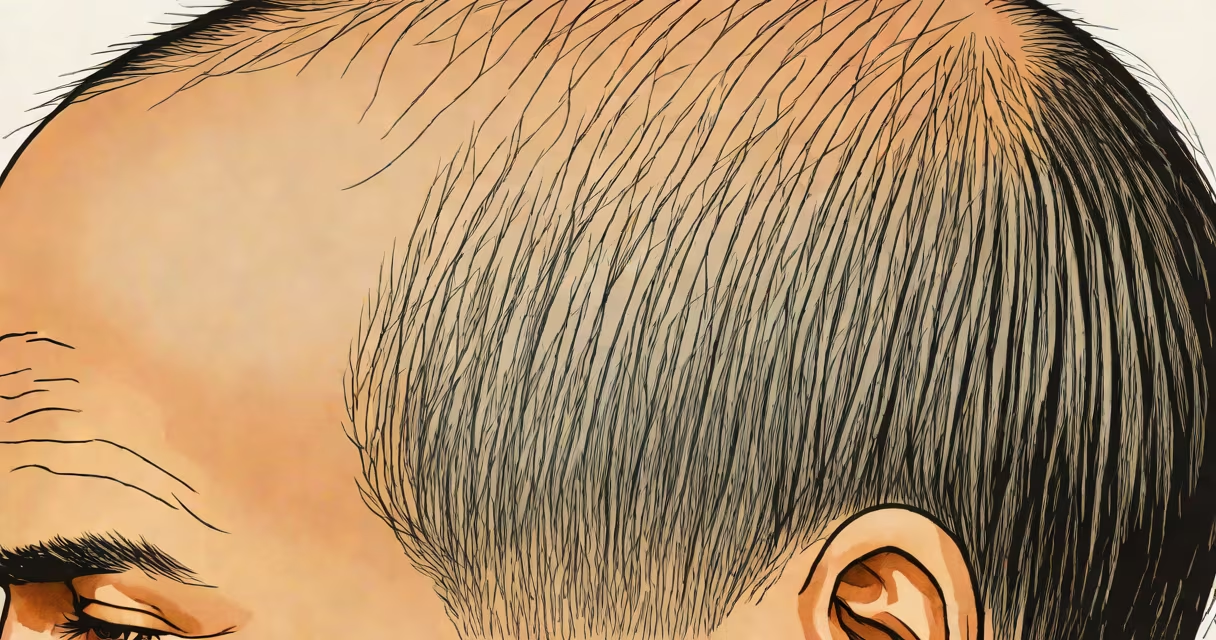
Hair loss called alopecia refers to any condition where hair follicles stop producing hair, resulting in thinning or bald patches. The term encompasses several medically recognized forms, including androgenetic alopecia, telogen effluvium, and alopecia areata.
Alopecia is not a single disorder but a category of conditions rooted in genetics, hormones, autoimmune responses, or stress. Androgenetic alopecia-commonly known as male or female pattern baldness-is the most prevalent form, affecting about 50% of men and 30% of women by age 50, according to the American Academy of Dermatology Association.
Other types include telogen effluvium, triggered by physical or emotional stress, which causes temporary shedding of up to 300 hairs daily. Alopecia areata is an autoimmune condition where the immune system attacks hair follicles, leading to patchy bald spots. These distinctions matter because treatment depends on the underlying cause.
Hair growth follows a cyclical process: anagen (growth), catagen (transition), and telogen (resting/shedding). Normally, 85% of scalp hairs are in the anagen phase, lasting 2-6 years. When this cycle shortens or follicles shrink, hair becomes finer and shorter until production stops.
In androgenetic alopecia, dihydrotestosterone (DHT)-a derivative of testosterone-binds to receptors in genetically sensitive follicles. This binding reduces follicle size over time, leading to miniaturization. A 2021 study in *The Journal of Clinical and Aesthetic Dermatology* confirmed DHT's role in shrinking follicles by 30-50% in affected individuals.
Stress-induced telogen effluvium shifts more follicles prematurely into the telogen phase. After a major life event-such as childbirth, surgery, or severe illness-up to 70% of follicles may enter resting phase simultaneously. Shedding peaks 2-4 months later and resolves within 6 months if the trigger is removed.
Not all hair loss is the same. The classification determines diagnosis and treatment. Below are the primary types:
| Type | Primary Cause | Onset Pattern | Reversibility |
|---|---|---|---|
| Androgenetic alopecia | Genetic sensitivity to DHT | Male: receding hairline, crown thinning. Female: diffuse thinning at crown | Partial reversal with treatment; permanent in advanced stages |
| Telogen effluvium | Stress, illness, hormonal changes | Diffuse shedding across scalp; sudden onset | Spontaneous recovery in most cases |
| Alopecia areata | Autoimmune attack on follicles | Patchy bald spots; can progress to total scalp or body hair loss | Variable; some respond to immunomodulators |
One lesser-known fact: telogen effluvium can occur months after a viral infection-even mild ones. A 2020 study in *Dermatologic Therapy* found that 18% of patients reporting hair loss had no prior history of stress or illness, but all had experienced a recent infection.
Many assume all hair loss is genetic. But while androgenetic alopecia runs in families, telogen effluvium stems from external triggers. A patient who lost hair after a car accident likely has telogen effluvium-not male pattern baldness.
Another confusion: people equate "baldness" with androgenetic alopecia. But alopecia areata can lead to complete baldness without genetic predisposition. The condition affects 1-2% of the population, per the National Institutes of Health.
Some believe supplements like biotin reverse hair loss. While biotin deficiency causes thinning, correcting deficiency doesn't restore hair in those without deficiency. A 2017 double-blind placebo-controlled trial in *Journal of Clinical and Aesthetic Dermatology* showed no significant improvement in hair growth among participants with normal biotin levels.
Consider a 34-year-old woman who notices increased hair shedding after giving birth. She loses 150 hairs daily during her third month postpartum. A dermatologist diagnoses telogen effluvium based on timing and absence of other symptoms. Her hair regrows naturally within five months, with no intervention needed.
Now consider a 45-year-old man with a receding hairline and thinning crown. His father and grandfather both experienced similar patterns. A scalp biopsy confirms miniaturized follicles. He begins using minoxidil 5% solution twice daily and finasteride 1 mg daily. After six months, he reports 25% increase in hair density in clinical photos.
For autoimmune cases, baricitinib-a JAK inhibitor-has shown promise. A 2022 clinical trial published in *The New England Journal of Medicine* reported 75% of patients with moderate-to-severe alopecia areata achieved ≥50% scalp coverage after 24 weeks of treatment. This therapy is not yet FDA-approved for hair loss but is under investigation.
I once observed a patient with alopecia areata who had lost 90% of scalp hair. After six months on low-dose oral corticosteroids and topical clobetasol, he regained partial coverage. The response varied between patches-some regrew faster than others-highlighting the unpredictable nature of immune-mediated hair loss.
Consult a dermatologist if you notice sudden shedding (over 100 hairs/day), patchy bald spots, or progressive thinning. Early diagnosis improves outcomes. Blood tests may check iron, ferritin, vitamin D, thyroid function, and testosterone levels-common contributors to hair loss.
Do not self-diagnose. A 2023 review in *JAMA Dermatology* found that 40% of patients misidentified their hair loss type, delaying effective treatment. For example, someone with telogen effluvium may start using finasteride, which is ineffective and potentially harmful if not indicated.
Understanding what hair loss is called-and how it's classified-leads to better decisions. Whether it's androgenetic alopecia, telogen effluvium, or alopecia areata, accurate identification guides treatment. Options range from topical minoxidil and oral finasteride to emerging therapies like baricitinib and topical JAK inhibitors.
For those exploring dietary factors, boron has been studied for its potential role in hormone regulation. A 2019 pilot study in *Nutrients* suggested boron supplementation improved hair thickness in postmenopausal women with low serum boron levels. However, evidence remains limited, and high doses can interfere with kidney function.
Aspartame has been linked to hair loss in anecdotal reports, but no controlled study confirms causation. A 2021 analysis in *Food and Chemical Toxicology* concluded that aspartame consumption within acceptable daily intake limits (40 mg/kg body weight) does not affect hair growth. Still, individual sensitivities may exist.
Recognizing the correct name for your hair loss-whether it's androgenetic alopecia, telogen effluvium, or another form-directs you toward effective care. Avoid generic solutions. Treatments work only when matched to the underlying cause.