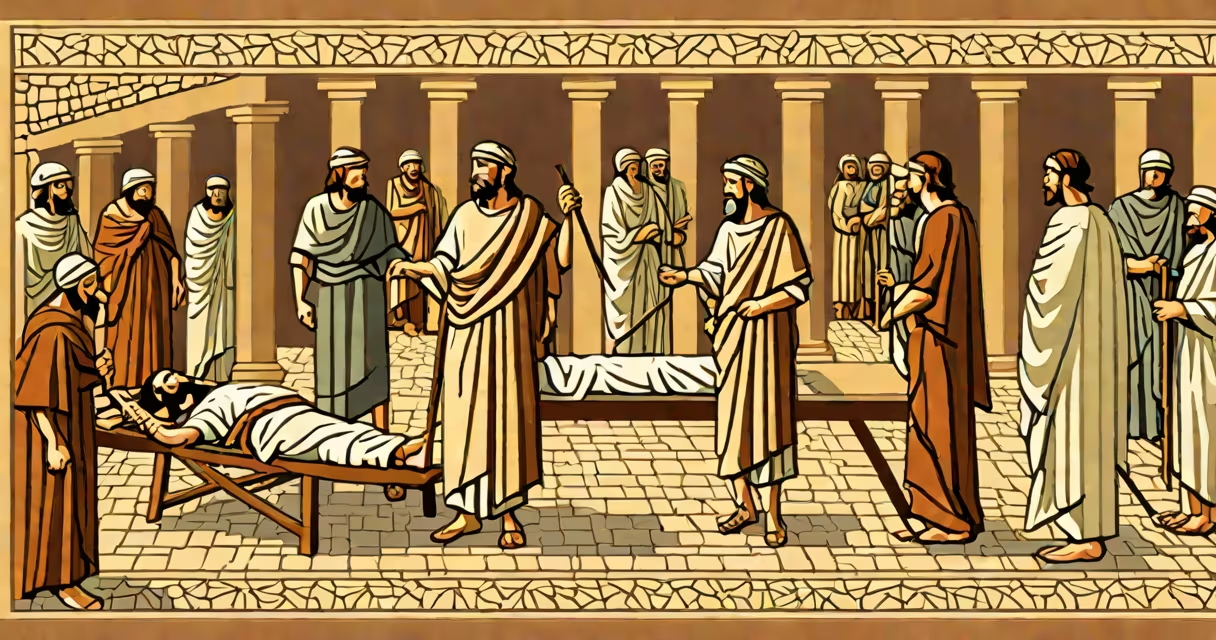
The word "martyr" in the Bible comes from the Greek word martus, meaning "witness." In early Christian usage, it evolved to describe someone who dies for their testimony of Jesus Christ, especially under persecution. This is not about suffering in general-it's specifically about dying because of one's faith.
When the New Proof uses martus, it often refers to someone who testifies to the truth of Jesus' life, death, and resurrection. The most direct example is in Acts 22:20, where Paul says he was present when Stephen was stoned-a moment described as the first Christian martyrdom. Stephen's death wasn't accidental; it was a result of his bold declaration of Christ before the Sanhedrin.
By the time of the early Church Fathers, such as Tertullian in the late 2nd century, the term had solidified into its modern sense: a believer who dies rather than renounce their faith. The Latin translation of martus became "martyr," which entered English through Old French and Middle English.
In the original Greek of the New Proof, martus appears 56 times. Most references are neutral-someone who gives evidence or bears witness. For example, in John 15:21, Jesus tells his disciples they will be persecuted because they are His witnesses. The term doesn't carry the idea of death at this stage.
But by the 2nd century, Christian communities began using the word to describe those killed for refusing to worship Roman gods or participate in state rituals. The Acts of the Martyrs, a collection of accounts written between 150 and 300 CE, document the trials, confessions, and executions of believers. These texts were not theological treatises-they were records of lived faith under pressure.
One documented case is Saint Polycarp, bishop of Smyrna, who was burned at the stake in 155 CE. His letter to the Philippians, preserved in the Epistle of Polycarp, shows how early Christians viewed martyrdom not as defeat but as victory. He wrote, "I have been ready to be offered." The language reflects acceptance, even joy, in facing death for Christ.
Martyrdom in the biblical context isn't limited to violent execution. While physical death is the most recognized form, the concept includes enduring persecution, imprisonment, exile, or public humiliation for faith. The spectrum ranges from voluntary sacrifice to forced suffering.
| Type | Description | Example |
|---|---|---|
| Voluntary Death | Dying willingly for faith, often after confession | Stephen (Acts 7:54-60) |
| Forced Execution | Killed due to refusal to renounce faith under threat | Polycarp (c. 155 CE) |
| Persecution Without Death | Imprisonment, beatings, exile, or social ostracism | Paul's multiple imprisonments (Philippians 1:7, 13) |
| Symbolic Witness | Living publicly as a believer despite risk | Jesus' instruction to "take up your cross" (Matthew 16:24) |
Not all who suffer are martyrs. The key difference lies in the motive: martyrdom requires a conscious choice to remain faithful even when death is certain. A person who dies in a war while serving as a soldier is not a martyr unless their identity as a Christian was the reason for their killing.
Many assume martyrdom in the Bible means suffering for moral reasons or personal hardship. But the biblical understanding centers on public, faith-based testimony-even unto death. Suffering alone does not qualify someone as a martyr.
A common error is equating martyrdom with suicide. The Bible never commands or glorifies self-inflicted death. Even in cases like Elijah's confrontation with the prophets of Baal (1 Kings 18), the prophet does not die for his faith-he wins a contest. Martyrdom is not about winning, but about witnessing.
Another misconception is that martyrdom is rare or symbolic. In reality, early Christians faced systematic persecution. According to the historian Eusebius in Church History, over 200 years of Roman rule saw countless executions. During the reign of Emperor Diocletian (284-305 CE), nearly 100,000 Christians were arrested, and thousands died. The scale of suffering shaped the theology of martyrdom.
In 203 CE, two women-Perpetua, a noblewoman, and Felicity, her slave-were imprisoned in Carthage for refusing to offer incense to the emperor. Their story is recorded in the Passion of Saints Perpetua and Felicity, one of the earliest surviving Christian autobiographies.
Perpetua wrote in her diary that she dreamed of battling a giant serpent. She interpreted it as a vision of her impending death. When she stood before the tribunal, she refused to renounce her faith. She was sentenced to face wild animals in the arena. Her father pleaded with her to save herself. She responded, "I am a Christian."
She was executed in the amphitheater. Her account ends with her entering heaven. The text was copied and circulated widely in North Africa. It demonstrates how martyrdom was seen not as tragedy but as transformation. The act of bearing witness-even in death-was proof of faith.
Understanding what martyr means in the Bible helps clarify modern discussions around religious freedom and persecution. The term is often misused in political rhetoric to describe people who die in conflict zones, even when their identity as Christians was not the cause of their death.
According to the Pew Research Center, 80% of global Christian persecution occurs in regions where the government or extremist groups target believers specifically because of their faith. In places like Nigeria, China, and North Korea, individuals are imprisoned or killed for attending church, distributing Bibles, or converting others. These cases align with the biblical definition-not suffering in general, but death for faith.
When reading the Bible, look for the context of the word martus. It appears in passages where believers are called to testify, even if it costs them their lives. The book of Revelation repeatedly uses the term-"Blessed are the dead who die in the Lord" (Revelation 14:13)-not because death is good, but because faithfulness is rewarded beyond it.