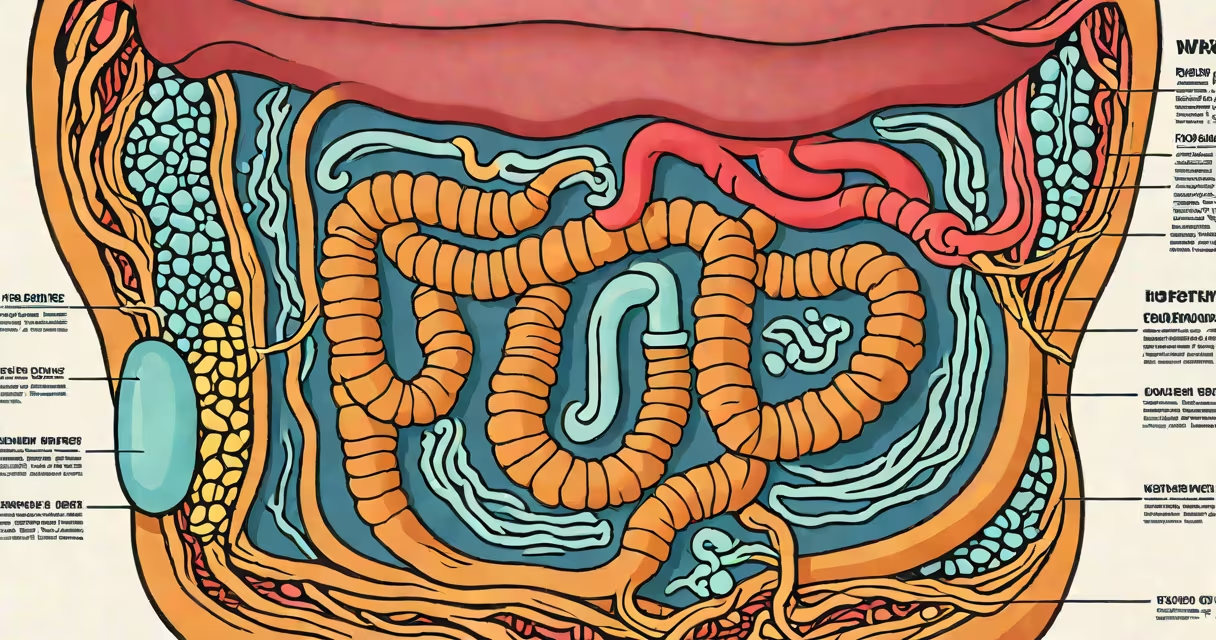
Digestion ends in the rectum, where undigested material is stored until expelled through the anus during defecation. The process concludes after nutrients are absorbed in the small intestine and water is reclaimed in the large intestine.
The digestive system begins in the mouth and progresses through the esophagus, stomach, small intestine, large intestine, and finally the rectum. While nutrient absorption occurs primarily in the small intestine, the final stages involve waste processing and elimination. The rectum serves as the storage chamber for feces before they are eliminated.
Food enters the digestive tract as a bolus. Enzymes and acids break it down in the stomach. In the small intestine, enzymes from the pancreas and bile from the liver further break down fats, proteins, and carbohydrates. Most nutrients are absorbed through the villi lining the small intestine's walls. By the time chyme reaches the large intestine, only indigestible fiber, water, and electrolytes remain.
The large intestine, or colon, absorbs water and electrolytes from the remaining material. This transforms liquid chyme into solid stool. The colon hosts trillions of bacteria that ferment undigested fibers, producing gases and short-chain fatty acids used by colon cells for energy.
Peristaltic contractions move waste toward the rectum. These waves occur in response to distension from incoming fecal matter. The internal anal sphincter, a smooth muscle under involuntary control, relaxes when pressure builds. The external anal sphincter, a skeletal muscle, allows voluntary control over defecation.
A study published in Gastroenterology found that colonic motility patterns differ between individuals based on diet and gut microbiome composition. High-fiber diets increase transit time slightly but improve stool consistency and reduce constipation risk. Low-fiber diets correlate with faster transit and higher incidence of diarrhea.
The rectum is the last segment of the large intestine. It measures about 12 to 15 centimeters long and lies just above the anus. When filled with feces, stretch receptors trigger the defecation reflex. The brain receives signals via the pelvic nerve, initiating the urge to defecate.
Defecation involves coordinated muscle actions: contraction of abdominal muscles, relaxation of the internal and external anal sphincters, and downward movement of the pelvic floor. Failure of this coordination leads to conditions like dyssynergic defecation, affecting up to 15% of patients with chronic constipation, according to the American College of Gastroenterology.
| Structure | Function | Length/Size |
|---|---|---|
| Small intestine | Nutrient absorption | 6-7 meters long |
| Large intestine | Water absorption, stool formation | 1.5 meters long |
| Rectum | Storage of feces prior to expulsion | 12-15 cm |
| Anus | Exit point for waste | 2-3 cm diameter |
Many assume digestion ends when food leaves the stomach. This is incorrect. The stomach breaks down food mechanically and chemically but does not absorb nutrients. Nutrient uptake happens almost exclusively in the small intestine.
Another misconception is that the large intestine digests food. It does not. Its role is to reclaim water and form solid waste. The term "digestion" refers to breaking down food into absorbable components. Once that process finishes in the small intestine, the remainder is processed for elimination.
A non-obvious fact: the rectum can hold up to 150 milliliters of feces before triggering the defecation reflex. This capacity varies by individual and is influenced by hydration levels and diet. Chronic straining during bowel movements increases the risk of hemorrhoids and rectal prolapse.
Consider a meal of grilled chicken, brown rice, and steamed broccoli eaten at noon. By 1:30 PM, the stomach has emptied most contents into the duodenum. Pancreatic enzymes and bile break down fats and proteins. By 3:00 PM, the chyme reaches the ileum, where nearly all nutrients are absorbed.
By 5:00 PM, the residue moves into the cecum. Over the next 6 hours, water is drawn out in the ascending and transverse colon. Bacteria ferment fiber, producing gas and butyrate. By 11:00 PM, the material reaches the sigmoid colon, forming a compact stool.
At 1:00 AM, the rectum fills. Stretch receptors activate the defecation reflex. The external sphincter remains contracted until the person chooses to defecate. After evacuation, the rectum empties completely. The cycle restarts with the next meal.
I once observed a patient with spinal cord injury who lacked voluntary control over the external sphincter. Despite intact reflexes, they required scheduled bowel programs using suppositories and manual evacuation. This illustrates how the nervous system integrates with muscular function at the end of digestion.
After the rectum, the final step is expulsion through the anus. The anus contains two sphincters: internal (involuntary) and external (voluntary). The internal sphincter relaxes automatically when the rectum is distended. The external sphincter allows conscious delay of defecation.
Once the feces pass through the anus, the digestive process ends. No further breakdown or absorption occurs. The body has extracted all usable nutrients and water. What remains is waste-undigested fiber, dead cells, bacteria, and metabolic byproducts.
Understanding where digestion ends helps clarify the difference between digestion and elimination. Digestion refers to the breakdown and absorption of food. Elimination is the removal of waste. The rectum marks the boundary between these two processes.